



What is CE LVD Compliance
What is CE lvd certification?
CE LVD Certification refers to the process where a product meets the safety requirements of the EU low voltage directive 2014/35/EU, undergoes a conformity assessment procedure, and is subsequently affixed with the CE mark.
The core objective of the LVD Directive is to ensure that electrical equipment designed for use within specific voltage ranges does not endanger the safety of persons, domestic animals, or property during use. It is not an "certificate" issued by a specific certification body; rather, the manufacturer or their authorized representative confirms compliance through a Self-Declaration.
Key Point: CE LVD is not a "certificate," but a complete compliance system including product testing, technical file preparation, and the signing of the Declaration of Conformity (DoC).
Relationship Between LVD Directive and ce marking
The CE mark is the "passport" for products entering the European Economic Area (EEA) market. For electrical products falling within the scope of the LVD Directive, the CE mark is mandatory.
Which Products Require CE LVD Certification?
The LVD Directive applies to the vast majority of everyday electrical equipment, mainly including the following categories:
Household Appliances: Washing machines, refrigerators, microwaves, vacuum cleaners, electric kettles
Lighting Equipment: LED luminaires, desk lamps, street lights, emergency lighting
IT Equipment: Computer power supplies, monitors, routers, chargers
Power Tools: Drills, electric saws, sanders, lawnmowers
Power Supplies: Switching power supplies, adapters, transformers, inverters
Industrial Controls: PLCs, frequency converters, motor controllers
Cables and Cords: Power cords, extension cords, cable assemblies
Note: The LVD Directive does not apply to:
Products for use in explosive atmospheres
Medical electrical equipment (governed by MDR regulations)
Elevators and elevator safety components
Radio equipment (must comply with the RED Directive, which incorporates LVD requirements)
Differences Between CE LVD, CE EMC, and ce red
Many sellers confuse these three directives. Here is a clear comparison:
Practical Tip: A smart lamp with WiFi may need to comply with RED + RoHS, as RED already covers the safety requirements of LVD and EMC. However, a standalone power adapter (without wireless functions) only needs to comply with LVD + EMC + RoHS.
CE LVD Certification Process
The complete CE LVD compliance process usually takes 4-8 weeks, depending on product complexity and testing schedules.
Step 1: Identify Applicable Directives and Harmonized Standards
Confirm if the product voltage falls under LVD jurisdiction.
Identify applicable EN Harmonized Standards (e.g., EN 62368-1, EN 60335-1).
If no harmonized standard applies, compliance must be proven via risk assessment.
Step 2: Product Testing
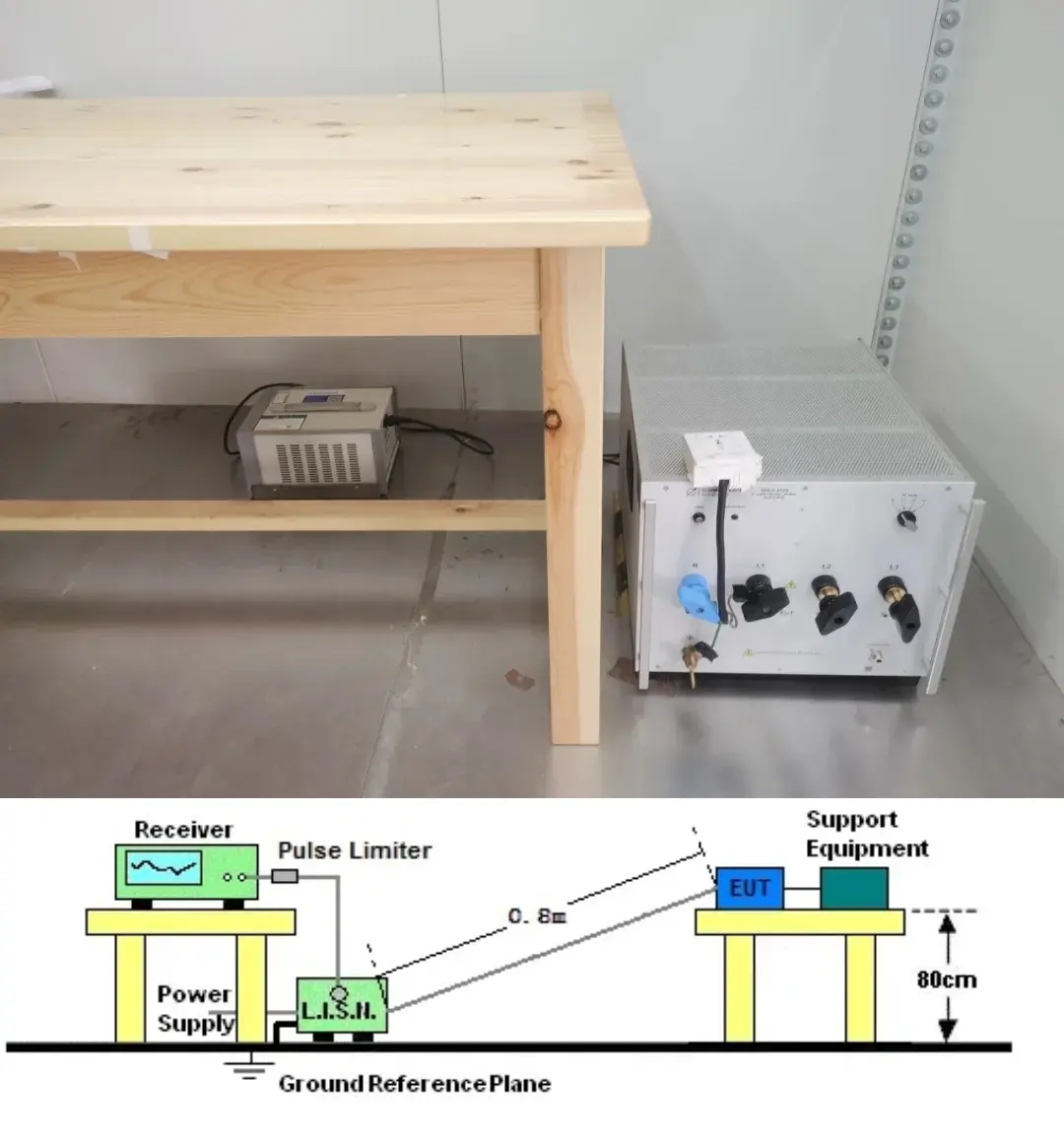
Send samples to an ISO 17025 accredited laboratory (JJR LAB) for safety testing.
Testing is conducted based on selected standards (see the checklist below).
Obtain the Test Report.
Step 3: Compile the Technical Construction File (TCF)
The technical file must include:
Product description and design drawings.
Bill of Materials (BOM) for critical components and their certificates.
Copies of test reports.
Risk assessment report.
Installation/User manuals (must include versions in official EU languages).
Draft Declaration of Conformity (DoC).
Legal Requirement: Technical files must be kept for at least 10 years after the last unit of the product is placed on the market.
Step 4: Sign the Declaration of Conformity (DoC)
Signed by the manufacturer or their EU Authorized Representative.
The DoC must include: product identification, applicable directives, harmonized standards, and signatory information.
Starting in 2026, the DoC must include a traceability code and report number (see the e-DoC section).
Step 5: Affix the CE Mark
Mark height ≥5mm.
Clear, durable, and wear-resistant.
Can be printed on the product, packaging, or accompanying documents.
Step 6: Market Surveillance and File Maintenance
Respond to spot checks from EU market surveillance authorities.
Re-evaluate compliance when product changes occur.
Continuously maintain technical files for inspection.
LVD Testing Item Checklist
Based on product categories and applicable standards, LVD testing typically covers:
Tip: Specific standards vary by product. For example, luminaires focus on anti-shock structures and heat resistance, while power adapters emphasize insulation and voltage with stand.
2026 Latest EN Harmonized Standards
Between 2024 and 2026, several harmonized standards were updated. Reports based on old standards are widely rejected. Please ensure you use the latest valid versions:
Important: Only the versions of harmonized standards published in the Official Journal of the European Union (EU OJ) provide a "presumption of conformity." Using non-harmonized standards requires the manufacturer to bear the full burden of proof for compliance.
CE LVD Certification Costs and Lead Time
Factors: Product complexity, rectification needs, lab schedule, and expedited requests. A simple power adapter may take 2-3 weeks, while complex industrial equipment may take over 2 months.
EU Authorized Representative (EU Rep) Requirements
As of July 16, 2021, all CE-marked products whose manufacturer is not located in the EU must appoint an EU Authorized Representative.
EU Rep information must be labeled on:
The product body; or
The product packaging; or
Accompanying documents
Core Responsibilities of the EU Rep:
Maintain complete technical files for inspection by market authorities.
Act as the legal point of contact between the non-EU manufacturer and EU authorities.
Assist in handling product safety incidents, recalls, or non-compliance investigations.
Frequently Asked Questions (FAQ)
Is CE LVD certification mandatory?
Yes. For electrical products within the voltage range of AC 50-1000V or DC 75-1500V, LVD compliance is a legal requirement for entering the EU market. Non-compliant products cannot bear the CE mark or be sold in the EEA.
How much does CE LVD certification cost?
Costs typically range between $1,120 and $3,500, depending on product complexity and testing requirements. Simple products may cost less, while complex industrial equipment will be higher.
How long does CE LVD certification take?
The standard cycle is 4-8 weeks. If the product design is mature and documentation is complete, it can be shortened to 2-3 weeks. If testing fails and requires rectification, it may exceed 2 months.
Can I handle CE LVD certification myself?
Yes. Manufacturers can perform their own testing, compile technical files, and sign the DoC. However, testing must be done in a qualified lab (ISO 17025 recommended), and files must meet EU requirements. For inexperienced companies, it is recommended to commission a professional compliance agency.
What is the difference between CE LVD and CE EMC?
CE LVD focuses on electrical safety (shock, fire, mechanical hazards), while CE EMC focuses on electromagnetic compatibility (not interfering with other devices and resisting external interference). Most electronic products require both.
How long is CE LVD certification valid?
There is no fixed expiration date. As long as the product design, materials, and production process remain unchanged, and the applicable directives or standards have not been updated, the compliance status remains valid.
Can I sell on Amazon Europe without CE LVD certification?
No. E-commerce platforms like Amazon require valid compliance documents for electrical products. A lack of CE marking or documents will lead to listing removal and potential account suspension.
Is an EU Authorized Representative (EU Rep) necessary?
Yes. If your company is outside the EU, under Regulation (EU) 2019/1020, you must appoint an EU Rep and display their information on the product, packaging, or documentation.
Email:hello@jjrlab.com
Write your message here and send it to us
 EU PPWR New Packaging Compliance
 How to Obtain an MSDS/SDS Report
 CPSIA Testing Service Consulting
 Food Contact Materials Testing Services
 California 65 Testing Service Consultation
 REACH Chemical Testing Services
 Electronic Vaporizers EU TPD / US PMTA / UK MHRA
 ISO 10993 Biocompatibility Standards
Leave us a message
24-hour online customer service at any time to respond, so that you worry!