



Certification CB CE EMC LFGB RoHS Types
What is Product Certification?
Product Certification is a systematic activity in which an authoritative third-party institution tests and evaluates product safety, environmental friendliness and functionality in accordance with specific technical standards, and issues a certificate of conformity. For Chinese manufacturing enterprises, product certification is a passport to enter the international market — without compliant certification, products will face risks such as customs detention, platform delisting, heavy fines and even legal litigation.
Key 2026 Data
• EU customs detains approximately 15,000 batches of imported products annually due to non-compliant certification (Source: EU RAPEX 2025 Annual Report)
• The compliance review pass rate of CE-marked products on Amazon EU sites is only 67% (Source: Amazon Seller Central Q1 2026 Data)
• Products with complete certification have a 43% higher transaction rate in European B2B procurement (Source: Alibaba.com 2026 Export Trend Report)
Overview of Core Certification Systems
• CB System: Global mutually recognized safety certification led by the International Electrotechnical Commission (IEC)
• CE Mark: Mandatory conformity mark for the EU market, covering more than 25 directives
• EMC Directive: Special compliance requirements for electromagnetic compatibility
• LFGB: Core regulation for food contact material safety in Germany and the EU
• RoHS: Directive on the restriction of hazardous substances in electrical and electronic equipment
Comparison of Five Major Product Certifications
Comparison Dimension | EMC Certification | LFGB Certification | |||
Legal Basis | IECEE CB Scheme | EU New Legislative Framework (NLF) | Directive 2014/30/EU | LFGB Articles 30/31 | Directive 2011/65/EU |
Scope of Application | Mutual recognition among 54 global member states | European Economic Area (EEA) | EU + Partially Recognized Countries | Germany / EU Food Contact Materials | EU and Global Expansion |
Product Category | Electrical & electronic products, household appliances, lighting equipment, etc. | Almost all consumer goods (covered by specific directives) | Electrical and electronic equipment | Food contact materials and articles | Electrical and electronic equipment and components |
Mandatory / Voluntary | Voluntary (Foundation for CE) | Mandatory (Most Directives) | Mandatory (EU) | Mandatory (German Market) | Mandatory (EU) |
Testing Focus | Electrical Safety (IEC Standards) | Safety + Health + Environmental Protection + Consumer Protection | Electromagnetic Emission + Immunity | Migration Limit + Organoleptic Test + Composition Analysis | 10 hazardous substances including Lead, Cadmium, Mercury |
Certificate Validity | No fixed term (Renewal required upon standard update) | No fixed term (Evaluation required upon standard update) | No fixed term | Usually 1-3 years (Subject to product) | No fixed term |
Issuing Body | NCB National Certification Body | Notified Body (NB) | Notified Body or Internal Production Control | Accredited Laboratory | Accredited Laboratory |
Typical Cycle | 4-8 Weeks | 2-6 Weeks (Subject to directive complexity) | 2-4 Weeks | 3-5 Weeks | 1-3 Weeks |
Mark Usage | cb test Certificate (No Mark) | CE Mark (Product + Package + Manual) | CE Mark (Integrated into CE Framework) | No unified mark (Declaration of Conformity Required) | CE Mark (Integrated into CE Framework) |
Mutual Recognition Basis | Direct conversion to multi-national certification | No direct conversion (Country-specific supplement required) | Subject to national spectrum requirements | High recognition in Germany, acceptable in other EU countries | Widely adopted globally (China, South Korea, etc.) |
Key Conclusion
CB is the International Passport, CE is the EU Visa; EMC, LFGB and RoHS are special compliance requirements under the CE framework. Most electrical and electronic products need to meet CE + EMC + RoHS triple compliance to enter the EU market.
Detailed Introduction to CB Certification
What is CB Certification?
The CB Certification Bodies’ Scheme is an international mutual recognition system operated by the IECEE (International Electrotechnical Commission for Conformity Testing and Certification of Electrical Equipment). Its core goal is One Test, Multi-Country Recognition. With CB test reports and certificates, manufacturers can directly convert to national safety certifications of 54 member states, greatly reducing repeated testing costs.
Product Coverage
The CB Scheme covers 23 major categories of electrical products, mainly including:
• Household Appliances (IEC 60335 Series)
• Information Technology Equipment (IEC 62368-1, Former IEC 60950/60065)
• Lighting Equipment (IEC 60598 Series)
• Power Tools (IEC 60745/62841 Series)
• Wires and Cables (IEC 60227/60245 Series)
• Electronic Entertainment Equipment (IEC 60065)
• Measuring / Control / Laboratory Equipment (IEC 61010 Series)
Certification Process & Required Documents
Standard Process (4-8 Weeks)
Phase 1: Application & Document Preparation (1-2 Weeks)
• Fill in the CB Test Application Form
• Provide product technical specification, circuit diagram, PCB Layout, BOM List (including key component list)
• Provide product photos (Appearance + Internal Structure)
• Provide User Manual (including safety warning labels)
Phase 2: Sample Testing (2-4 Weeks)
• Submit 2-4 representative samples to NCB accredited laboratories
• Conduct safety tests per corresponding IEC standards (Withstand voltage, Insulation, Temperature rise, Abnormal operation, etc.)
• Key components must hold valid CB certificates or comply with IEC standards
Phase 3: Report Review & Certification Issuance (1-2 Weeks)
• Laboratory issues CB Test Report (CBTR)
• NCB reviews and issues CB Test Certificate (CBTC)
• Certificate includes product model, technical parameters and applicable standard version
Mandatory Technical Document List
1. Product description and purpose statement
2. Schematic circuit diagram and PCB layout drawing
3. Key component list (including supplier, model and certification information)
4. Exploded structure drawing and material description
5. Nameplate / Label design draft
6. English User Manual (including safety warnings and installation instructions)
7. Difference statement (for series model application)
CB Conversion: Convert to National Certifications
Target Country | Converted Certification | Supplementary Requirements | Cycle |
EU | CE-LVD | Declaration of Conformity (DoC), Technical File | 1-2 Weeks |
USA | UL/cUL | National difference test, Factory Inspection | 4-6 Weeks |
Japan | PSE | meti registration, Factory Inspection | 6-8 Weeks |
South Korea | KC | National difference test, EMC Report | 4-6 Weeks |
Saudi Arabia | SASO | Energy Efficiency Registration, CB Certificate Recognition | 2-3 Weeks |
UAE | ECAS | National difference test, Importer Registration | 2-3 Weeks |
Detailed Introduction to CE Certification
What is CE Certification?
CE Mark (Conformité Européenne) is a mandatory conformity mark for products entering the European Economic Area (EEA, including 27 EU Member States + Iceland, Liechtenstein, Norway). It indicates that products meet EU directives on health, safety and environmental protection. CE is not a quality mark, but a legal compliance declaration.
Core Directives Covered by CE
Directive / Regulation | Applicable Products | Harmonized Standard Example | Notified Body Intervention |
Low Voltage Directive (LVD) 2014/35/EU | 50-1000V AC / 75-1500V DC Equipment | EN 60335, EN 62368 | No (Self-Declaration) |
EMC Directive 2014/30/EU | Electrical and Electronic Equipment | EN 55032, EN 55035 | No (Self-Declaration) |
Machinery Directive (MD) 2006/42/EC | Mechanical Equipment | EN ISO 12100 | Required for High-Risk Products |
Toy Safety Directive 2009/48/EC | Toys for Children under 14 | EN 71 Series | Yes |
Radio Equipment Directive (RED) 2014/53/EU | Wireless Communication Equipment | EN 301 489, EN 300 328 | Partial Required |
Personal Protective Equipment (PPE) 2016/425 | Protective Clothing / Equipment | EN 149, EN 166 | Yes |
Construction Products Regulation (CPR) 305/2011 | Building Materials | EN Standard Series | Yes |
Pressure Equipment Directive (PED) 2014/68/EU | Pressure Vessels / Pipelines | EN 13445 | Yes |
Two CE Certification Modes
Mode A: Module A (Internal Production Control)
Applicable to most electrical and electronic products
• Manufacturer conducts or entrusts testing
• Compiles Technical File
• Signs Declaration of Conformity (DoC)
• Affixes CE Mark
• No Notified Body intervention required
Mode B+C/D/E/F/G: Notified Body Intervention Mode
Applicable to high-risk products
• Notified Body conducts type examination
• Factory quality assurance system audit
• Issues EU-Type Examination Certificate
• Continuous production supervision
CE Technical File Requirements (Must be kept for 10 years)
1. Product description: Model, specification, function, photos
2. Design drawings and circuit diagrams
3. BOM list and key component list
4. List of applicable EU harmonized standards
5. Test report (issued by accredited laboratory)
6. Risk assessment report (per EN ISO 12100 or corresponding standards)
7. User Manual (including safety information, CE mark instructions, EU responsible person information)
8. Declaration of Conformity (DoC) (Signed by manufacturer, including directives, standards and responsible person info)
9. EU Responsible Person Agreement (New GPSR 2024 Requirement)
Standard Specifications for Correct CE Mark Usage
Mandatory Requirements
• Mark height ≥ 5mm (Unless restricted by product size)
• Proportionally scalable without deformation
• Must be clearly visible and indelibly affixed to product, package and manual
• Shall not be confused or covered by other marks
Common Mistakes
• Using self-made CE mark (Incorrect font/spacing)
• Failure to specify applicable directives in the manual
• Missing EU responsible person information (GPSR Violation)
• Missing risk assessment in technical file
Detailed Introduction to EMC Certification
What is EMC Certification?
EMC (Electromagnetic Compatibility) refers to the capability of equipment or system to operate normally in its electromagnetic environment, and not cause unacceptable electromagnetic disturbance to any object in the environment. The EU EMC Directive 2014/30/EU requires all electrical and electronic equipment to meet EMC requirements before placing on the market.
Two Core Dimensions of EMC Testing
Dimension 1: EMI Electromagnetic Emission Test
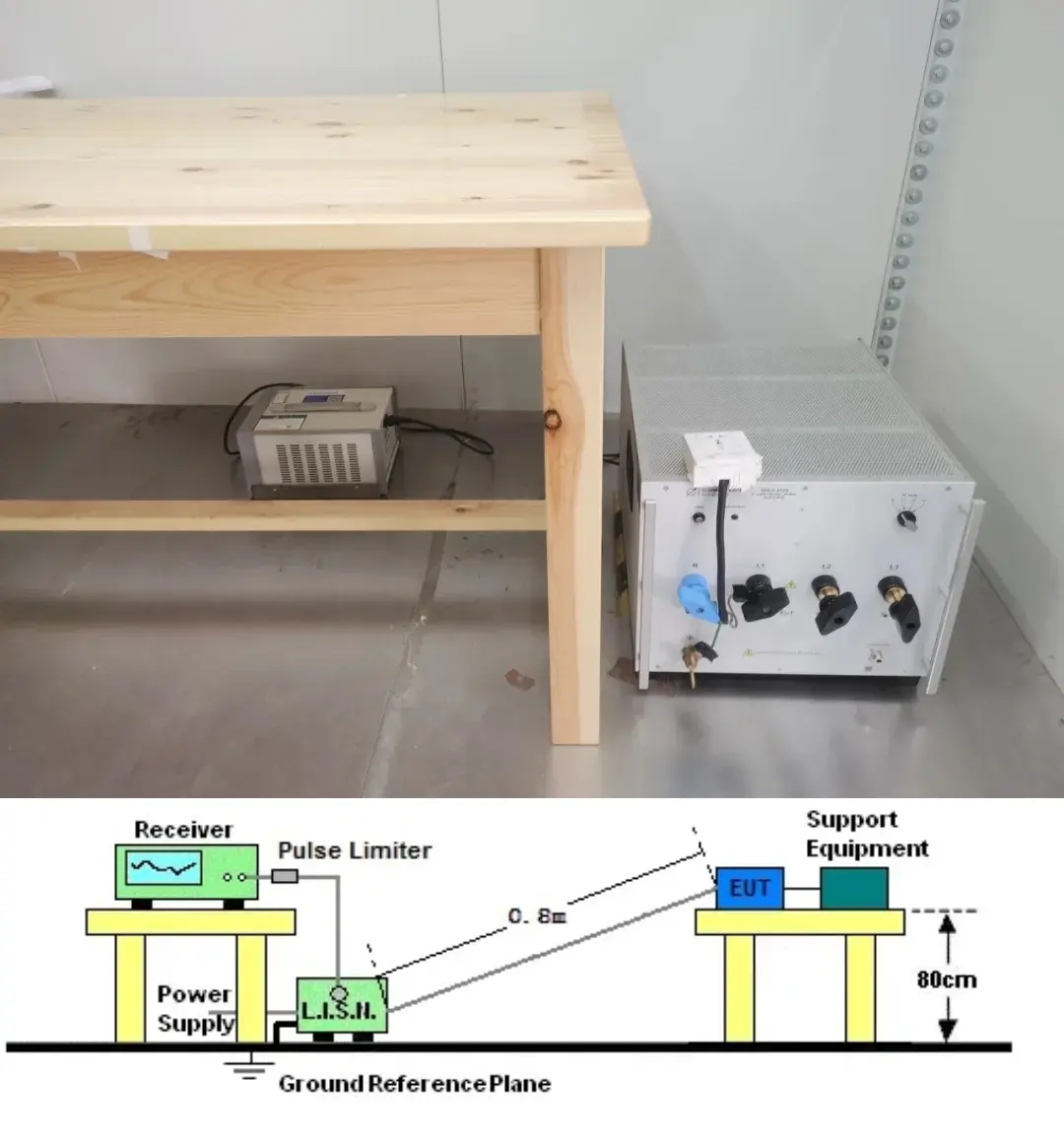
• Conducted Emission (CE): 150kHz-30MHz, interference transmitted via power lines
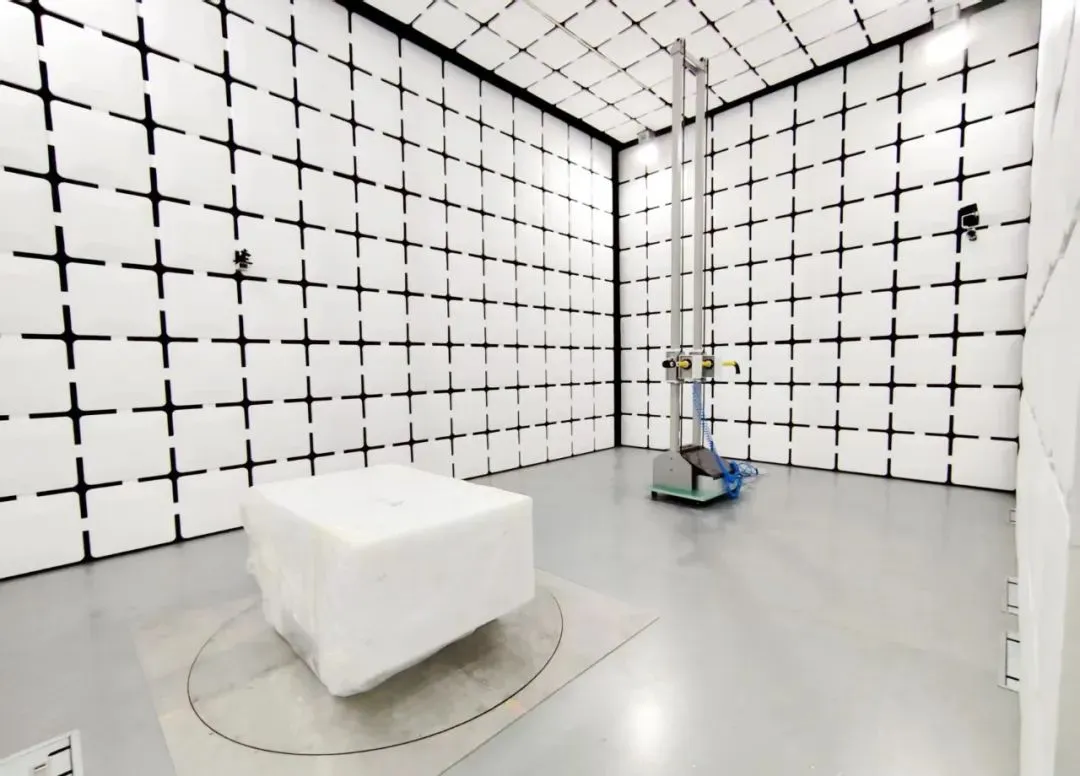
• Radiated Emission (RE): 30MHz-6GHz, interference radiated through space
• Harmonics: IEC 61000-3-2
• Voltage Fluctuation & Flicker: IEC 61000-3-3
Dimension 2: EMS Electromagnetic Immunity Test
• ESD: ±2kV/±4kV/±8kV Contact / Air Discharge
• RF Radiated Immunity (RS): 80MHz-6GHz, 3V/m-10V/m
• Electrical Fast Transient Burst (EFT): ±0.5kV-±4kV
• Surge: ±0.5kV-±4kV (Power / Signal Line)
• Conducted Immunity (CS): 150kHz-80MHz
• Voltage Dips / Interrupts
Product Classification & Testing Standards
Product Category | Emission Standard | Immunity Standard |
Information Technology Equipment (ITE) | EN 55032 | EN 55035 |
Household Appliances | EN 55014-1 | EN 55014-2 |
Lighting Equipment | EN 55015 | EN 61547 |
Industrial Equipment | EN 61000-6-4 | EN 61000-6-2 |
Residential / Commercial / Light Industry | EN 61000-6-3 | EN 61000-6-1 |
Automotive Electronics | CISPR 25 | ISO 11452 Series |
Medical Devices | EN 60601-1-2 | EN 60601-1-2 |
5.4 Common EMC Test Failures & Countermeasures
Failed Item | Typical Causes | Solutions |
Radiated Emission Exceedance | Unreasonable PCB layout, Unshielded high-speed signal lines, Clock frequency harmonics | Optimize ground plane design, Add shielding cover, Spread spectrum technology |
ESD Failure | Large shell gaps, No TVS protection for interfaces, Improper insulation material selection | Add conductive sealing ring, Install TVS diode at interfaces, Use anti-static materials |
Surge Test Failure | No varistor at power inlet, Insufficient filter circuit design | Add MOV+GDT combination, Optimize common-mode / differential-mode filtering |
Conducted Emission Exceedance | High switching power supply noise, Mismatched filter parameters | Optimize PFC circuit, Adjust filter cutoff frequency |
Detailed Introduction to LFGB Certification
What is LFGB Certification?
LFGB (Lebensmittel-, Bedarfsgegenstände- und Futtermittelgesetzbuch) is the German Food, Tobacco, Cosmetics and Daily Commodities Act, the core regulation for Food Contact Materials (FCM) safety in Germany and the EU. LFGB Articles 30 and 31 stipulate basic requirements: FCM shall not harm health, nor change food composition, taste or odor.
Product Coverage of LFGB
• Plastic Products: Tableware, fresh-keeping boxes, straws, food packaging films
• Silicone Products: Baking molds, baby nipples, kitchen utensils
• Rubber Products: Sealing rings, baking mats
• Metal Products: Stainless steel tableware, aluminum foil, kitchen tools
• Coating / Plating Products: Non-stick pan coating, can inner wall coating
• Paper Products: Food packaging paper, paper cups
• Wooden Products: Cutting boards, wooden spoons
• Ceramic / Glass Products: Tableware, storage containers
Core LFGB Test Items
Organoleptic Test
• Purpose: Ensure no odor or color migration from materials to food
• Method: Assess odor and taste by trained assessors after material contact with food simulants
• Judgment: No obvious abnormal odor or color change
Migration Test
• Overall Migration Limit (OML): ≤10 mg/dm² or ≤60 mg/kg
• Specific Migration Limit (SML): For specific substances (Formaldehyde, Primary Aromatic Amines, Heavy Metals, etc.)
• Simulant Selection:
○ 10% Ethanol (Simulate aqueous / acidic food)
○ 3% Acetic Acid (Simulate acidic food)
○ 20%/50% Ethanol (Simulate alcoholic food)
○ Olive oil / Alternative solvent (Simulate fatty food)
Heavy Metal Migration Test
• Lead (Pb), Cadmium (Cd), Chromium (Cr), Nickel (Ni), etc.
• Limits per BfR Recommendations or EU Regulation (EU) No 10/2011
Special Substance Test
• Primary Aromatic Amines (PAA): ≤0.01 mg/kg (Detection Limit)
• Formaldehyde: Specific limit
• BPA: ≤0.05 mg/kg (Banned for baby products)
• Phthalates: Specific limit
• Melamine: ≤2.5 mg/kg
Difference Between LFGB and FDA Certification
Comparison Item | LFGB (Germany / EU) | FDA (USA) |
Regulatory System | Risk assessment + Positive list based | Pre-approval of substances (FCN) based |
Testing Strictness | Stricter (Especially organoleptic test) | Relatively lenient |
Overall Migration Limit | ≤10 mg/dm² | No unified overall migration requirement |
Heavy Metal Requirements | Stricter (Lower lead limit, etc.) | Relatively lenient |
Certificate Validity | Usually 1-3 years | No fixed term |
Mutual Recognition | High recognition within EU | Only applicable to the US |
Recommendation: Prioritize LFGB for Germany/EU export, FDA for US export; apply for LFGB + FDA simultaneously for dual-market sales.
Detailed Introduction to RoHS Certification
What is RoHS Certification?
RoHS (Restriction of Hazardous Substances) refers to the Directive on the Restriction of the Use of Certain Hazardous Substances in Electrical and Electronic Equipment. The current version is 2011/65/EU (RoHS 2.0), revised by (EU) 2015/863 in 2015 to add 4 phthalates (known as RoHS 3.0 in the industry).
Core Goal: Reduce harm to the environment and human health caused by waste electrical and electronic products, and promote circular economy.
RoHS Restricted Substances & Limits (Latest 2026 Standard)
Substance | Chemical Symbol / CAS | Homogeneous Material Limit | Main Usage / Source |
Lead | Pb | 0.1% (1000ppm) | Solder, Glass, Ceramics, Batteries |
Mercury | Hg | 0.1% (1000ppm) | Switches, Fluorescent Lamps, Sensors |
Cadmium | Cd | 0.01% (100ppm) | Pigments, Batteries, Contact Plating |
Hexavalent Chromium | Cr(VI) | 0.1% (1000ppm) | Metal anti-corrosion plating, Pigments |
Polybrominated Biphenyls | PBB | 0.1% (1000ppm) | Flame Retardants (Rarely used now) |
Polybrominated Diphenyl Ethers | PBDE | 0.1% (1000ppm) | Flame Retardants (Rarely used now) |
DEHP | DEHP | 0.1% (1000ppm) | PVC Plasticizer |
BBP | BBP | 0.1% (1000ppm) | PVC Plasticizer, Adhesive |
DBP | DBP | 0.1% (1000ppm) | PVC Plasticizer, Paint |
DIBP | DIBP | 0.1% (1000ppm) | PVC Plasticizer, Adhesive |
RoHS Compliance Assessment Modes
Mode 1: Internal Production Control (Module A)
Applicable to most enterprises
1. Establish technical documents (Product description, BOM, supplier declaration, test report)
2. Conduct or entrust hazardous substance testing (XRF Screening + Chemical Analysis)
3. Sign Declaration of Conformity (DoC)
4. Affix CE Mark (RoHS integrated into CE framework)
5. Keep technical files for 10 years
Mode 2: Notified Body Intervention
Applicable for special scenarios
• When the manufacturer cannot assess compliance independently
• When EU-Type Examination Certificate is required
ROHS Testing Methods
Step 1: XRF Rapid Screening (X-Ray Fluorescence)
• Non-destructive testing, quickly identify Lead, Mercury, Cadmium, Chromium, Bromine
• Judgment: Pass / Fail / Uncertain (Requires chemical analysis)
Step 2: Precise Chemical Analysis (For XRF Uncertain Items)
• ICP-OES/MS: Quantitative analysis of heavy metals (Pb, Cd, Hg, Cr)
• UV-Vis Spectrophotometry: Hexavalent Chromium quantification
• GC-MS: Quantitative analysis of PBB/PBDE flame retardants and phthalates
Homogeneous Material Definition
• A single substance that cannot be mechanically separated into different materials
• Example: Plastic shell is one homogeneous material; copper core + insulation layer of wire are two homogeneous materials
• Limits apply to each homogeneous material, not the whole product
RoHS Exemption Clauses (2026 Status)
The EU updates the exemption list regularly; key 2026 changes:
• Exemption 7(a): Lead in high melting point solders (Extension under evaluation)
• Exemption 8(b): Cadmium in electrical contacts (Expires 2026, partially extended)
• Exemption 18(b): Lead in certain sensors (Under evaluation)
Suggestion: Follow exemption updates in the Official Journal of the European Union (OJEU) to avoid using expiring exemption clauses.
Complete Certification Application Roadmap
Phase 1: Preparatory Stage (2-4 Weeks)
Week 1-2: Demand Identification & Standard Confirmation
① Confirm target sales market (EU / Germany / Global)
② Clarify product category and applicable directives/regulations
③ Identify applicable Harmonized Standards
④ Confirm whether Notified Body intervention is required
⑤ Budget evaluation and laboratory selection (JJR LAB, etc.)
Week 3-4: Technical Document Preparation
① Organize product specification, circuit diagram, BOM list
② Prepare product photos (Multi-angle + internal structure)
③ Compile or update User Manual (including safety warnings, CE mark instructions)
④ Collect certification certificates / declarations of key component suppliers
⑤ Establish risk assessment report (if applicable)
Phase 2: Testing & Audit Stage (3-6 Weeks)
Week 5-6: Sample Preparation & Submission
① Prepare representative samples (Usually 2-4 units covering all model differences)
② Fill in test application form, specify test standards and items
③ Send samples to accredited laboratory
④ Confirm test schedule and urgent processing demand
Week 7-9: Laboratory Testing
① Follow up test progress and respond to laboratory inquiries timely
② Analyze causes and optimize design if test fails
③ Retest after rectification
④ Obtain official test report
Week 10: Document Review & Certification Issuance
① Review completeness and accuracy of test reports
② Compile / Sign Declaration of Conformity (DoC)
③ Organize complete Technical File
④ Obtain CB Certificate / CE Conformity Document / LFGB Report / RoHS Report
Phase 3: Market Access & Continuous Compliance (Long-Term)
Product Launch
① Affix compliant marks (CE / LFGB conformity label, etc.)
② Ensure compliance of package, manual and label
③ Appoint EU Responsible Person (GPSR Requirement)
④ Establish product traceability system (Batch number, production date)
Continuous Monitoring
① Monitor regulatory updates (Standard revision, new directive release)
② Supplier management (Collect RoHS declaration regularly)
③ Production consistency control (Internal quality inspection, annual audit)
④ Keep technical files for 10 years (EU legal requirement)
⑤ Handle market supervision sampling inspection and non-compliance rectification
Certification Cost Reference
CB Certification Cost
Convert RMB to USD at exchange rate 1 CNY ≈ 0.138 USD
Cost Item | Simple Product | Medium Complexity | High Complexity |
Application Fee |
|
|
|
Testing Fee |
|
|
|
Certificate Fee |
|
|
|
Total |
|
|
|
ce certification cost (LVD+EMC+RoHS as Example)
Cost Item | Simple Electrical & Electronic | Medium Complexity | High Complexity |
LVD Safety Test |
|
|
|
EMC Test |
|
|
|
RoHS Test |
|
|
|
Technical File Review |
|
|
|
Total |
|
|
|
LFGB Certification Cost
Cost Item | Simple Plastic / Silicone | Medium Complexity | High Complexity |
Organoleptic Test |
|
|
|
Overall Migration Test |
|
|
|
Specific Migration Test |
|
|
|
Heavy Metal Test |
|
|
|
Total |
|
|
|
Other Service Cost Reference
Service Item | Cost Range | Description |
Urgent Service | Standard Fee × 1.3-2.0 | Cycle shortened by 30%-50% |
Factory Audit (FAI) |
| Required for CB conversion & specific certifications |
Technical Document Translation |
| English / German / Japanese, etc. |
Annual Supervision Audit |
| Certificate maintenance (If applicable) |
Standard Renewal |
| Required when standard version updated |
EU Responsible Person Service |
| GPSR Compliance Service |
FAQ
Can CB and CE certification be applied together?
A: Yes, and highly recommended. CB certification is an important foundation for CE — CB test reports are directly accepted by EU Notified Bodies for CE-LVD compliance assessment.
Advantages of simultaneous application:
• Avoid repeated safety tests, save 30%-50% testing cost
• Shorten overall certification cycle (Save 2-4 weeks normally)
• CB certificate can also be converted to US UL, Japan PSE, South Korea KC, realizing One Investment, Global Application
Recommended Process: Apply for CB first → Take CB report as the core of CE technical file → Supplement EMC/RoHS CE special tests → Complete CE Declaration of Conformity.
Is CE mark mandatory? Can products be sold on Amazon Europe without CE mark?
A: For products covered by CE directives (Electrical & electronic, toys, machinery, etc.), CE mark is legally mandatory in the EU market. Without CE mark:
• Products will be detained or returned by customs
• Amazon / eBay will delist product listings
• Fines imposed by EU market supervision authorities (Up to 10% of annual turnover)
• Manufacturers/importers may bear criminal liability if safety accidents occur
Amazon EU Special Requirement: After GPSR implementation in 2024, sellers must provide:
• EU Responsible Person information
• Product safety pictures / warning information
• CE Declaration of Conformity (DoC)
• Commitment to keep technical files for inspection
What is the approximate cost and cycle of LFGB certification?
A: LFGB cost depends on product material complexity and test items:
• Simple single-color plastic/silicone products:  3,036
3,036
• Multi-color / composite material products: 5,658
• Complex products with coating/metal/printing: 10,764
Cycle
• Standard: 3-5 weeks (Including sample preparation, testing and report compilation)
• Urgent: 2-3 weeks (Cost increased by 30%-50%)
Money-saving Tips
1. Confirm if raw material suppliers hold LFGB test reports in advance for partial reference
2. Apply for series certification for products of the same material to share partial test items
3. Negotiate package quotation with laboratories (Discount for simultaneous LFGB + FDA testing)
What is the difference between RoHS 2.0 and RoHS 3.0? Which one should my product comply with?
A: The industry-called RoHS 3.0 is not an independent new directive; it refers to RoHS 2.0 (2011/65/EU) revised in 2015. Core changes:
Version | Year | Restricted Substances | Description |
RoHS 1.0 | 2006 | 6 substances (Pb, Hg, Cd, Cr6+, PBB, PBDE) | Original Directive 2002/95/EC |
RoHS 2.0 | 2011 | 6 substances | New Directive 2011/65/EU, expanded product scope, integrated CE mark |
RoHS 2.0 Revision | 2015 | 10 substances (4 additional phthalates) | Added DEHP, BBP, DBP, DIBP |
Current compliance requirement: All electrical and electronic products placed on the EU market must comply with 10 restricted substances. If your test report only covers 6 substances, supplementary testing for 4 phthalates is required.
What are the common causes of EMC test failure and how to avoid them?
A: Top 5 EMC failure causes:
1. Radiated Emission Exceedance (35%)
Cause: Unmatched impedance of high-speed signal lines, strong clock harmonics, unreasonable PCB ground plane division
Prevention: Conduct EMC simulation in design phase, ground key signal lines, adopt spread spectrum technology
2. ESD Failure (25%)
Cause: Large shell gaps, no TVS protection for interfaces, exposed buttons/indicators
Prevention: Add conductive gaskets at shell joints, install TVS/ESD devices for all interfaces, avoid sharp edges
3. Surge Failure (20%)
Cause: No varistor at power inlet, insufficient filter circuit design, poor grounding
Prevention: Equip MOV+GDT at power inlet, optimize common-mode/differential-mode filtering, ensure grounding continuity
4. Conducted Emission Exceedance (15%)
Cause: High switching power supply noise, mismatched filter parameters, grounding loop
Prevention: Optimize PFC circuit, accurately calculate filter cutoff frequency, single-point grounding design
5. Immunity Failure (RS/CS) (5%)
Cause: No shielding for sensitive circuits, no watchdog/error correction mechanism in software
Prevention: Add metal shield for key circuits, add abnormal state recovery mechanism in software
Core Suggestion: EMC compliance is designed rather than tested. Arrange EMC engineers to participate in the early product design for pre-compliance design, which can reduce later rectification cost by over 70%.
Which certifications does my product need? Is there a quick judgment method?
A: Follow the quick decision tree below:
Step 1: Confirm Target Market
• EU (Including Germany/France/Italy, etc.) → Go to Step 2
• USA/Canada → FDA/UL/FCC (Not covered in this article, separate consultation required)
• Global multi-market → Prioritize CB first, then convert to national certifications
Step 2: Confirm Product Category
• Electrical & electronic products (Home appliance, IT, lighting, tools) → CE + EMC + RoHS (Mandatory)
• Food contact materials (Tableware, kitchenware, packaging) → LFGB (Mandatory for Germany/EU)
• Machinery → CE-MD (Notified Body may be required)
• Toys → CE-Toy + EN 71
• Wireless products → CE-RED
Step 3: Confirm Certification Mode
• Is it high-risk product (Medical devices, pressure equipment, PPE, etc.)?
• Yes → Notified Body intervention required
• No → Self-declaration (Module A) available
Quick Consultation: If you are unsure of product classification, provide product name + function description + target market, JJR LAB provides free certification demand assessment.
Email:hello@jjrlab.com
Write your message here and send it to us
 How to get SOR/2011-17 Compliance Certification
 What is DGCCRF Certification Testing
 Bow and Arrow Children's Toys CPC Certification
 POPs Testing Service Consultation
 EU PPWR New Packaging Compliance
How to Obtain an MSDS/SDS Report
EU PPWR New Packaging Compliance
How to Obtain an MSDS/SDS Report
 CPSIA Testing Service Consulting
 Food Contact Materials Testing Services
Leave us a message
24-hour online customer service at any time to respond, so that you worry!