



CE Certification EMC Directive 2014/30/EU
CE certification EMC Directive 2014/30/EU | JJR LAB
The EU Electromagnetic Compatibility Directive (EMC Directive 2014/30/EU) is one of the core regulations within the ce marking system, applicable to all electrical and electronic equipment sold on the EU market. Based on the latest official guidelines released by the European Commission in March 2025, this guide provides a complete operational manual for manufacturers, importers, and distributors, ranging from compliance determination to technical documentation preparation.
What is EMC Directive 2014/30/EU?
The EMC Directive 2014/30/EU (Electromagnetic Compatibility Directive) is a harmonized directive under the EU's New Legislative Framework (NLF). It officially entered into force on April 20, 2016, replacing the old Directive 2004/108/EC.
Core Objectives:
Electromagnetic Emission Limits: Ensuring that electromagnetic interference generated by electrical equipment does not exceed allowable levels to avoid affecting the normal operation of other equipment.
Immunity Requirements: Ensuring that equipment has sufficient resistance to interference in its intended electromagnetic environment.
Key Difference: The EMC Directive is distinct from the lvd directive (2014/35/EU). EMC focuses on electromagnetic compatibility, while LVD focuses on electrical safety. Both usually must be satisfied simultaneously before the CE mark can be applied.
1.2 Legal Basis of the Directive
Issuing Body: European Parliament and the Council of the European Union
Effective Date: April 20, 2016
Scope of Application: 27 EU Member States and the European Economic Area (EEA)
Latest Guidance: March 2025 edition of the "Guide for the Emc Directive"
Scope & Applicability
2.1 Applicable Product Types
The EMC Directive applies to all electrical and electronic equipment that is liable to cause electromagnetic disturbance or whose performance is liable to be affected by such disturbance. It is specifically divided into two categories:
A. Apparatus
Refers to finished products placed on the market as a single functional unit, including:
Information Technology Equipment (computers, servers, monitors)
Household Appliances (washing machines, refrigerators, microwaves)
Lighting Equipment (LED luminaires, ballasts)
Industrial Control Equipment (PLCs, frequency converters, sensors)
Power Tools (drills, welding equipment)
Consumer Electronics (mobile phone chargers, power adapters)
B. Fixed Installations
Refers to a particular combination of several types of apparatus which are assembled and installed for permanent use, such as:
Industrial production lines
Elevator systems
Large-scale power distribution systems
HVAC systems
Note: Compliance requirements for fixed installations differ from standalone apparatus; they require "good engineering practices" rather than a full conformity assessment procedure.
2.2 Explicitly Excluded Products
The following products do not apply to the EMC Directive and are governed by other specific regulations:
2.3 Compliance Determination Flowchart
Is your product an electrical/electronic device?
↓
Yes → Does the product fall under an excluded category?
↓
No → Does the product generate or get affected by electromagnetic interference?
↓
Yes → Is the product a fixed installation?
↓ Yes → Adopt Good Engineering Practices
↓ No → Apply full emc compliance procedures
Detailed Core Compliance Requirements
3.1 Essential Requirements
According to Article 5 of the Directive, all equipment must meet the following two essential protection requirements:
Requirement 1: Electromagnetic Emission Limits
Electromagnetic interference generated by the equipment must not exceed levels that ensure:
Radio and telecommunications equipment operate normally
Other equipment operates according to its intended purpose
No unacceptable interference is caused to the power grid
Requirement 2: Immunity Requirements
Equipment must have a level of immunity in its intended electromagnetic environment to ensure:
No performance degradation occurs in general electromagnetic environments
Functional integrity is maintained in specific industrial environments
No hazardous situations are created when interference occurs
3.2 Special Requirements for Fixed Installations
Fixed installations do not require a full conformity assessment procedure, but they must:
Consist of equipment compliant with the EMC Directive
Be installed following good engineering practices
Have technical documentation prepared for inspection
Identify the person/company responsible for the installation
Harmonized Standards List
4.1 What are Harmonized Standards?
Harmonized standards are European standards (EN) published in the Official Journal of the European Union (OJ). Full application of harmonized standards grants a Presumption of Conformity, meaning the product is legally presumed to comply with the essential requirements of the EMC Directive.
4.2 Standard Comparison Table by Product Category
Information Technology Equipment (ITE)
Industrial Environment Equipment
Residential, Commercial, and Light-Industrial Environments
Common Basic Standards
4.3 Handling Lack of Applicable Harmonized Standards
When no harmonized standards apply to a product, or they only apply partially, the manufacturer must:
Adopt non-harmonized standards (e.g., IEC standards, national standards)
Conduct a risk assessment and record the technical basis
Ensure testing methods are scientific and reasonable
Describe the standards used and the reasoning in the technical file
Important Note: Using non-harmonized standards does not grant a presumption of conformity; the manufacturer must prove compliance with the essential requirements of the directive themselves.
Responsibility Matrix for Economic Operators
According to the EMC Directive and the EU Market Surveillance Regulation (EU) 2019/1020, various parties in the supply chain bear different legal responsibilities:
5.1 Manufacturer
Core Responsibilities:
Design and manufacture products meeting EMC Directive requirements
Conduct (or commission) emc testing
Prepare Technical Documentation
Issue the EU Declaration of Conformity (DoC)
Affix the CE mark
Keep technical documentation for 10 years
Establish a product traceability system
Legal Risks:
Product Recall
Sales Ban
High fines (up to 4% of turnover or higher)
Criminal liability (in severe cases)
5.2 Importer
Core Responsibilities:
Import only products compliant with the EMC Directive
Verify the manufacturer has completed the conformity assessment procedure
Ensure DoC and technical documentation are available
Ensure the CE mark is affixed to the product
Retain evidence of compliance
Keep a copy of technical documentation within the EU
Legal Risks:
Joint liability with the manufacturer
Product seizure by customs
Penalties from market surveillance authorities
5.3 Distributor
Core Responsibilities:
Check if the CE mark is affixed to the product
Check if accompanying documents are complete
Must not sell products known to be non-compliant
Cooperate with market surveillance authority investigations
Legal Risks:
Sales ban
Product removal from shelves
Administrative penalties
5.4 Authorized Representative
A manufacturer may appoint an authorized representative within the EU to:
Keep technical documentation
Cooperate with market surveillance authorities
Receive compliance-related notifications
Note: An authorized representative cannot issue a DoC on behalf of the manufacturer.
CE Marking and EMC Testing
6.1 Legal Meaning of the CE Mark
The CE mark is a mandatory marking indicating compliance with relevant EU regulations, signifying:
The manufacturer declares the product meets all applicable directives
The product can circulate freely within the EEA
The manufacturer assumes full legal responsibility
6.2 Correct Use of the CE Mark
Required Elements:
CE letters (specific proportions and font)
Notified Body number (if applicable; usually not required for EMC)
Last two digits of the year the product was manufactured
Rules of Use:
Minimum height of 5mm
Must be clearly visible, legible, and indelible
Should be affixed to the product body or nameplate
If not feasible, it may be affixed to the packaging and accompanying documents
6.3 EMC Testing Process
Step 1: Product Classification and Standard Identification
Determine product type and function
Identify applicable harmonized standards
Determine the testing environment (Residential/Industrial)
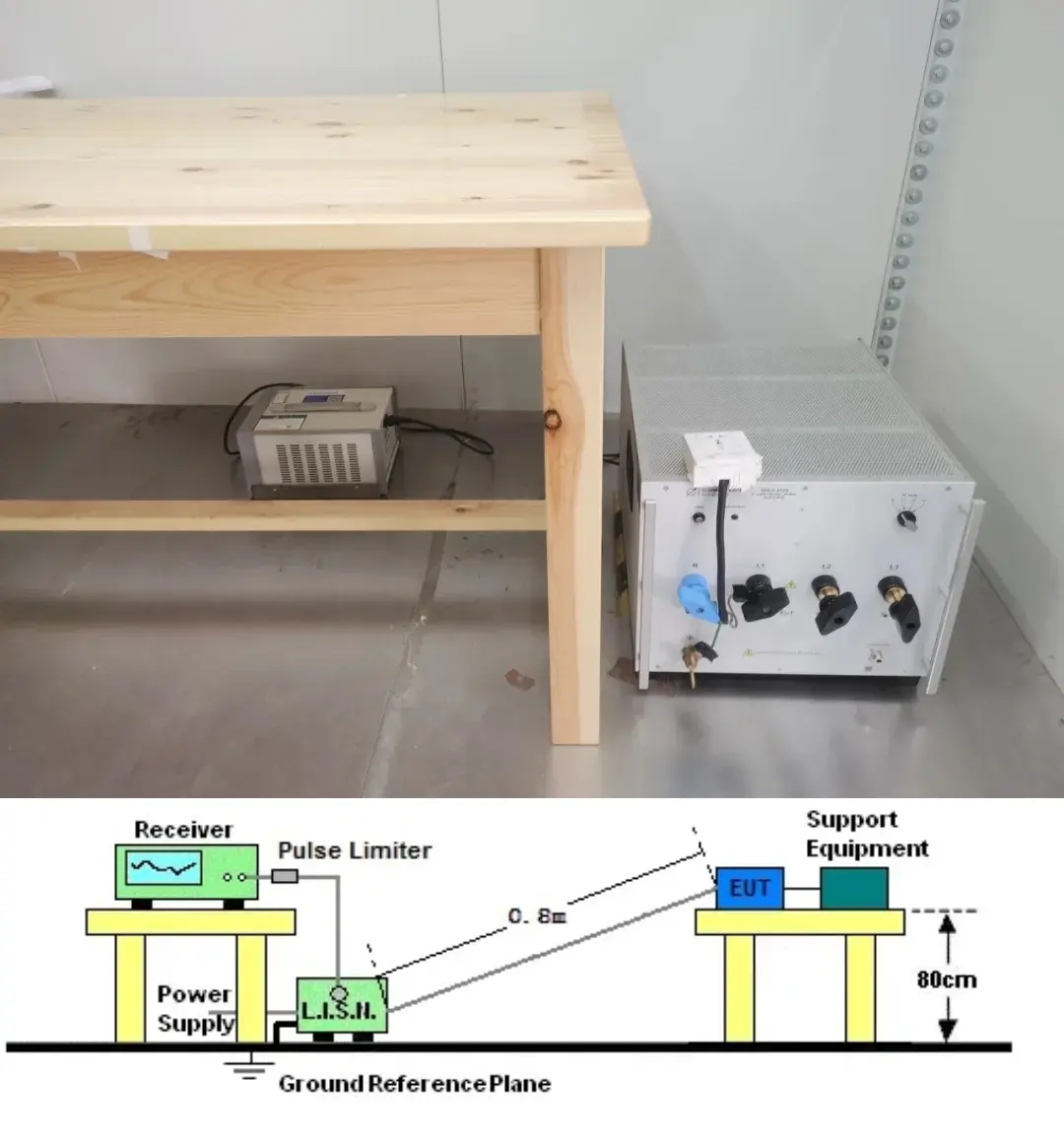
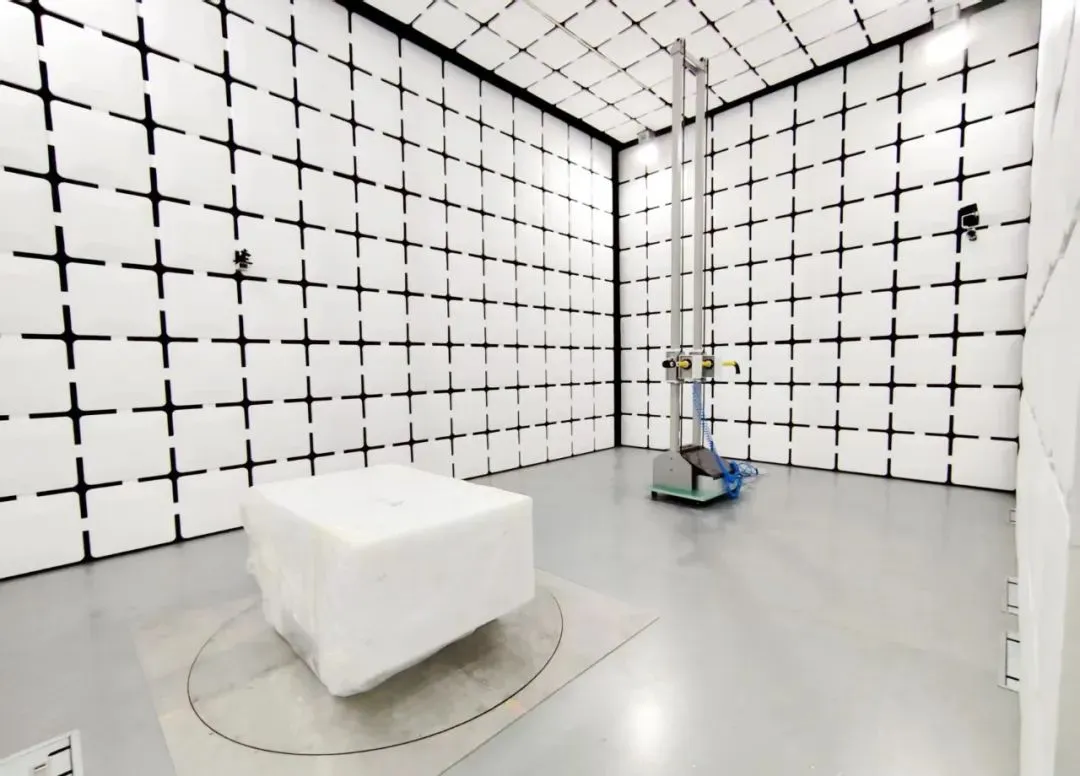
Step 2: Emission Testing
Step 3: Immunity Testing
Step 4: Preparation of Test Report
Detailed records of test configurations and conditions
Inclusion of product photos and test setup diagrams
List of all used test equipment and their calibration status
Clear determination of whether it meets standard requirements
6.4 Testing Period and Costs
Detailed Technical Documentation
7.1 Legal Requirements for Technical Documentation
According to Annex III of the EMC Directive and the 2025 official guide, the technical documentation must include these 7 items:
1. Product Identification Information
Product name, model, serial number
Must allow for unique identification of the product
Must match the description in the DoC exactly
2. General Product Description
Product function and principles of operation
Block diagrams or photos for complex products
Statement of intended use environment
3. Design Drawings and Manufacturing Documents
Mechanical design drawings
Electrical schematics and PCB layouts
Bill of Materials (BOM) for critical components
4. Explanatory Descriptions for Drawings and Schemes
Explanations for complex drawings
Descriptions of key design decisions
Description of electromagnetic compatibility design measures
5. List of Harmonized Standards
List of all applied standards
Standard version numbers (e.g., EN 55032:2015+A11:2020)
Statement of evidence of conformity
6. EMC Assessment Report
Must be provided when harmonized standards are not fully applied
Includes risk assessment methodology
Detailed technical arguments
7. Test Reports and Design Calculations
Third-party lab test reports
Internal test records
Design calculations and analysis
Inspection records
7.2 EMC Risk Assessment
New Requirement in 2014/30/EU: Manufacturers must conduct an EMC risk assessment.
Assessment content should include:
Identification of all possible sources of electromagnetic interference
Evaluation of immunity needs in the intended environment
Analysis of potential consequences of non-compliance
Determination of risk mitigation measures
Documentation of the assessment process and conclusions
7.3 Document Retention Period
Technical documentation must be kept for 10 years after the product has been placed on the market, available for inspection by market surveillance authorities at any time.
Declaration of Conformity (DoC)
8.1 Legal Status of the DoC
The EU Declaration of Conformity is a legally binding document signed by the manufacturer, declaring that the product meets all applicable EU regulations. It is the legal basis for the CE mark.
8.2 Mandatory DoC Elements
According to Article 18 of the EMC Directive, the DoC must include:
Product Identification: Name, model, batch, or serial number.
Manufacturer Information: Name and full address (plus Authorized Representative info if applicable).
Declaration Statement: Explicitly stating compliance with Directive 2014/30/EU and citing harmonized standards.
Signature Info: Date and place of issue, authorized signer's name, title, and signature.
CE Mark Year: Last two digits of the year of manufacture.
Compliance Process Guide
Product Classification & Standard Identification
Conduct EMC Risk Assessment
Product Design & EMC Measure Implementation
Internal Pre-testing (Optional but recommended)
Formal Testing at Third-Party Lab
Preparation of Technical Documentation
Signing the EU Declaration of Conformity (DoC)
Affixing the CE Mark
Placing Product on the Market
Retain Documents for 10 Years & Continuous Monitoring
Frequently Asked Questions (FAQ)
Do battery-powered devices need EMC testing?
A: Yes. There are no exemptions for battery-powered devices. If they fall under the scope of the EMC Directive and may cause or be affected by interference, they must be tested. Common examples include power tools, portable devices, and toys.
What is the difference between the EMC Directive and the RED Directive?
A: - EMC (2014/30/EU): For electromagnetic compatibility of all electrical/electronic equipment.
RED (2014/53/EU): For radio equipment, including radio spectrum and EMC requirements.
Key Distinction: No radio function → EMC Directive. Radio function (WiFi, Bluetooth, etc.) → RED Directive (no separate EMC Directive compliance needed).
Can I perform self-certification?
A: Yes. The EMC Directive allows for self-certification (Module A: Internal Production Control), provided that harmonized standards are fully applied, an internal quality system is established, testing capabilities exist, and full technical documentation is prepared. A Notified Body is only required if harmonized standards are not used.
How long does EMC certification take?
A: Simple products (e.g., power adapters) take 2-3 weeks; medium complexity (e.g., IT equipment) takes 3-4 weeks; complex systems take 4-6+ weeks.
How much does emc certification cost?
A: Testing costs range from €1,500 to €10,000. It is recommended to budget at least €3,000 - €5,000 for regular products.
What changed when upgrading from 2004/108/EC to 2014/30/EU?
A: Changes include updated legal references (NLF), reinforced manufacturer obligations, new responsibilities for importers/distributors, and more detailed requirements for technical documentation.
Do I need a Notified Body?
A: Usually no. Most assessments are done via self-declaration. You only need one if standards aren't applied, non-standard test methods are used, or the product is in a special category.
How long must technical files be kept?
A: 10 years from the date the last unit of the product was placed on the market.
If product design changes, is re-certification needed?
A: Minor changes (e.g., enclosure color) only require internal evaluation. Major changes (e.g., circuit design, key components) require re-testing and an updated DoC.
Email:hello@jjrlab.com
Write your message here and send it to us
 EU PPWR New Packaging Compliance
 How to Obtain an MSDS/SDS Report
 CPSIA Testing Service Consulting
 Food Contact Materials Testing Services
 California 65 Testing Service Consultation
 REACH Chemical Testing Services
 Electronic Vaporizers EU TPD / US PMTA / UK MHRA
 ISO 10993 Biocompatibility Standards
Leave us a message
24-hour online customer service at any time to respond, so that you worry!