



Detailed Explanation of CE Certification for SRD 1GHz~40GHz RF
When exporting Short Range Devices (SRD) operating in the 1 GHz to 40 GHz frequency band to the EU for CE-RED certification, EN 300 440 is one of the core harmonized radio frequency (RF) standards. Many hardware engineers, product managers, and certification engineers often ask: What is the EN 300 440 testing standard? Which products need to undergo EN 300 440 testing? What test items are included?
What Standard is EN 300 440?
EN 300 440 is a harmonized standard published by ETSI (European Telecommunications Standards Institute) for Short Range Devices (SRD) and radio equipment operating in the 1GHz to 40GHz frequency band. This harmonized standard supports Article 3.2 (radio frequency spectrum requirements) of the EU Radio Equipment Directive RED 2014/53/EU. Meeting this standard grants a presumption of conformity, allowing the ce mark to be affixed for sale in the EU market.
Key Distinctions:
1.EN 300 440: RF spectrum standard, governing RF indicators such as transmit power, spurious emissions, and occupied bandwidth.
2.EMC Standards: Generally paired with the EN 301 489 series.
3.Safety Standards: Paired with EN 62368-1, etc.

EN 300 440 is divided into two parts:
1.EN 300 440-1: Technical characteristics and test methods (the core test specification).
2.EN 300 440-2: Harmonized standard, used to meet Article 3.2 of the old R&TTE Directive (old version; currently, the V2.1.1 version is mainly promoted, oriented towards the red directive).
Current Mainstream Valid Version: EN 300 440 V2.1.1 (2017)
Important Note: This standard does not cover the performance of category 2 and category 3 receivers. For receiver indicators, a presumption of conformity cannot be obtained solely by relying on this standard; receiver performance needs to be evaluated separately.
Applicable Product Scope for EN 300 440
EN 300 440 is applicable to short-range wireless devices operating in the 1 GHz to 40 GHz range, including products with internal or external antennas, any modulation type, with or without voice transmission:
1.General SRD equipment: Wireless alarms, remote controls, telemetry, general data transmission modules.
2.RFID equipment: (Frequency bands above 1GHz).
Radio determination equipment: Motion detection, sensing, and alarm radars (24GHz human body sensing radar, 10.5GHz microwave sensing, etc.).
3.2.4GHz general SRD equipment: (SRD category products that do not belong to WiFi/Bluetooth).
4.5.8GHz ISM band short-range transmitting equipment.
Products NOT within the scope of EN 300 440:
1.WiFi, Bluetooth (use EN 300 328).
2.Sub-1GHz SRD (short-range devices below 1GHz use EN 300 220).
3.Cellular communication modules, broadcasting equipment.
EN 300 440 Test Items
1.RF Output Power: Limits the maximum transmit power. The upper limit for SRD equipment is usually up to 4W, with different limits depending on the frequency band, to prevent interference with other radio services.
2.Occupied Bandwidth: Confirms the signal spectrum occupation width, ensuring it does not exceed the allowed bandwidth of the frequency band.
3.Frequency Tolerance: Carrier frequency deviation, ensuring the device operates stably within the authorized SRD frequency band.
4.Spurious Emissions: Out-of-band harmonics and parasitic radiation. This is one of the most important items in EN 300 440, including conducted spurious emissions + radiated spurious emissions.
5.Listen Before Talk (LBT): Mandatory LBT mechanism for certain frequency bands, specifying minimum listening time and transmission duty cycle limits to avoid channel conflicts (e.g., 2.4GHz SRD).
6.Transmitter Shut-off: Automatic cessation of transmission upon timeout, preventing the device from getting stuck in continuous transmission and interfering with the spectrum.
7.Receiver Squelch: (Can be bypassed as needed during testing). Test requirements specify how receiver squelch and power-saving circuits should be handled during testing to avoid affecting RF measurement results.
8.Antenna Requirements: Devices with built-in antennas must not allow users to replace them with high-gain antennas at will; if adjustable parameters could increase interference, they must be made inaccessible to users.
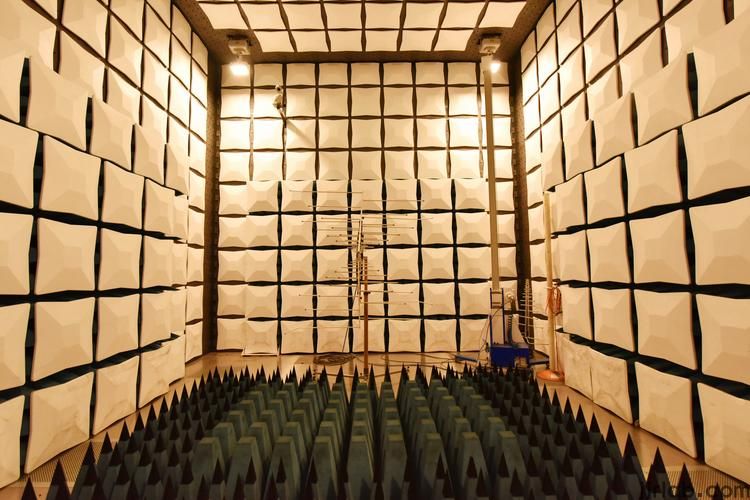
9.Test Environment: Anechoic chamber, repeated tests under different temperature and voltage conditions (high/low temperature, nominal voltage, minimum/maximum supply voltage) to verify RF performance under all working conditions.
Differences Between EN 300 440, EN 300 328, and EN 300 220
Many customers easily confuse these SRD standards. Here is a direct comparison:
One-sentence distinction: Look at the operating frequency band, and simultaneously determine whether the product is a general SRD or Bluetooth/WiFi.
EN 300 440 Certification Process
1.Confirm the product frequency band and type, and determine if EN 300 440 is applicable.
2.Select an RF laboratory with EU-recognized qualifications (e.g., JJR LAB).
3.Sample preparation (2~3 prototypes, including antennas and user manuals).
4.Execute EN 300 440 RF testing; synchronously perform supporting EN 301 489 EMC and safety testing.
5.Obtain test reports.
6.Compile the Technical Construction File (TCF).
7.Issuance of the eu authorized representative and Declaration of Conformity (DoC), and affix the CE mark to the product.
8.Place the product on the EU market.
Common FAQs
Q1: Is EN 300 440 an EMC standard?
A: No. EN 300 440 is an RF spectrum standard that evaluates radio transmission performance; EMC (Electromagnetic Compatibility) requires the supporting EN 301 489 series tests.
Q2: Does a 24GHz human body sensing radar need EN 300 440?
A: Yes, a 24GHz motion detection radar belongs to the 1–40GHz SRD category, and its ce red RF section uses EN 300 440.
Q3: Can a ce certificate be obtained solely with EN 300 440?
A: No. CE certification under the RED Directive requires simultaneous compliance with: RF (EN 300 440) + EMC + Electrical Safety + Health Assessment. Only after fully satisfying all of these can a DoC be issued.
Q4: Is EN 300 440 V2.1.1 still valid?
A: V2.1.1 is the current harmonized version. It is listed in the EU Official Journal (OJ) and can be used for the presumption of conformity under the RED Directive.
Conclusion
EN 300 440 is a harmonized RF standard developed by ETSI for Short Range Devices (SRD) operating in the 1GHz to 40GHz range. It is used to meet the RF spectrum requirements of Article 3(2) of the eu red directive. It is an essential RF testing standard for CE certification when exporting microwave sensing radars, high-frequency RFIDs, and general 2.4G/5.8G SRD products to the EU. Testing priorities include output power, occupied bandwidth, frequency tolerance, spurious emissions, LBT, and other RF indicators. When selecting standards, it is crucial to carefully distinguish between EN 300 440, EN 300 328, and EN 300 220 to avoid certification rework due to selecting the wrong standard.
Email:hello@jjrlab.com
Write your message here and send it to us
 How to get an EN 300 440 Test Report
What is EN 300 440 Compliance Certification?
 Detailed Explanation of CE Certification for SRD 1
 How to get an EN 301 893 test report?
 What is EN 301 893 Certification Compliance
 What is the CSA 62368-1 Standard?
 Canadian Pacifier Compliance SOR/2016-184
 US Agent for FCC & EC REP for CE: Compliance R
Leave us a message
24-hour online customer service at any time to respond, so that you worry!