



Australian Electrical EESS and RCM Compliance
What is EESS Registration?
The EESS (Electrical Equipment Safety System) is a framework for the nationally consistent regulation of household electrical equipment. The EESS operates under an Inter-Governmental Agreement (IGA) and is managed by the signatory Ministers responsible for EESS regulation and policy oversight through the Ministerial Oversight Committee (MOC), the Standing Committee of Officials (SCO) responsible for EESS operations, and the SCO Equipment Working Group (SCO EWG) which handles day-to-day technical advice and coordination.
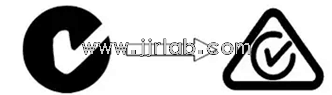
The EESS utilizes a single compliance mark (the Regulatory Compliance Mark — RCM) and provides a single national access point for Responsible Suppliers within Australia and New Zealand to register themselves and the electrical equipment they sell. The EESS features a national publicly accessible database for buyers (wholesalers, retailers, and the general public) to search for information on registered Australian and New Zealand Responsible Suppliers and registered equipment.
In addition to obtaining a certificate from a JAS-ANZ accredited body, civilian low-voltage electrical products (50V-1000Vac / 120V-1500Vdc) exported to Australia and New Zealand must also complete registration under the EESS framework and affix the RCM mark. Failure to do so carries significant risks regarding customs clearance, sales, and potential penalties.
Product Risk Levels and Compliance Requirements
The EESS categorizes products into three levels based on risk, with different handling procedures for each:
Newly Controlled Products and Compliance Deadlines
(Based on the AS/NZS 4417.2:2020+A1:2026 amendment)
Before February 12, 2027 (Approx. 6-month window)
Inverter Welding Machines: Must comply with the IEC 60974-1 standard.
Heat Pump Water Heaters (models without heating function): Classified as Level 2 (Medium Risk) and must be registered.
Cable Extension Sets: Classified as Level 2 (Medium Risk), must comply with the AS/NZS 3199 standard, and must be registered.
Before February 12, 2028
EV Charging Stations: Classified as Level 3 (High Risk); must be certified and registered.
Battery Energy Storage Systems (BESS): Classified as Level 3 (High Risk) and are subject to the SA TS 5398 standard.
Portable Power Stations: Must comply with the AS/NZS 4763 standard.
Note: EESS registration is only open to local Responsible Suppliers in Australia or New Zealand (who must hold an ABN or IRD tax number). Overseas manufacturers or traders cannot operate directly and must entrust a qualified local entity to act as the compliance subject.
Regulatory Compliance Mark (RCM) Information & Certification Body Interpretation
The RCM is a mark only and covers electrical safety and/or EMC.
There is no rcm certificate – if a company is trying to sell you one, it is a scam!
Importers and manufacturers located in Australia and NZ must register to use the RCM.
The RCM does not apply to commercial or industrial products for electrical safety.
The electrical safety requirements for using the mark are set out in the Australian Standard AS/NZS 4417.
Even if a product is outside the scope of the RCM for electrical safety, it might still be required to be marked with the RCM for EMC.
If you have an saa certificate and you comply with the EMC regulations and all of the provisions of AS/NZS 4417, you can mark the RCM on the product.
It is impossible for foreign companies to register for RCM directly, and it is not required.
Foreign manufacturers have their Level 3 certificates automatically uploaded to the EESS database when they receive an saa certificate issued under the RECS. The importer can then link their registration to the certificate.
If an application is made under RECS for electrical safety, Level 1 and Level 2 certificates are also uploaded.
Email:hello@jjrlab.com
Write your message here and send it to us
 What is the CA Prop 65 Warning Label?
 2026 Amazon TIC Mandatory Audit Catalog
 Australian Electrical EESS and RCM Compliance
 How to get Vietnam CR Certification
 What is a UN 38.3 Battery Test Report
 What is the UN38.3 Certification Test?
 What is a Lithium Ion Battery Certification
 What is a UN38.3 Test Certificate?
Leave us a message
24-hour online customer service at any time to respond, so that you worry!