



Export Product Certifications for the U.S. Market
FDA Certification: U.S. Food and Drug Administration Registration
What is FDA Certification?
FDA (U.S. Food and Drug Administration) registration is not a traditional “certification,” but rather a registration and filing process required by the regulatory authority. Whether it's cosmetics, medical devices, food, or products like laser equipment and LED lighting, companies must register with the FDA before exporting to the U.S. and ensure compliance with U.S. health and safety standards. Certain high-risk products may also require testing by designated labs before completing registration.
Which Products Must Register with the FDA?
- Food-related products: Processed foods, packaging materials, glass and ceramic containers, food-grade plastics, beverages, and food additives.
- Medical and health: Medical devices such as masks and protective equipment, prescription and over-the-counter drugs.
- Consumer goods: Cosmetics (especially those containing color additives), laser-emitting products, tobacco products, animal drugs, and pet food.
FDA Registration Categories & Process
① Cosmetic Registration
Involves two steps: factory registration and product listing. First, apply for an account and submit factory details. Once confirmed by the FDA, submit the ingredient listing (more ingredients = higher cost). Upon success, you'll receive a facility registration number and CPIS ingredient listing number (available via login).
② Food FDA Registration
Three key steps:
- Confirm whether the product falls under FDA regulation.
- Appoint a U.S. Agent.
- Prepare company and product documentation in English.
③ Medical Device Registration
Requires both establishment registration and product listing.
Processing Time: 2–4 weeks. Plan ahead.
FCC Certification: Electromagnetic Compatibility Access for Electronics
What is FCC Certification?
FCC (Federal Communications Commission) certification is a mandatory requirement for electronic products entering the U.S. market. It applies to devices operating within the 9KHz to 3000GHz frequency range, focusing on controlling electromagnetic interference (EMI) and ensuring compliance in radio wave transmission.
Applicable Product Categories:
- Wireless devices: Wi-Fi routers, Bluetooth headphones, mobile phones, RFID tags.
- Consumer electronics: Computers, TVs, speakers, smart speakers.
- Industrial & security: Remote controls, surveillance cameras, wireless modules.
Types of FCC Certification:
① fcc sdoc (Supplier’s Declaration of Conformity)
For devices without wireless functions (e.g., monitors, keyboards). Requires emc testing in an FCC-recognized lab. The manufacturer retains the declaration—no direct fcc approval needed.
② fcc id Certification (for wireless devices)
Applies to devices with wireless features. Requires both RF and emc testing and submission to an FCC-authorized TCB (Telecommunication Certification Body). Upon approval, the product must display a unique FCC ID, which is searchable on the FCC website.
Processing Time:
- Non-wireless devices: 5 business days
- Wireless devices: 14 business days
CPC Certification: Safety Compliance "ID" for Children's Products
What is CPC Certification?
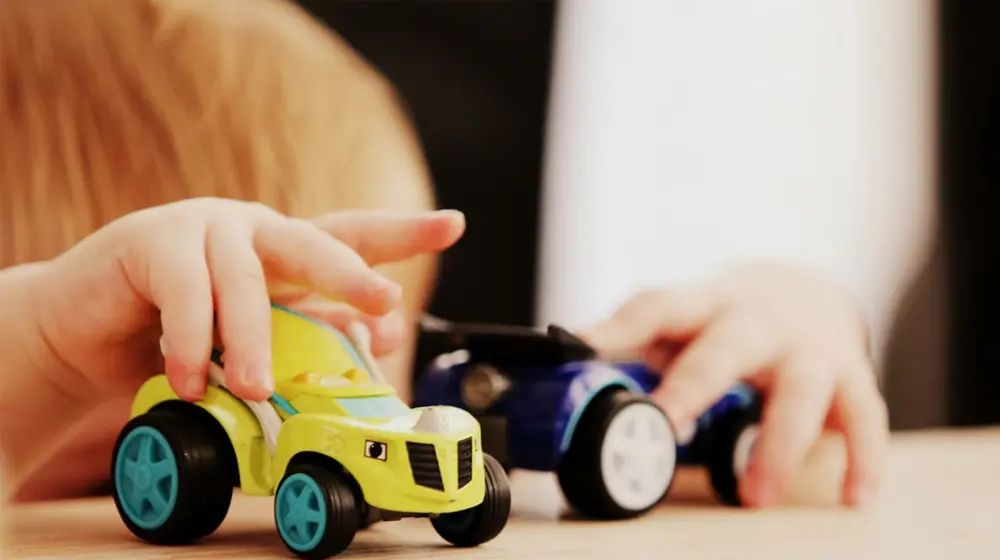
CPC (Children's Product Certificate) is a mandatory compliance document issued by the U.S. Consumer Product Safety Commission (CPSC) for consumer products intended for children aged 12 and under. Products must undergo testing at a CPSC-accredited third-party lab, which then issues the compliance declaration.
Key Products to Focus On:
By principle, all products for children under 12 must be certified. Common categories include:
- Toys: General toys, electric toys
- Mother & baby products: Children's clothing, baby bottles, car seats
Note: To avoid CPC certification, explicitly label the product as "for ages 12 and up" and avoid terms like “baby” or “under 12 years old” in the description.
Processing Time:
5 business days. Confirm testing standards in advance (e.g., ASTM F963 Toy Safety Standard).
UL certification: Authoritative Endorsement of Product Safety
What is UL Certification?
UL (Underwriters Laboratories) is a century-old U.S. safety certification body focused on evaluating the electrical safety, fire resistance, and mechanical hazards of products. Products that pass UL certification have undergone rigorous testing in terms of materials and design.
Products Requiring UL Certification:
- Electronics & Appliances: Chargers, power adapters, refrigerators, microwaves
- Lighting Equipment: LED lights, cables
- Industrial & Building Materials: Lithium batteries, fireproof materials, motor controllers
Processing Time:
7 business days
Email:hello@jjrlab.com
Write your message here and send it to us
 What is the Difference Between EU PPWR and EPR?
 What is Japanese METI Registration
 Exporting to Saudi Arabia Saber Certification: PCo
 How to get a Saudi Arabia MSDS?
 Do I Still Need PPWR Compliance if I Have RoHS?
 Amazon Children's Toys Direct Validation Mandatory
 UL 4200A-2026 Compliance Standard for Button/Coin
 Guide to the EN18031 Testing Standard
Leave us a message
24-hour online customer service at any time to respond, so that you worry!