



FCC, CE & EMC Compliance for Printers Exported to EU & U.S.
As a typical office and household information technology equipment (ITE), printers integrate precision machinery, optical scanning, laser imaging (for laser printers), heating components, and wireless communication modules. Due to their structural complexity, the European and U.S. markets impose stringent access requirements on their safety, energy efficiency, and environmental performance. This article provides a detailed overview of the core certification systems for printers exported to Europe and the U.S.
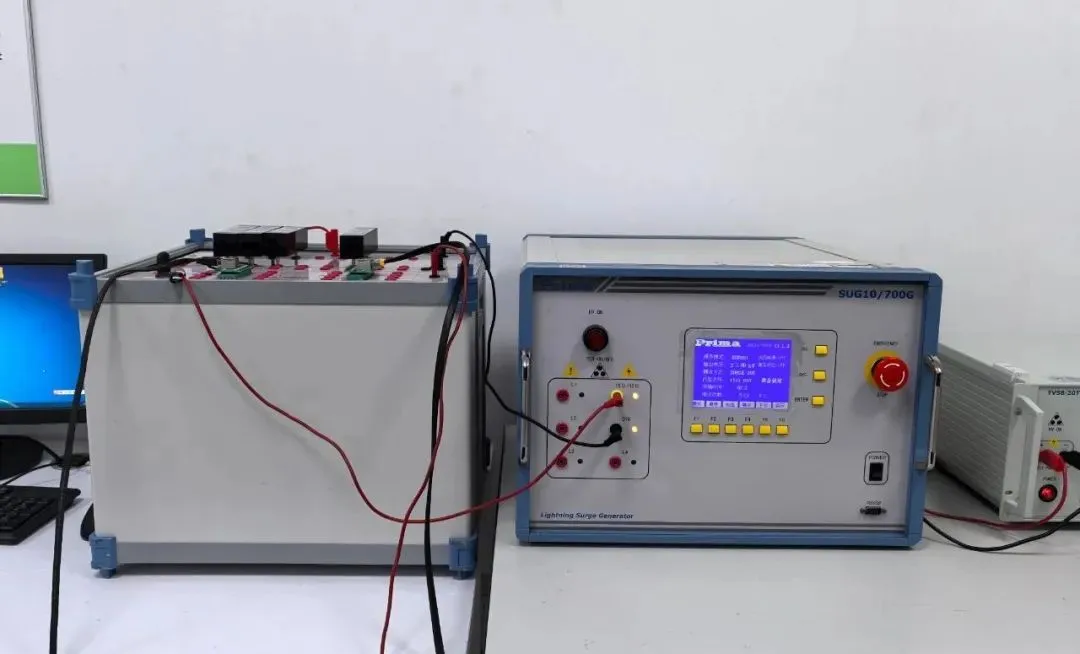
Core Mandatory Access Requirements for European and U.S. Markets
Printers exported to Europe and the U.S. must comply with legal frameworks spanning multiple dimensions.
1. European Market: CE certification and Relevant Directives
CE certification serves as the "entry permit" for products to access the EU market. Printers must meet the following directives:
① LVD (low voltage directive): Ensures electrical safety.
② EMC (Electromagnetic Compatibility Directive): Guarantees that equipment does not generate electromagnetic interference and has anti-interference capabilities.
③ RoHS Directive: Restricts the use of hazardous substances in electrical and electronic equipment.
④ erp directive: Mandates requirements for standby power consumption.
2. U.S. Market: FCC, UL and Energy Efficiency Requirements
① FCC Certification: A mandatory electromagnetic compatibility requirement for the U.S. market. Printers must comply with fcc part 15 standards.
② Safety Certification: While UL or etl certification is not legally mandatory, mainstream U.S. distribution channels and insurance agreements generally require products to bear the safety mark issued by a NRTL (Nationally Recognized Testing Laboratory).
Core Technical Specifications and Standards for Printer Certification
Given the unique characteristics of printers, several core technical indicators require focused attention during testing.
1. Core Safety Standard: EN/IEC/UL 62368-1
Printers currently fully comply with the EN/IEC/UL 62368-1 standard. Key testing areas include:
① Safety of internal laser components (e.g., laser classification for laser printers).
② Temperature rise protection for heating and fusing components.
③ Safety guards for mechanical moving parts.
④ Reliability of power supply modules.
2. Electromagnetic Compatibility (EMC)
Printers generate high-frequency signals during operation and must pass EN 55032 (for Europe) or fcc part 15b (for the U.S.) tests. For printers equipped with Wi-Fi or Bluetooth functions, additional wireless radio frequency (RF) testing is required, in accordance with the RED Directive (for Europe) or fcc id (for the U.S.).
3. Chemical and Environmental Testing
① In addition to ROHS Testing for electronic components, printer inks or toners must comply with the reach regulation.
② For the European market, printers are also subject to the WEEE Directive (Waste Electrical and Electronic Equipment), which mandates mandatory product recycling responsibilities.
Analysis of Certification Process, Costs and Timelines
Understanding the certification procedures and associated costs is critical for enterprises to formulate export plans for printers targeting Europe and the U.S.
1. Certification Process Overview
1. Technical Pre-assessment: JJR Laboratory conducts a pre-assessment based on printer specifications (e.g., inkjet, laser, thermal).
2. Sample Testing: Comprehensive testing is performed, covering safety, EMC, energy efficiency, and chemical analysis.
3. Reporting and Certification: Upon passing all tests, a formal test report is issued. The laboratory assists enterprises in completing the DOC (Declaration of Conformity) self-declaration or applying for certification from authorized bodies.
2. Cost and Timeline Factors
① Cost Variables: Certification costs are heavily influenced by product functions. For example, printers with wireless capabilities incur additional RF testing fees compared to standard wired models; laser printers require extra costs for laser safety classification assessment.
② Typical Timeline: A full set of compliance testing for both European and U.S. markets generally takes 4 to 6 weeks.
Email:hello@jjrlab.com
Write your message here and send it to us
 FCC Certification Requirements and Costs for Consu
 EMC Testing Lab IEC 60601 Medical Electrical Safet
 What are the FCC Testing Requirements for Bluetoot
 Australia RCM Certification for Radio Devices
 RED Cybersecurity EN 18031 Standard
 Compliance Testing for EMC
 What is Amazon Toy Compliance?
 What is Cytotoxicity ISO 10993-5
Leave us a message
24-hour online customer service at any time to respond, so that you worry!