



How to Test IP68 Rating
As electronic devices are used in increasingly complex environments, waterproof performance has become a critical indicator of product reliability. Whether it is smart wearables, automotive electronics, LED lighting, communication equipment, or new energy storage and outdoor power supplies, it is essential to verify the dust and water resistance of their enclosures.
How is the IP68 Waterproof Rating Classified?
The IP protection rating consists of two digits, defined in the standards GB/T 4208-2017 Degrees of Protection Provided by Enclosures (IP Code) and iec 60529:1989+A1:1999+A2:2013.
① The first digit (6): Indicates dust resistance. Grade 6 means "complete dust tightness", i.e., no dust ingress.
② The second digit (8): Indicates water resistance. Grade 8 means "protection against continuous immersion in water", i.e., the device can remain functional when immersed in water for an extended period under the pressure and duration specified by the manufacturer.
Comparison:
① IP67: Can be immersed in 1-meter-deep water for 30 minutes without water ingress.
② IP68: Features a higher waterproof rating, usually capable of long-term immersion in water at a depth of 1.5m to 3m without water ingress (test depth and duration are agreed upon by the manufacturer and testing institution).
Therefore, IP68 represents the highest level of dust and water resistance in current testing standards.
IP68 Waterproof Rating Test Standards and Methods
Test Standards
① GB/T 4208-2017 Degrees of Protection Provided by Enclosures (IP Code) (Domestic Standard)
② IEC 60529:1989+A1:1999+A2:2013 (International Standard)
③ EN 60529:1992+A1:2000+A2:2013 (EU Standard)
General Guidelines:
① Products sold domestically adopt the GB/T 4208 standard and issue Chinese test reports.
② Exported products adopt the IEC 60529 standard and issue English test reports.
Test Methods
IP6X Dust Resistance Test
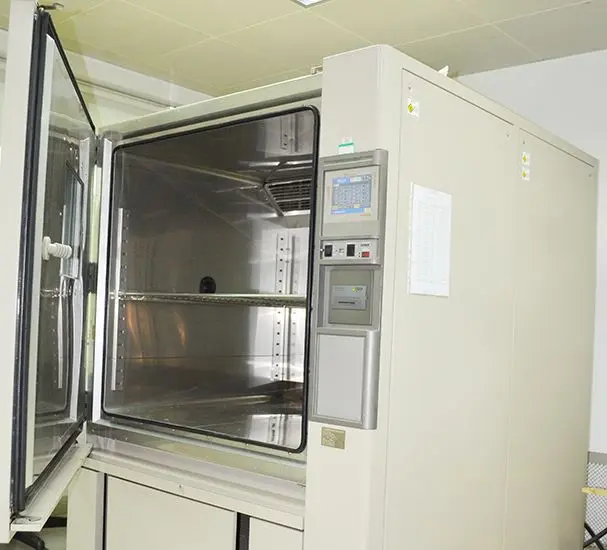
1. Place the device in a dust test chamber (using talcum powder or equivalent dust).
2. Operate the device under negative pressure suction conditions for 6 hours.
3. Inspect the interior of the enclosure for dust ingress or any functional impact caused by dust.
More:ingress protection testing
IPX8 Waterproof Resistance Test
1. Immerse the test sample in water at the specified depth (commonly 1.5m to 3m) and maintain the immersion for 30 minutes to 1 hour.
2. Inspect the sample for normal functionality, intact seals, and no traces of water ingress inside the enclosure.
Email:hello@jjrlab.com
Write your message here and send it to us
 What is Cytotoxicity ISO 10993-5
 What is Hemocompatibility Testing ISO 10993?
 What is ISO 10993-5 Tests for In Vitro Cytotoxicit
 Electronic Product IEC 62368-1 Safety Testing
 What is an EU SDS (Safety Data Sheet)?
 What is the CA Prop 65 Warning Label?
 2026 Amazon TIC Mandatory Audit Catalog
 Australian Electrical EESS and RCM Compliance
Leave us a message
24-hour online customer service at any time to respond, so that you worry!