



Introduction to 5G NR FCC Certification Testing
What is fcc certification, and why is it necessary?
FCC (Federal Communications Commission) certification is a licensing requirement for radio equipment entering the U.S. market, ensuring the quality and legality of devices. FCC certification testing applies to electronic and digital products bound for the U.S. market, especially communication devices, which must pass tests at government-authorized laboratories per FCC technical standards. Upon completing the tests, devices receive an FCC certification ID, a unique identifier proving the device has met strict fcc testing standards, including RF signal strength and safety. This certification allows devices to be legally sold and used in the U.S. market. fcc certification is equally crucial for 5G devices as a standard for market access.
How to Set Up an fcc test Station
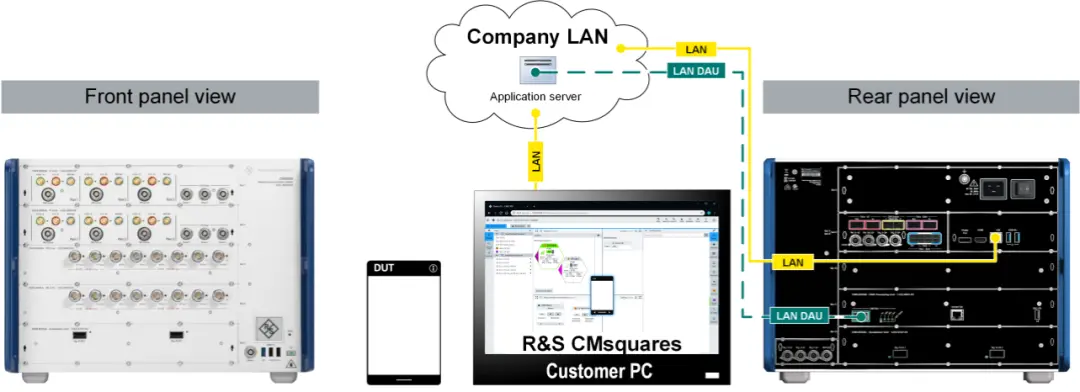
Both pre-testing in labs and certification testing require a complete FCC test system. Below, we outline how to set up an FCC testing environment with necessary testing instruments.
Steps for FCC Certification:
1. Select test samples
2. Pre-certification testing during the development phase
3. Register with the FCC
4. Laboratory certification testing
5. Certification and record by the Telecommunications Certification Body (TCB)
6. FCC grants equipment authorization
System Configuration:
- CMX500: OBT (Basic license)
- FSVA3030/3044 or FSW26.5 or FSW50 (Basic spectrum mode)
- RSCN ATE FCC TEST tool
Key Technical Metrics for FCC Testing on 5G Terminal Devices
Listed below are key FCC test cases from CFR TITLE47, Part 27 & Part 2:

1. RF Output Power Testing
Per CFR TITLE47 PART2.1046/27.50(h)(2), the device is set to maximum power transmission to measure output on specified channels, ensuring it does not exceed limits. Using an OBT tester with the appropriate modulation and power settings, results are analyzed.
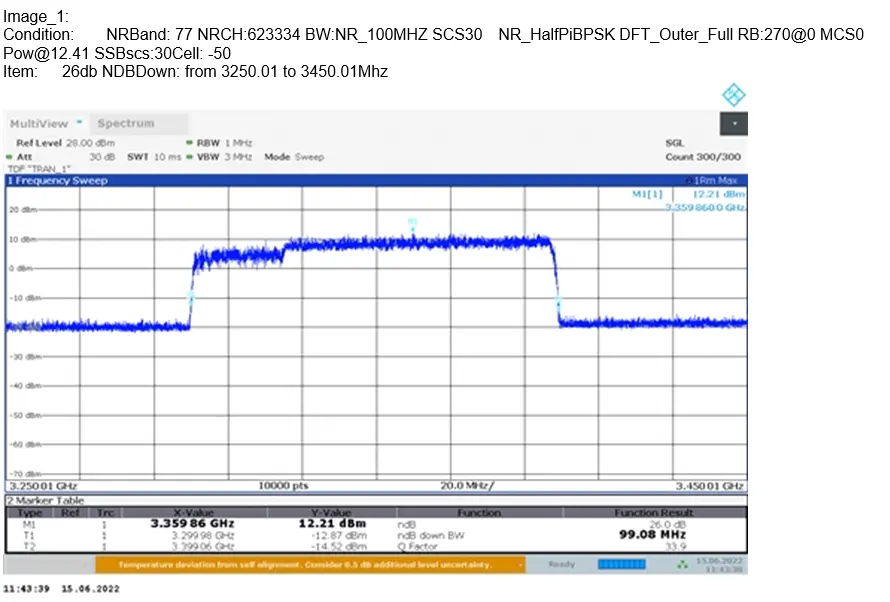
2. Occupied Bandwidth (OBW)
Per CFR TITLE47 PART2.1049, this test measures the actual bandwidth occupied by the transmitted signal to verify it remains within allocated channels, preventing interference with adjacent bands. The test is completed using a spectrum analyzer.

3. Frequency Stability Test
Per CFR TITLE47 PART2.1055/27.54, this test assesses frequency stability by measuring frequency error, with an OBT tester providing results.

4. Conducted Spurious Emissions
Per CFR TITLE47 PART2.1051/27.53(m)(4)(6), this test checks unwanted electromagnetic energy conducted through device wires (such as power or signal lines) that could interfere with other devices. It is performed using spectrum scans.

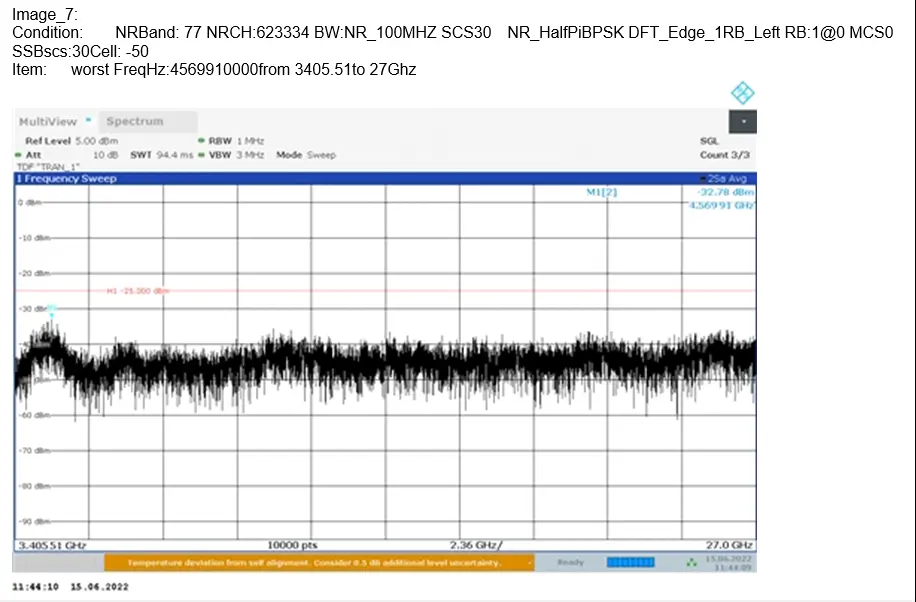
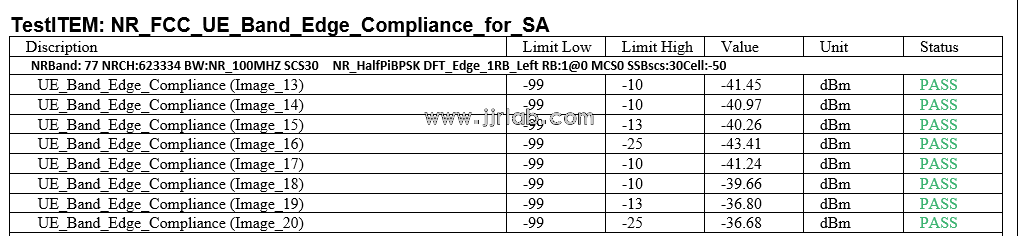
5. Band Edge Testing
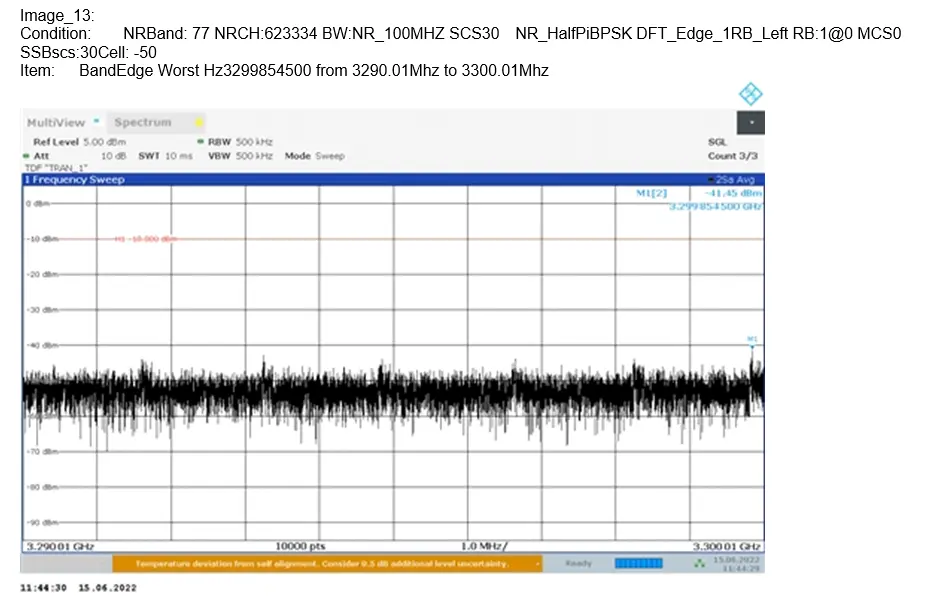
Per CFR TITLE47 PART2.1051/27.53(m)(4)(6), this test ensures emissions at the edge of frequency bands meet specified limits. Spectrum analyzers are used to confirm compliance with FCC's band requirements.
6. Peak-to-Average Ratio (PAR)
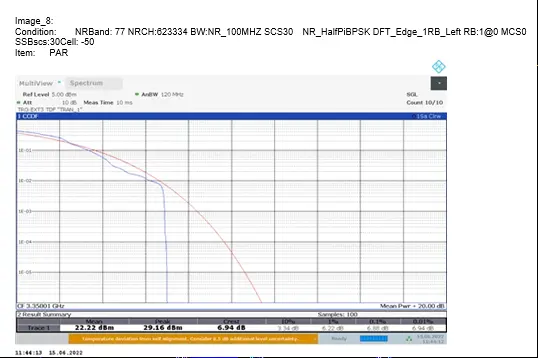
Known as Crest Factor, this ratio assesses the relationship between the signal’s peak instantaneous amplitude and its effective value (RMS). High PAR values indicate significant transient components in the signal, potentially leading to interference or added circuit stress. PAR testing uses the spectrum analyzer’s CCDF (Complementary Cumulative Distribution Function).

CCDF Definition:
CCDF(x) = P(X > x), where X represents signal instantaneous power/amplitude, and x is a given threshold.
7. Modulation Testing (EVM)
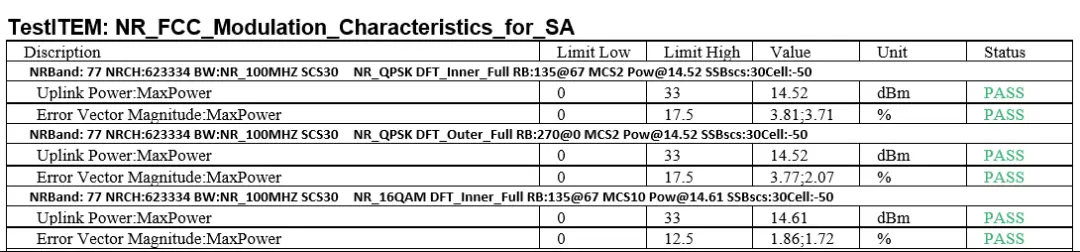
This test measures Error Vector Magnitude (EVM), which evaluates modulation signal quality, especially in digital communication systems. A lower EVM indicates better signal quality, whereas a high EVM may signal significant distortion.
China JJR Laboratory provides FCC certification testing services for electrical equipment with complete qualifications. Welcome to consult!
Email:hello@jjrlab.com
Write your message here and send it to us
 California 65 Testing Service Consultation
 REACH Chemical Testing Services
 Electronic Vaporizers EU TPD / US PMTA / UK MHRA
 ISO 10993 Biocompatibility Standards
 Medical TPV ISO 10993 Biocompatibility Testing
 FDA Requirements for Biocompatibility under ISO 10
 Amazon Spain WEEE Compliance Deadline: September 3
 What is the ASTM F2264 Certification Test?
Leave us a message
24-hour online customer service at any time to respond, so that you worry!