



What is Electrical RCM Certification?
RCM certification is a marking system introduced by Australia and New Zealand to unify electrical product standards. This trademark, owned by regulatory authorities in both countries, indicates that a product complies with both safety and electromagnetic compatibility (EMC) requirements, making it mandatory. Electrical products under rcm certification are categorized as either regulated or non-regulated. Not all products bearing the rcm mark require registration. Non-regulated products do not need registration, while Level 3 electrical products, such as power adapters and vacuum cleaners, must be registered. There are currently 56 high-risk categories for Level 3 products.

Typically, the RCM mark must be placed on the product's label. Previously, it was necessary to display the distributor’s number, but the new RCM standard no longer requires this. This requirement was introduced on March 1, 2013, with a three-year transition period, and became mandatory on March 1, 2016. Manufacturers must strictly adhere to the testing standards.
Applicable Countries
Australia, Nauru, Fiji, Solomon Islands, Kiribati, Federated States of Micronesia, Tuvalu, New Zealand, Tonga, Marshall Islands, Vanuatu, Papua New Guinea, and Samoa.
What does Australian RCM Certification Include?
It must pass the following tests:
1. emc testing (electromagnetic compatibility), i.e., C-Tick report;
2. Safety testing;
3. EMR testing (electromagnetic radiation);
4. Telecommunications testing;
5. Radio frequency communication testing (New Zealand’s Radio Spectrum Management (RSM)).
Australian RCM Certification Scope
Australia classifies electrical product risk levels into Level 1 (low risk), Level 2 (medium risk), and Level 3 (high risk).
1. Level 1 Certification: Usually applies to DC-powered products, requiring an emc report for direct RCM (C-Tick) application.
2. Level 2 Certification: Applies to AC-powered products, requiring both EMC and safety reports for RCM (C-Tick) application.
3. Level 3 Certification: Requires EMC report, safety report, and saa certificate to apply for RCM certification and EESS registration.
All electrical products with a voltage range of 50V to 1000V (AC) and 120V to 1500V (DC) must comply with Australian electrical safety laws.
Basic certification Information:
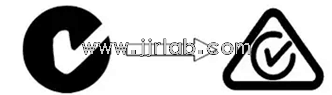
- As of March 1, 2016, C-Tick, A-Tick, and RCM have been consolidated into a single regulatory compliance mark, RCM.
- Products must comply with both electrical safety and EMC standards.
- Mandatory: Yes.
- Factory inspection: No.
- Local representative: Required (the certificate must be applied for in Australia).
- Registration in the national database is required.
- Certificate validity: 2, 3, or 5 years.
RCM is an Australian safety certification. JJR, an ISO17025-certified lab in China, is recognized by the Australian government for IEC and AS/NZS safety projects, allowing for saa certification. Due to mutual recognition agreements between Australia and New Zealand, products certified in Australia can be sold in New Zealand without additional testing.
Email:hello@jjrlab.com
Write your message here and send it to us
 EMC Testing Lab IEC 60601 Medical Electrical Safet
 What are the FCC Testing Requirements for Bluetoot
 Australia RCM Certification for Radio Devices
 RED Cybersecurity EN 18031 Standard
 Compliance Testing for EMC
 What is Amazon Toy Compliance?
 What is Cytotoxicity ISO 10993-5
 What is Hemocompatibility Testing ISO 10993?
Leave us a message
24-hour online customer service at any time to respond, so that you worry!