



What is EN 300 422 Compliance Certification?
EN 300 422 is used to regulate the radio frequency (RF) and spectrum performance of audio PMSE (Programme Making and Special Events) equipment operating in the 25 MHz to 3 GHz range, such as wireless microphones, in-ear monitors, tour guide systems, and assistive listening devices. When products enter the European Union market, it typically serves as one of the core standards to prove the "effective use of the radio spectrum" under the red directive 2014/53/EU. Combined with EMC and safety requirements, it helps complete the CE certification.
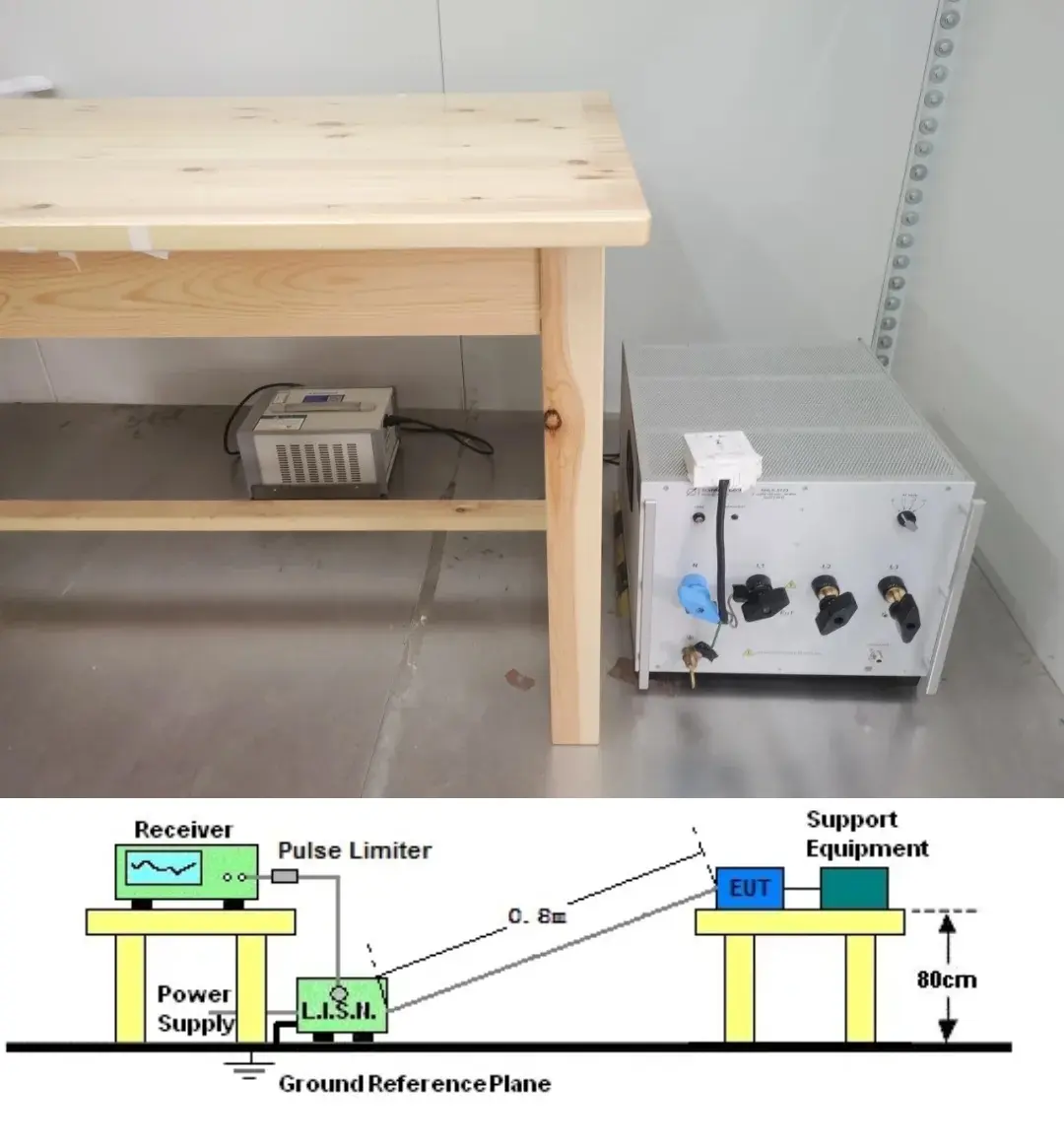
What Exactly is EN 300 422?
EN 300 422 (ETSI EN 300 422) is the European harmonized standard for wireless audio equipment.
The standard is typically divided into:
Note: EN 300 422 itself is not a certificate issued by a certification body, but rather a specification that dictates "which standard to use for testing, what to test, and what the limits are."
What is its Relationship with CE Certification and the RED Directive?
Many clients ask: "Do I need EN 300 422 certification, or CE certification?" The correct relationship is:
1.RED Directive 2014/53/EU = EU legal level requirement
2.EN 300 422 = Harmonized standard used to prove compliance with Article 3.2 "effective use of spectrum" of the RED Directive
3.ce mark = Conformity mark after the product complies with applicable directives such as RED, LVD, and EMC
4.Test Report / DoC = Evidence in technical documentation used to prove compliance
Therefore, when the industry says "doing EN 300 422 certification," it usually means:Performing RF testing according to EN 300 422 and including it in the CE-RED compliance package.
Which Products Use EN 300 422?
Applicable equipment includes:
1.Handheld wireless microphones
2.Bodypack/lavalier wireless microphones
3.In-Ear Monitoring systems (IEM)
4.Tour Guide Systems
5.Assistive Listening Devices (ALDs)
6.Wireless Multichannel Audio Systems (WMAS)
7.Professional broadcasting/performance audio links
Frequency Range: Typically covers wireless audio equipment operating from 25 MHz to 3 GHz.
What Does EN 300 422 Mainly Test?
Transmitter Items
1.Rated output power / EIRP / ERP
2.Frequency stability
3.Necessary bandwidth
4.Occupied Bandwidth (OBW)
5.Out-of-band emissions
6.Spurious emissions
7.Harmonics and parasitic emissions
Receiver-related Items
1.Receiver sensitivity
2.Adjacent channel selectivity
3.Blocking immunity
4.Local oscillator leakage
5.Performance differences between Class A and Class B receivers
Supporting Standards
EN 300 422 does not cover all compliance requirements:
1.EMC: Often refers to EN 301 489-9
2.Safety: Audio/AV equipment often refers to EN 62368-1
3.Low Voltage: E.g., applicable LVD 2014/35/EU
4.EMC Directive: E.g., applicable EMC 2014/30/EU
EU Frequency Planning
Even if a device passes EN 300 422, it does not mean it can be "used freely anywhere in Europe." Common EU wireless microphone frequency bands:
Warning: Countries like Germany, France, the UK, Spain, and Italy have different frequency rules. Frequency compliance review for the target country must be done before export.
EN 300 422 Compliance Process
1.Confirm Product Category: Wireless Microphone / IEM / ALD / WMAS
2.Confirm Sales Country Frequency Bands: Avoid cleared frequency bands like 700 MHz
3.Sample Finalization: Lock in the frequency range, power, and modulation type
4.JJR Lab Testing: EN 300 422 + EN 301 489-9 + Safety Standards
5.Technical Documentation: Circuit diagrams, RF reports, user manuals, label drawings
5.Declaration of Conformity (DoC): Based on the RED Directive
6.Affix CE Mark: Must be consistent across the packaging, device body, and manual
7.Market Surveillance Preparation: eu authorized representative, UDI/model traceability, after-sales compliance
FAQ
Is EN 300 422 a mandatory certification? It is not a mandatory "certification" in itself. Rather, when wireless audio equipment enters the EU, it usually needs to prove spectrum compliance under the RED Directive; EN 300 422 is the most commonly used harmonized standard to do so.
What is the difference between EN 300 422-1 and -2?
-1: Technical characteristics, test methods, Class A receivers.
-2: The harmonized standard part used to demonstrate the essential requirements of Article 3.2 of the RED/R&TTE Directive.
What else is required to export wireless microphones to the EU? RED RF Testing + EMC + Safety + DoC + CE Mark + EU Authorized Representative (if applicable).
The US uses fcc, does the EU use EN 300 422? Wireless microphones in the US follow fcc part 15 / Part 74 and other rules; the EU follows RED + ETSI EN 300 422. They are not the same regulatory system.
Email:hello@jjrlab.com
Write your message here and send it to us
 Introduction to the EN 300 422 Standard
 How to get an EN 300 422 Test Report
What is EN 300 422 Compliance Certification?
 How to get an EN 300 220 Test Report
 How to get an EN 300 440 Test Report
 What is EN 300 440 Compliance Certification?
 Detailed Explanation of CE Certification for SRD 1
 How to get an EN 301 893 test report?
Leave us a message
24-hour online customer service at any time to respond, so that you worry!