



How to get an EN 300 422 Test Report
An EN 300 422 test report cannot be "purchased directly." It must be issued by a laboratory with wireless radio frequency (RF) testing capabilities after conducting RF, EMC, safety, and RF exposure tests on equipment such as wireless microphones, hearing aid/tour guide systems, in-ear monitors, and Audio PMSE, in accordance with the ETSI EN 300 422 series of standards.
What is EN 300 422? Which Products Need It?
EN 300 422 is a harmonized standard published by ETSI. Its full name covers Wireless Microphones / Audio PMSE up to 3 GHz. It is used to evaluate the compliance of audio wireless equipment below 3 GHz in terms of spectrum utilization, receiver performance, spurious emissions, etc. It primarily supports Article 3.2 (effective use of the radio spectrum) of the eu red directive 2014/53/EU.
Common Applicable Products:
1.Wireless Microphones / Bodypack Transmitters
2.Receiving Hosts / Multi-channel Wireless Microphones
3.In-Ear Monitoring Systems
4.Tour Guide Systems
5.Assistive Listening Devices (ALD)
6.Wireless Multichannel Audio Systems (WMAS)
Tip: If the product also features Bluetooth/Wi-Fi, it usually needs to be supplemented with EN 300 328 and EN 301 893. If it contains a battery, IEC/EN 62133 and UN 38.3 must also be considered.
What is the Relationship Between EN 300 422 and CE certification?
EN 300 422 ≠ ce certificate. It is just one of the harmonized standards under the RED Directive. The correct relationship is:
1.The product is an EU radio equipment → Governed by RED 2014/53/EU
2.RF spectrum requirements → Apply EN 300 422 series
3.EMC requirements → Commonly use EN 301 489-1 / EN 301 489-9
4.Safety requirements → Commonly use EN iec 62368-1
5.RF exposure → en 62479 / EN iec 62311, etc.
6.The laboratory issues the EN 300 422 test report
7.The manufacturer/importer issues the Technical File + DoC
8.The product is affixed with the ce mark
Therefore, when a client asks "how to get an EN 300 422 report," they are essentially asking "how does my wireless audio equipment achieve EU RED RF compliance."
EN 300 422 Testing Process
Confirm Whether the Product Actually Needs EN 300 422
First, check 4 parameters:
1.Operating Frequency: 470–694 MHz, 863–865 MHz, VHF, UHF, <3 GHz
2.Modulation Method: Analog FM / Digital / Hybrid
3.Equipment Type: Transmitter, Receiver, Class A / Class B Receiver
4.Market: EU / EEA, or countries referencing this standard
If the equipment is a 2.4 GHz digital audio link, it might be more suitable for EN 300 328; if it is a PMSE audio device below 3 GHz, EN 300 422-1 / -2 / -3 / -4 should be prioritized.
Prepare Technical Documents
Laboratories typically require:
1.Product Specifications
2.Frequency List / Channel Table
3.Transmit Power Table
4.Circuit Schematics
5.PCB Layout
6.BOM (Bill of Materials) for critical components
7.Antenna Specifications
8.RF Module Information
9.Firmware Version and Test Mode Instructions
10.English User Manual
11.Label Draft
12.External / Internal Photos
13.Power Adapter and Battery Information
If the documents are incomplete, formal testing is very likely to require rework.
Conduct Pre-testing (Strongly Recommended)
Pre-testing is not mandatory, but it can be a lifesaver:
1.Whether the transmit power exceeds the limit
2.Whether the occupied bandwidth is too wide
3.Whether the Adjacent Channel Power / ACPR passes
4.Whether spurious emissions are too high
5.Whether receiver blocking fails
6.Whether multi-channel intermodulation collaPSEs
The pre-testing cycle generally takes a few days to 1–2 weeks; modifying filters, shielding, crystal oscillators, and modulation parameters before formal testing is 10 times cheaper than modifying them after mass production.
Send Samples for Formal Testing
Typical Prototype Configuration:
1.Transmitter: Test low/middle/high channels respectively
2.Receiver: Typical working modes
3.Multi-channel System: Test multiple transmitters working simultaneously
4.Models with Chargers: Test EMC and safety in the charging state
5.Body-worn: Conduct RF exposure assessment
Common EN 300 422 Test Items:
1.Frequency Error / Frequency Stability
2.Maximum RF Output Power
3.Occupied Bandwidth BW99 / 20 dB Bandwidth
4.Modulation Characteristics
5.Adjacent Channel Power / ACPR
6.Out-of-band Emissions
7.Conducted/Radiated Spurious Emissions
8.Receiver Sensitivity
9.Adjacent Channel Selectivity
10.Receiver Blocking
11.Image Response, Spurious Response
12.Multi-device Coexistence / Intermodulation Scenarios
Accompanying Tests:
1.EMC: EN 301 489-9
2.Safety: EN IEC 62368-1
3.RF Exposure: EN 62479 / EN IEC 62311
4.Battery: IEC/EN 62133, UN 38.3 (if applicable)
get Report + Prepare Technical File + Issue DoC
Laboratory Deliverables:
1.Cover Page and Sample Description
2.Test Configuration Diagrams
3.Calibration Status
4.Raw Data Curves
5.Limit Comparison Table
6.Conclusion: Pass / Fail
The Enterprise Must Also Prepare:
1.RED Technical File
2.Risk Analysis
3.User Manual
4.EU Declaration of Conformity (DoC)
5.Importer/Manufacturer Information
6.Label and Traceability Information
Technical files are generally kept for 10 years and are subject to inspection by EU market surveillance.
Where to Conduct EN 300 422 Testing?
When choosing a laboratory, do not just look at the price. Consider these 5 points:
1.Has CNAS / ISO/IEC 17025 system accreditation.
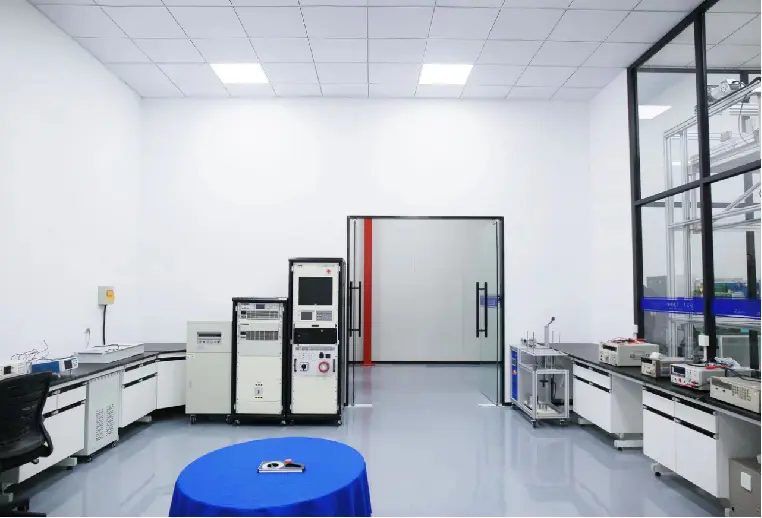
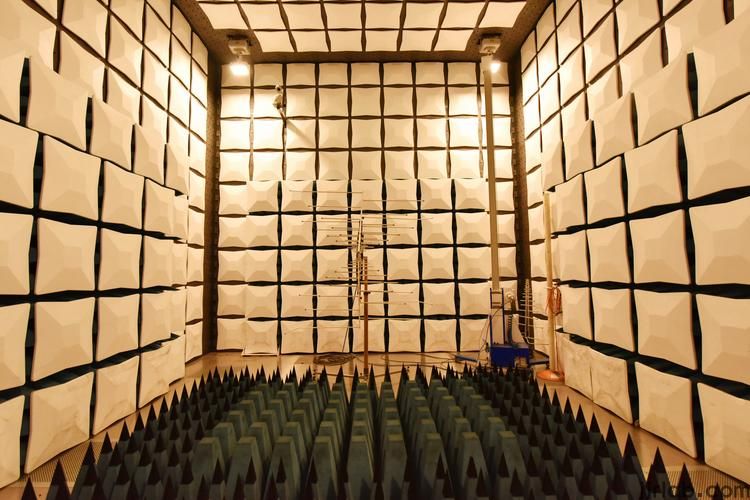
2.Has an RF anechoic chamber, spectrum analyzers, signal generators, and emc test sites.
3.Has experience with real projects involving wireless microphones / WMAS / ALD.
4.Can issue English reports with clauses matching the EN 300 422 version number.
5.Can advise you that a full suite of RED + EMC + Safety + RF Exposure is needed, rather than just RF testing.
JJR LAB can provide these services for you.
How Long Does an EN 300 422 Test Report Take and How Much Does It Cost?
Approximate Market Rates (2026 figures):
1.Pre-testing: 3–7 working days
2.Formal RF Testing: 1–3 weeks
3.EMC + Safety Additional Testing: Another 1–3 weeks
4.Single RF Report: Around 1,200 - 2,500 USD
5.Full Suite (RF+EMC+Safety): Depends on the number of frequency channels/transmitters, typically several thousand USD.
FAQ:
How long is the EN 300 422 test report valid? The test report itself does not have a unified "global validity period." As long as the product design, frequency, antenna, RF chip, and applicable standard version remain unchanged, the report can continue to be used. Once there is a change or the harmonized standard version is updated, it must be evaluated for retesting.
Can I sell in the EU without an EN 300 422 report? You cannot sell compliantly. Placing RED equipment on the EU market requires technical files and evidence of conformity. The EN 300 422 report is the core evidence for wireless audio equipment to prove spectrum compliance.
Do wireless microphones strictly require EN 300 422? Audio PMSE / wireless microphones / in-ear monitors / tour guide systems below 3 GHz generally refer to it. 2.4 GHz broadband digital audio may follow EN 300 328. It specifically depends on the frequency and function.
Does the EU recognize reports issued by domestic laboratories? Recognition does not depend on "domestic/foreign," but on the laboratory's scope of capabilities, report content, standard version, and how the client/importer uses it. Under RED Module A, the manufacturer is responsible for the technical file; if Notified Body procedures are involved, the corresponding qualification requirements must be checked.
What is the difference between EN 300 422-1 and -2?
EN 300 422-1: Class A Receiver
EN 300 422-2: Class B Receiver
Email:hello@jjrlab.com
Write your message here and send it to us
 Introduction to the EN 300 422 Standard
How to get an EN 300 422 Test Report
 What is EN 300 422 Compliance Certification?
 How to get an EN 300 220 Test Report
 How to get an EN 300 440 Test Report
 What is EN 300 440 Compliance Certification?
 Detailed Explanation of CE Certification for SRD 1
 How to get an EN 301 893 test report?
Leave us a message
24-hour online customer service at any time to respond, so that you worry!