



What is FDA Cytotoxicity Testing
iso 10993-5 In Vitro cytotoxicity testing is a versatile method, widely applicable for the evaluation of various medical devices and materials. The test type should be selected based on the properties, application sites, and usage characteristics of the sample to be evaluated. In addition, cytotoxicity testing requires special attention to the sterility of samples to avoid microbial contamination introduced by manual operations. If the sample is supplied in a non-sterile state and intended for non-sterile use, careful consideration should be given to whether sterilization is required and the suitability of sterilization conditions.

Evaluation Types
Numerous methods and endpoint measurement approaches used in cytotoxicity determination can be classified into the following evaluation types. The test type should be selected according to the product properties, application sites, and usage characteristics:
1. Assessment of cell damage by morphological methods;
2. Determination of cell damage;
3. Determination of cell growth;
4. Determination of cell metabolic characteristics.
Common Test Methods
Test Type | Specific Test Method | Evaluation Type | Result Criteria |
Extract Test<br>Note: Extraction conditions shall not cause changes in the physical and chemical properties of the sample | MEM Elution Test<br>(FDA ASCA) | Qualitative Evaluation | Non-cytotoxicity can be determined if the qualitative grade based on cytotoxic morphology does not exceed Grade "2" |
MTT (XTT) Assay | Quantitative Evaluation | Cytotoxicity is considered to exist if the cell viability decreases by more than 30% | |
Colony Formation Assay | Quantitative Evaluation | Cytotoxicity is considered to exist if the cell viability decreases by more than 30% | |
Neutral Red Uptake Assay | Quantitative Evaluation | Cytotoxicity is considered to exist if the cell viability decreases by more than 30% | |
Relative Proliferation Assay | Semi-quantitative Evaluation | Qualified if the relative proliferation (calculated based on cell density on Day 7) is Grade 0 or 1.<br>If the relative proliferation of the test sample group is Grade 2, comprehensive evaluation combined with morphology is required; qualified if the toxicity is slight or absent.<br>Unqualified if the relative proliferation is Grade 3 to 5 | |
Direct Contact Test | Direct Contact Test | Qualitative Evaluation | Non-cytotoxicity can be determined if the score based on cell morphology does not exceed Grade "2" |
Indirect Contact Test | Agarose Diffusion Test | Qualitative Evaluation | Non-cytotoxicity can be determined if the score based on cell morphology does not exceed Grade "2" |
Membrane Diffusion Test | Qualitative Evaluation | Non-cytotoxicity can be determined if the score based on cell morphology does not exceed Grade "2" |
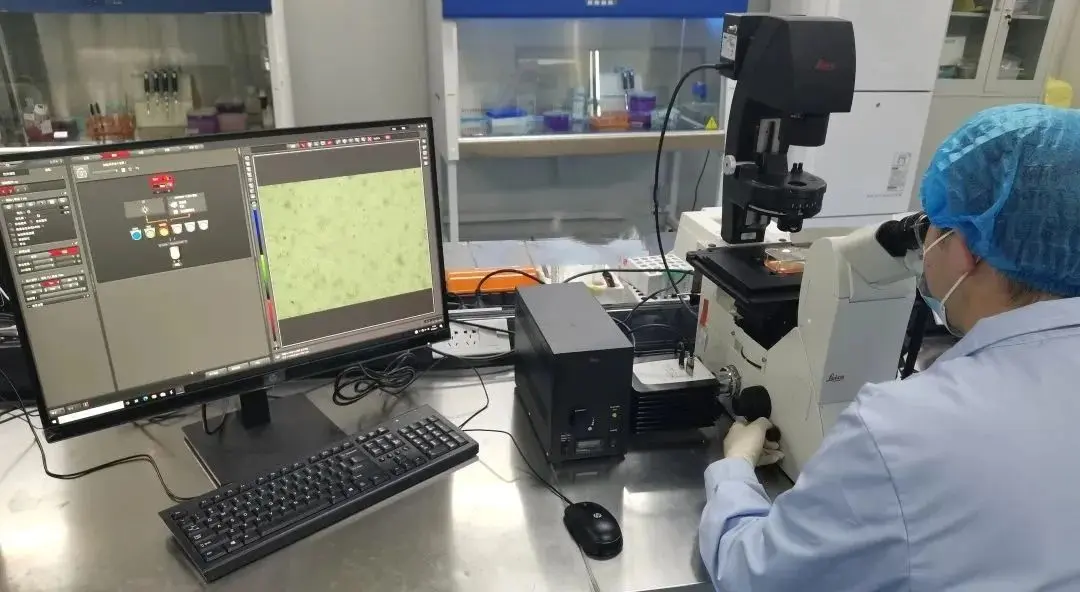
Qualitative Evaluation: Cells are examined under a microscope. Cytochemical staining may be used if necessary to evaluate changes in aspects such as general morphology, vacuolation, detachment, cytolysis, and cell membrane integrity.
Quantitative Evaluation: Determination of cell death, growth inhibition, proliferation, or colony formation. Objective methods are used for quantitative measurement of determinable parameters such as cell number, total protein content, and enzyme release.
Special Requirements of FDA
5. For new materials (not used in similar devices with the same contact type and contact duration), direct contact test and MEM elution test shall be performed;
6. For cytotoxic materials, testing shall be conducted at multiple diluted concentrations to determine the non-cytotoxic dose level;
7. For some products known to contain cytostatic/cytotoxic substances or uncured polymer resins, comparison can be made with similar marketed devices to confirm that their cytotoxicity is not higher than that of the marketed products.
Cell Lines and Culture Media
Established cell lines should be preferred for the test and obtained from recognized repositories, such as American Type Culture Collection (ATCC) lines including CCL1 (NCTC clone 929), CCL 163 (Balb/3T3 clone A31), CCL171 (MRC-5), CCL75 (WI-38), and V-79 379A. The culture medium used for cell culture shall be sterile, with components meeting the growth requirements of the cell line, and the pH value shall be maintained between 7.2 and 7.4.
Cells should be free of mycoplasma contamination. Mycoplasma contamination of cells can induce cytotoxicity, interfering with test results and leading to false positives or false negatives. Meanwhile, regular inspection of cells (e.g., morphology, population doubling time, representative chromosome number) is required to prevent the reduction of test sensitivity due to increasing passage numbers.
When using cells resuscitated from storage, considering the need to remove cryoprotectants, the cells should be subcultured at least once before use to restore them to a normal growth state.
Email:hello@jjrlab.com
Write your message here and send it to us
 Guide to the EN18031 Testing Standard
 Amazon Lithium Battery Smart Home/3C Sellers Can N
 RoHS Compliance Testing Services
 Amazon Toy Seller Exporting to Europe Compliance
US Jewelry Compliance Guide
Amazon Toy Seller Exporting to Europe Compliance
US Jewelry Compliance Guide
 FCC Certification Requirements and Costs for Consu
 EMC Testing Lab IEC 60601 Medical Electrical Safet
 What are the FCC Testing Requirements for Bluetoot
Leave us a message
24-hour online customer service at any time to respond, so that you worry!