



Biocompatibility Testing for Dental Materials
What is biocompatibility testing for Dental Materials?
biocompatibility testing for dental materials is a critical procedure for evaluating the safety of materials when they come into contact with human tissues in the oral environment. It covers multiple indicators including cytotoxicity, sensitization, irritation, and others. The testing is conducted in accordance with the ISO 10993 series standards and YY/T 0268 and other medical device industry specifications, verifying potential risks of materials to biological systems through in vitro tests (e.g., cell culture) and in vivo tests (e.g., animal models). Its core objective is to ensure that materials meet biosafety requirements prior to clinical application, avoid inflammation, allergy, or long-term toxic reactions, and satisfy compliance approval requirements of global medical device regulatory authorities.
Testing Items for Dental Material Biocompatibility
Biocompatibility testing for dental materials is a core item in medical device safety evaluation, which systematically verifies the biological safety of materials such as composite resins, glass ionomers, and dental amalgams. Testing items include cytotoxicity test (evaluating the impact of materials on cell proliferation), sensitization test (detecting potential allergens), irritation or intracutaneous reactivity test (simulating oral mucosal contact reactions), and genotoxicity screening (excluding DNA damage risks). Some high-risk materials also require subchronic or implantation tests to assess histocompatibility under long-term contact. Test results directly affect the clinical applicability and market access qualification of materials.
Project implementation needs to consider the compositional characteristics of materials; for example, residual resin monomers may cause cytotoxicity, and metal ion release requires assessment of local irritation risks. The testing plan must cover changes in chemical properties before and after material curing, and simulate oral temperature, humidity, and mechanical stress environments to ensure that experimental conditions are close to real usage scenarios.
Scope of Dental Material Biocompatibility Testing
The testing scope covers all materials in direct contact with oral hard tissues (dentin, enamel) and soft tissues (gingiva, mucosa), including but not limited to light-cured composite resins, self-etching adhesives, glass ionomer cements, temporary materials, etc. For innovative materials containing nanofillers, antibacterial components, or novel polymers, additional evaluation of the biological effects of their degradation products is required.
Test objects shall include the bulk material, cured product, and extract (dissolved substances after simulated saliva immersion), with a focus on the stability of materials under pH changes, temperature fluctuations, and mechanical friction. Regional regulatory differences require special attention; for instance, the EU MDR requires an expanded scope of genotoxicity testing, while the FDA emphasizes long-term implantation test data.
Required Samples for Dental Material Biocompatibility Testing
Standard testing requires three types of samples: uncured raw materials (powder/liquid), standard specimens cured according to instructions (usually discs with a diameter of 6 mm × thickness of 2 mm), and material extracts (prepared according to surface area extraction ratio). The number of samples must meet the requirements for three independent experiments; for example, each group of cytotoxicity tests requires at least 6 parallel samples.
Special requirements include: cured specimens need to simulate clinical light intensity (≥800 mW/cm²) and time parameters; extracts shall be prepared using serum-containing medium or normal saline and extracted at 37 °C for 24–72 hours. For materials containing radiopaque agents (e.g., zirconia), additional stability test samples after X-ray irradiation are required.
Equipment for Dental Material Biocompatibility Testing
Core equipment includes: CO₂ cell incubator (maintaining culture environment for L929 fibroblasts), microplate reader (cell viability detection by MTT assay), flow cytometer (apoptosis rate analysis), scanning electron microscope (observing material surface and cell adhesion status).
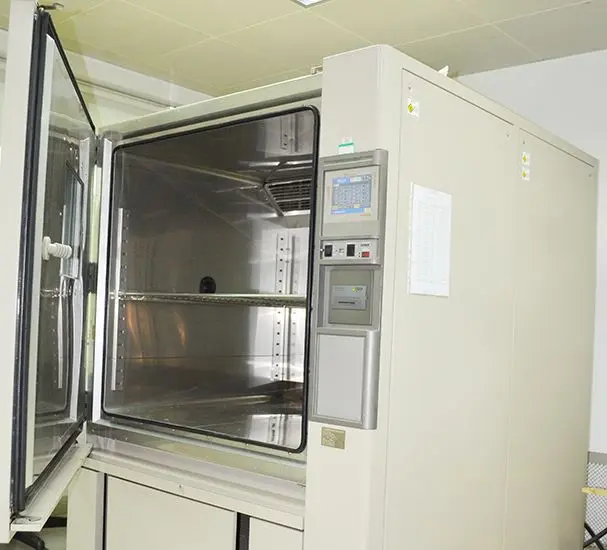
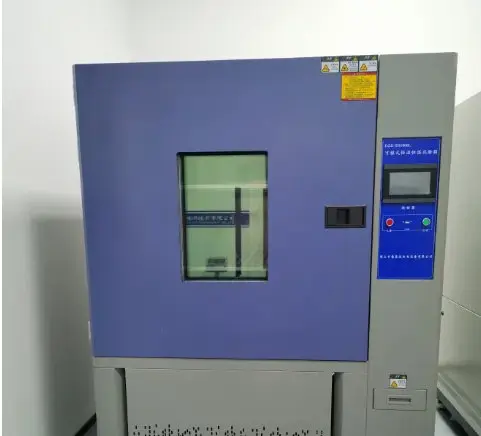
Special equipment involves: oral environment simulation system (controlling temperature at 37 °C ± 1 °C, humidity at 95% ± 5%), universal material testing machine (simulating occlusal force loading), HPLC-MS combined instrument (detecting residual monomer content), inductively coupled plasma mass spectrometer (metal ion dissolution analysis). All equipment must be calibrated in accordance with ISO/IEC 17025 and undergo regular performance verification.
Testing Process for Dental Material Biocompatibility
The standard process includes five stages: sample pretreatment (curing/sterilization), extract preparation (at the ratio specified in iso 10993-12), in vitro tests (cytotoxicity/genetic mutation), animal tests (skin irritation/sensitization), data integration and risk assessment. Cytotoxicity tests shall be carried out in a Biosafety Level 2 laboratory using mouse fibroblast cell lines for 72-hour exposure experiments.
Key control points: material curing degree verification (double bond conversion rate detected by FTIR), extract endotoxin test (LAL test < 0.5 EU/ml), positive control setting (zinc oxide as irritation reference). The process cycle is usually 6–8 weeks, and implantation tests can be extended to 12 weeks.
Technologies and Methods for Dental Material Biocompatibility Testing
Core technologies include: MTT colorimetric assay (quantitative cell viability), agar overlay method (qualitative evaluation of cytolytic effects), local lymph node assay (LLNA for sensitization intensity detection), reverse mutation assay (Ames test for genotoxicity screening).
Application of innovative methods: 3D oral mucosal models replacing animal tests, microfluidic chips simulating dentinal tubule penetration, real-time cell analysis (RTCA) technology for dynamic monitoring of cell impedance changes. Material characterization shall be combined with X-ray photoelectron spectroscopy (XPS) to analyze surface chemical states, and atomic force microscopy (AFM) to detect the influence of nanoscale roughness on cell behavior.
Standards and Specifications for Dental Material Biocompatibility Testing
ISO 10993-1:2018 Biological evaluation of medical devices — Part 1: Evaluation and testing within a risk management process (specifies principles for selection of testing items)
iso 10993-5:2009 Tests for in vitro cytotoxicity (specifies methodological requirements for MTT assay, agar overlay method, etc.)
iso 10993-10:2010 Tests for irritation and skin sensitization (specifies patch test dosage and observation period)
ISO 7405:2018 Dentistry — Preclinical evaluation of biocompatibility of medical devices used in dentistry (supplementary test conditions for oral contact materials)
YY/T 0268-2008 Dentistry — Biological evaluation of medical devices used in dentistry — Part 1: Evaluation and tests (detailed extraction ratios in Chinese industrial standards)
USP <87> Biological reactivity tests in vitro (cytotoxicity judgment criteria in the United States Pharmacopeia)
GB/T 16886.3-2019 Tests for genotoxicity, carcinogenicity and reproductive toxicity (Chinese national standard corresponding to ISO 10993-3)
ASTM F619-2022 Standard Practice for Extraction of Medical Devices (standardizes selection of extraction media)
EN 1642:2011 Biological safety requirements for dental medical devices (mandatory standard for EU CE certification)
FDA Blue Book Memorandum G95-1 (guidance for long-term implantation test design of oral materials)
Service Cycle of Dental Material Biocompatibility Testing
The conventional testing cycle is 45–60 working days, including 14 days for cytotoxicity tests (including cell subculture), 21 days of observation period for sensitization tests (guinea pig maximization test), and implantation tests extended to 12 weeks according to cycle requirements. Expedited services can be compressed to 30 days, but a 50% expediting fee is required and rapid testing methods are prioritized (e.g., XTT assay instead of MTT assay).
Factors affecting the cycle include: sample complexity (e.g., additional stability tests for materials containing antibacterial agents), animal model supply cycle (SPF guinea pigs need to be reserved 8 weeks in advance), and retesting of abnormal results (e.g., repeated experiments for abnormal cell survival rates). Five working days shall be reserved for data compliance review during the report approval stage.
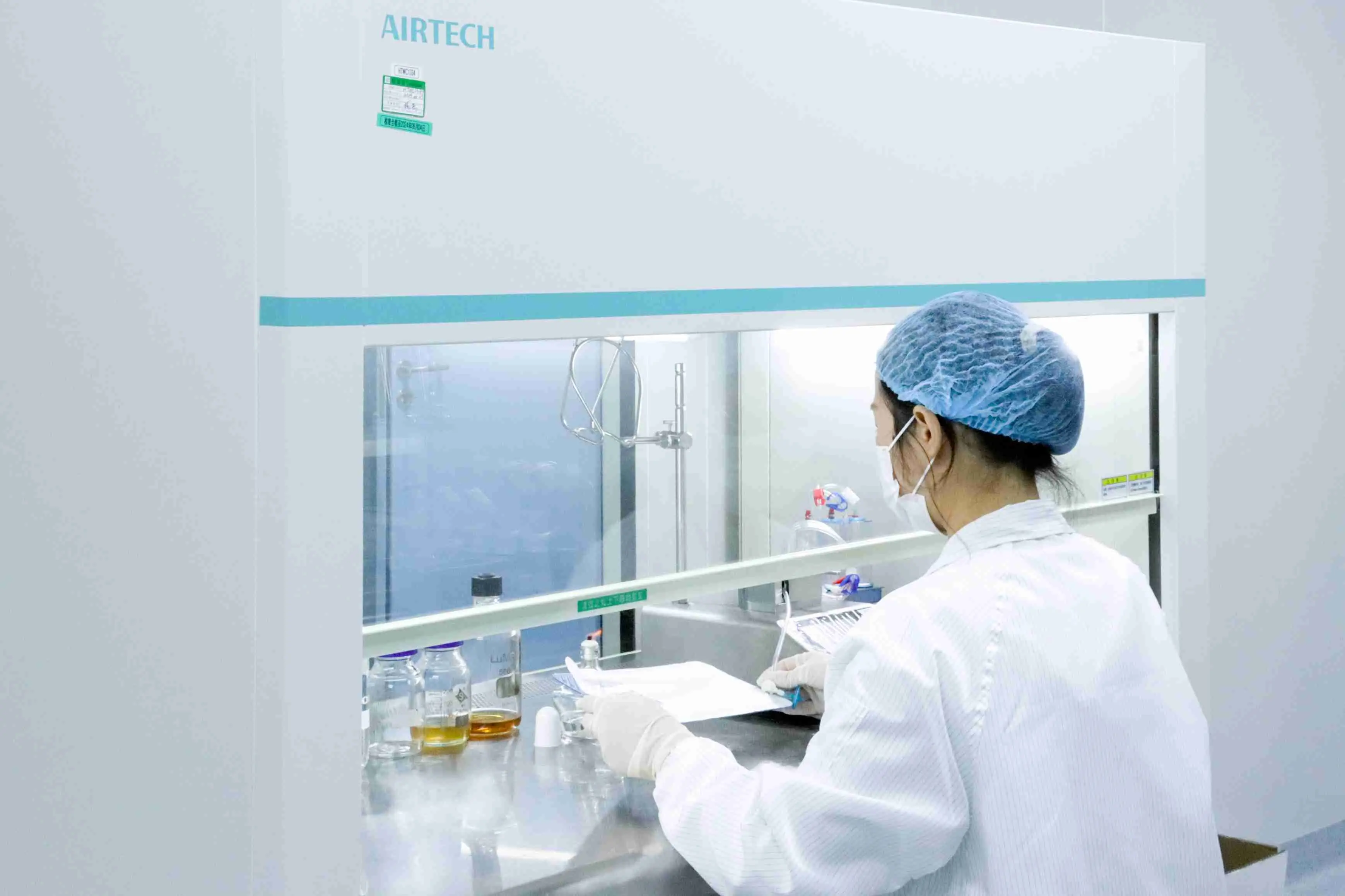
Application Scenarios of Dental Material Biocompatibility Testing
It is mainly used in three scenarios: safety screening in the R&D stage of new materials (optimizing formulas to reduce cytotoxicity), product registration and declaration (meeting NMPA/FDA/CE certification requirements), and production quality control (monitoring biosafety among batches). In the analysis of adverse medical device events, test data can be used as a basis for tracing material-related allergic reactions.
Extended applications include: comparative analysis of biosafety of competitive products (gaining competitive advantages through differences in apoptosis rates), customized testing plan design (development of hypoallergenic materials for children or patients with allergic constitutions), and evaluation of biofilm formation on oral prostheses (analyzing material antibacterial properties combined with colony counting).
Email:hello@jjrlab.com
Write your message here and send it to us
 EU PPWR New Packaging Compliance
 How to Obtain an MSDS/SDS Report
 CPSIA Testing Service Consulting
 Food Contact Materials Testing Services
 California 65 Testing Service Consultation
 REACH Chemical Testing Services
 Electronic Vaporizers EU TPD / US PMTA / UK MHRA
 ISO 10993 Biocompatibility Standards
Leave us a message
24-hour online customer service at any time to respond, so that you worry!