



Button Cell Battery 16 CFR 1263 + UL 4200A + GCC Certification
The core of button cell battery product compliance for the US market is: 16 cfr 1263 (Federal Regulation) + UL 4200a-2023 (Safety Standard) + gcc certificate (General Certificate of Conformity). Mandatory enforcement for product compliance began on March 19, 2024, and labeling requirements became mandatory on September 21, 2024.
Relationship Between Regulations and Standards
16 CFR 1263: A mandatory regulation issued by the US CPSC, which references and enforces ANSI/ul 4200a-2023. It originated from Reese’s Law (2022) with the goal of preventing children aged 6 and under from accidentally swallowing button cell batteries.
UL 4200A-2023: A safety standard for products containing button/coin cell batteries, specifying requirements for structure, testing, labeling, and user manuals.
GCC (General Certificate of Conformity): For general-purpose consumer products (non-children's products), it must be issued by the manufacturer/importer to certify compliance with 16 CFR 1263 and UL 4200A; children's products require a CPC instead of a GCC.
Effective Dates
Product Compliance (Structure + Testing): March 19, 2024 (Originally scheduled for October 23, 2023, but later postponed).
Packaging / Product Labeling: September 21, 2024.
Amazon Requirements: Listings must provide both the GCC and UL 4200A report.
UL 4200A-2023 Core Requirements
1. Structural Design (Child-Resistant)
Replaceable Battery Compartment: Must meet one of the following criteria:
Requires a tool (screwdriver/coin) to open; screws require a minimum torque of 0.5 Nm and a 90° rotation, or at least 2 threads and be captive (prevented from falling out).
Requires two independent and simultaneous hand movements (e.g., press + slide) and cannot be completed with a single finger.
Non-Replaceable Battery: Welded, riveted, or fully enclosed, making it completely inaccessible to the user; must pass a 20N pull test without detaching.
2. Performance testing (Battery Inaccessible After Abuse)
Drop Test: Portable products 3 times / 1 meter; Handheld products 10 times / 1 meter.
Impact Test: Battery compartment subjected to 2J energy impact 3 times.
Crush Test: Exposed surfaces subjected to 330N for 10 seconds.
Torque / Pull Test: Torque ≥ 0.5 Nm, Pull force ≥ 45N.
Environmental: High-temperature preconditioning at 70°C for 7 hours.
3. Labeling and Manual Requirements (16 CFR 1263.4)
Warning Content (in English):WARNING: KEEP BATTERIES OUT OF REACH OF CHILDREN
SWALLOWING MAY LEAD TO SERIOUS INJURY OR DEATHLocation: Principal display panel of the product packaging, the product body (when feasible), and the instruction manual.
Format: Orange background + black triangle with an exclamation mark + uppercase sans-serif font.
Essential Content of GCC Certificate (Amazon / Customs Review Key Points)
Certificate Number: Unique identifier.
Product Identification: Name, model, specifications, and intended use.
Applicable Regulations/Standards:
16 CFR §1263.3 (Product Safety)
16 CFR §1263.4 (Labeling)
Manufacturer/Importer Information: Company name, address, phone number, and US representative.
Production Information: Date of manufacture (accurate to the month) and place of origin.
Testing Information: Test date/location, report number, and ISO 17025 laboratory information.
Declaration of Responsibility: Signature of the responsible person and date.
Difference between GCC and ul report: The UL report provides test data, whereas the GCC is a legal declaration of conformity. Both must be provided simultaneously.
Amazon US Marketplace Listing Requirements
Must Submit:
GCC Certificate (for non-children's products).
UL 4200A-2023 Test Report (from a CPSC-accepted laboratory).
Product / Packaging Warning Label Sample.
Common Rejection Reasons:
Failure to cite 16 CFR 1263.3 / 1263.4 or UL 4200A-2023.
Labels missing the orange background / triangle with exclamation mark.
Battery compartment design fails to meet dual-action or tool-opening requirements.
Incomplete testing items (missing drop / impact / crush tests).
Exemptions
Zinc-Air Button Batteries (e.g., hearing aid batteries).
Toy Products: Must comply with ASTM F963 instead of UL 4200A.
Professional / Industrial Use Products (Non-household).
Processing Flow and Timeline
Sample Preparation: 2–3 finished units (including the battery compartment).
ul 4200a testing: 5–7 working days (at an ISO 17025 laboratory).
GCC Preparation: 1–2 days (including US representative information).
Amazon Submission: Upload GCC + UL Report + Label Samples to the seller central.
Total Cycle: 1–2 weeks. Advance planning is highly recommended.
Compliance Risks
Amazon Listing Removal: Listings will be taken down if there is no GCC/UL report or if labels are non-compliant.
Customs Detention: Non-compliant products will be denied entry.
CPSC Recall / Fines: Fines up to $15,000 / day for non-compliance, with potential criminal liability for severe cases.
Button cell battery products on the US market must simultaneously meet the 16 CFR 1263 regulation, UL 4200A-2023 standard, and gcc certification, while strictly adhering to labeling requirements. It is strongly recommended to complete testing and certification as soon as possible to prevent listing disruptions.
Email:hello@jjrlab.com
Write your message here and send it to us
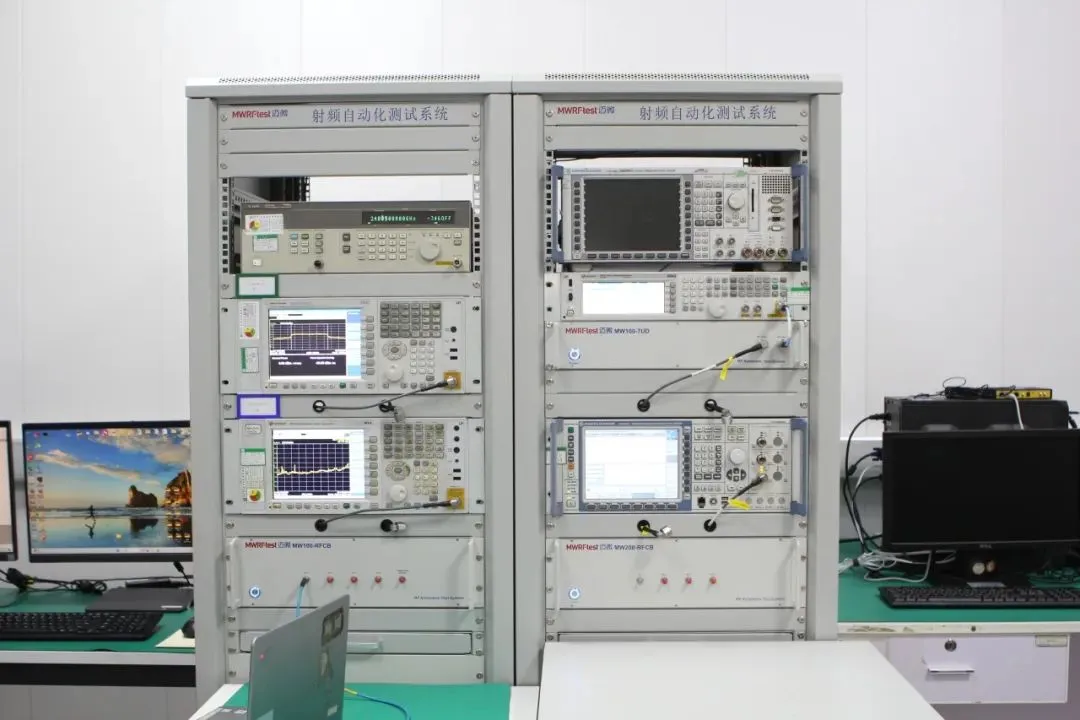 How to get the EN 55035 Test Report?
 What is the Amazon EN 301 489 Standard?
 How to get an EN 301 489 Test Report?
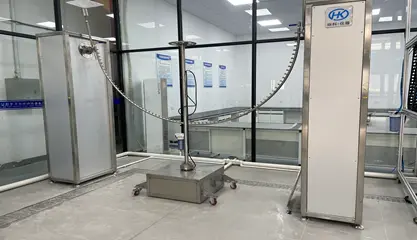 What is EN 301 489 Compliance Certification?
 Introduction to the EN 300 422 Standard
 How to get an EN 300 422 Test Report
 What is EN 300 422 Compliance Certification?
 How to get an EN 300 220 Test Report
Leave us a message
24-hour online customer service at any time to respond, so that you worry!