



Children's Toy CPC Certification Testing
With the booming development of cross-border e-commerce, an increasing number of Chinese toy enterprises are setting their sights on the North American market. To successfully enter the US market or sell children's toys on platforms like Amazon, CPC Certification is an unavoidable threshold.
What is CPC Certification?
CPC stands for Children's Product Certificate, which is a mandatory compliance document required by the United States Consumer Product Safety Commission (CPSC). All toy products designed and intended primarily for children 12 years of age or younger, including building blocks, dolls, plush toys, electric toys, puzzles, etc., must be tested by a CPSC-accepted third-party laboratory and be issued a CPC certificate. Simply put, the CPC certificate is not issued by an official agency; rather, it is a declaration of compliance issued by the manufacturer or importer based on the test results from a third-party laboratory.
Testing Standards
cpsia (Consumer Product Safety Improvement Act): Primarily regulates harmful chemical substances in toys (such as lead and phthalates) as well as labeling and identification requirements.
ASTM F963-23: The core standard for toy safety in the United States, fully effective as of April 20, 2024, replacing the older version astm f963-17.
Electric toys must also additionally comply with UL 4200a or 16 CFR Part 1505 electrical safety standards.
Testing Sections
3.1 Physical and Mechanical Safety Testing — Preventing Choking and Scratching
This is the most basic and critical part of cpc testing, simulating scenarios of a child's normal use and "violent play."
① Small Parts Testing: The "top priority" for toys intended for children under 3 years old. Using a standard test cylinder with a diameter of 31.75mm, if any detachable component can fit completely inside, it is judged as unqualified. Small parts like eyes and buttons on toys must withstand a 90N pulling force without detaching.
② Sharp Edges and Points Testing: Toy surfaces and edges must not have dangerous sharp points or sharp edges.
③ Abuse Testing: The toy is dropped 6 times from a height of 91cm, and subjected to a 50-pound pull force on seams, to simulate behaviors like dropping, smashing, biting, and pulling by children.
④ Special Toy Requirements: Rattle toys require weight and structure testing; the kinetic energy of projectile toys must not exceed 0.08J; the length of cords used on toys for children under 18 months must not exceed 22cm.
3.2 Chemical Safety Testing — Rejecting "Toxic Toys"
① Lead Content Testing: The lead content in toy surface coatings must be ≤90ppm, and in substrate materials (plastic, metal, etc.) must be ≤100ppm. Lead is a highly toxic substance, and the US has a "zero tolerance" policy for lead content supervision.
② Phthalates Testing: Currently, the US generally requires testing for 8P (adding DIBP, DPENP, etc., to the original 6P), with the content of each limited to ≤0.1%. Soft plastic toys (such as teethers) are key testing targets.
③ Other Harmful Substances: The formaldehyde emission of fabric toys must be ≤30ppm, and wooden toys need to be tested for wood flammability and hygiene safety.
3.3 Flammability Testing — Preventing Fire Hazards
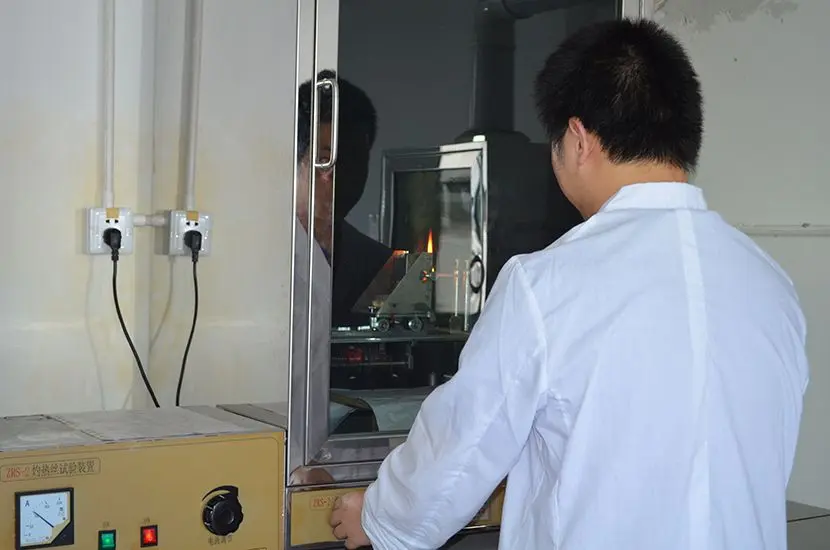
Primarily targeting materials like plush toys and textile toys, this requires a flame spread rate of ≤75mm/s. Textile categories must also comply with the 16 CFR Part 1610 flammability requirements for textiles.
3.4 Electrical Safety Testing — For Electric Toys
Includes circuit short-circuit protection, battery compartment safety (must require a tool to open), and motor overheat protection (no overheating after 1 hour of continuous operation). Toys with sound-producing features must also comply with sound pressure level testing (hand-held toys ≤85dB).
Key Testing Focuses for Different Toy Categories
Plastic Toys: Focus on lead, phthalates, BPA, small parts, and sharp edges.
Plush Toys: Focus on flammability, formaldehyde, azo dyes, seam strength, and small parts fixation.
Electric Toys: Focus on electrical safety, sound pressure levels, and harmful chemical substances.
Wooden Toys: Focus on lead (coatings), sharp edges, abuse performance, and flammability.
The Three Essentials of CPC Certification
Test Report: Issued by a CPSC-accepted laboratory.
CPC Certificate: Self-issued by the manufacturer or importer.
Product/Packaging Labels: Including batch/production date, manufacturer information, age warnings, choking hazards, etc. All children's products must also bear a permanent tracking label.
Certification Process and Cycle
Select a CPSC-accepted lab → Send samples (3-5 pieces, including packaging and accessories) → Test according to ASTM F963 + CPSIA → Issue test report → Issue CPC certificate.
The testing cycle is usually 5-7 working days (can be expedited to 3-5 days).
Frequently Asked Questions (FAQ)
Q1: How long is a CPC certification valid?
There is no fixed validity period, but re-certification is required if the product design or materials change, or if the CPSC releases new standards.
Q2: Do all children's products need to be tested?
Yes, all products intended for children 12 years of age or younger must be tested by a CPSC-accepted laboratory.
Q3: Is testing for 6P enough?
No! The US currently widely requires 8P testing; testing only 6P will likely fail platform reviews.
CPC certification is not simply about "testing for lead content"; it is a systematic project covering four major sectors: physical, chemical, flammability, and electrical. You cannot get certified if even one item is missing. It is highly recommended that toy enterprises align with CPC standards during the product development phase to avoid missing business opportunities due to late-stage rectifications.
Email:hello@jjrlab.com
Write your message here and send it to us
 What is the CA Prop 65 Warning Label?
 2026 Amazon TIC Mandatory Audit Catalog
 Australian Electrical EESS and RCM Compliance
 How to get Vietnam CR Certification
 What is a UN 38.3 Battery Test Report
 What is the UN38.3 Certification Test?
 What is a Lithium Ion Battery Certification
 What is a UN38.3 Test Certificate?
Leave us a message
24-hour online customer service at any time to respond, so that you worry!