



CISPR 25 Test Standard Compliance Guide
Why Are Automakers Focusing on CISPR 25?
"Electromagnetic compatibility (EMC) issues in a smart vehicle can cause GPS malfunctions, persistent radio static, and even compromise autonomous driving safety."
As the level of automotive electronics continues to rise, electromagnetic interference (EMI) has become a critical challenge that automakers must overcome. As a globally recognized automotive EMC standard, CISPR 25 directly impacts the compliance of on-board electronic devices. Therefore:
① What exactly does CISPR 25 test?
② What are the similarities and differences between CISPR 25 and the national standard GB/T 18655?
③ How can automakers meet both CISPR 25 and GB/T 18655 requirements in one go?
Today, we will explain everything in this comprehensive article!
What is CISPR 25?
CISPR 25 (International Special Committee on Radio Interference Standard No. 25) is formulated by the International Electrotechnical Commission (IEC). It is primarily used to assess electromagnetic interference (EMI) from automobiles, ships, and internal combustion engine equipment, ensuring that on-board electronic devices (such as radios, radars, and 5G modules) are free from interference.
Core Objectives:
① ● Protect on-board receivers (AM/FM, GPS, V2X, etc.) from electromagnetic interference.
② ● Standardize test methods for conducted and radiated emissions to ensure global market access.
Industry Data: All major global automakers require suppliers to comply with CISPR 25; otherwise, they cannot be included in the supply chain.
What Tests Does CISPR 25 Cover?
CISPR 25 mainly tests Conducted Emissions (CE) and Radiated Emissions (RE), which specifically include:
1. Conducted Emissions (CE) Test
(1) Test Objects: Power cables, signal cables (e.g., CAN bus).
(2) Methods:
① Voltage Method (measured via LISN, 150 kHz ~ 108 MHz).
② Current Probe Method (measures common-mode current, 150 kHz ~ 245 MHz).
(3) Applicable Devices: ECUs, On-Board Chargers (OBC), motor drivers.
2. Radiated Emissions (RE) Test
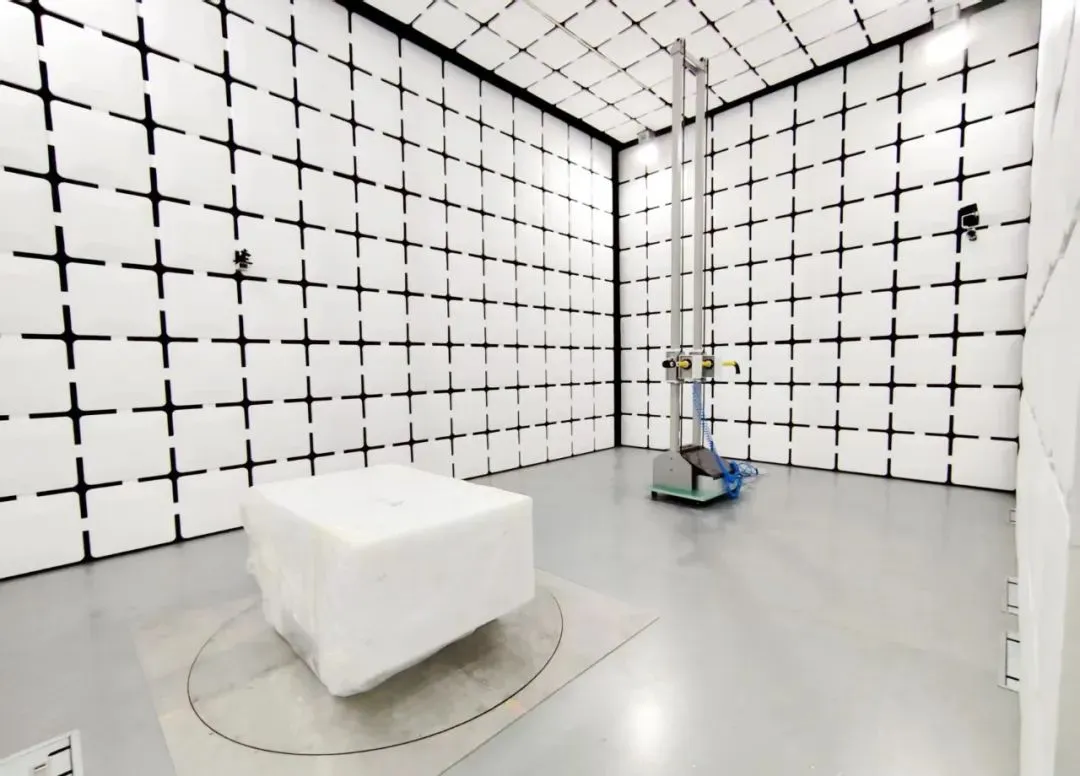
① Test Environment: Anechoic Chamber (ALSE) or TEM Cell.
② Frequency Band: 150 kHz ~ 6 GHz (covering AM/FM, GPS, 5G, etc.).
③ Applicable Devices: In-Vehicle Infotainment (IVI) systems, millimeter-wave radars, T-Box.
3. Transient Emissions Test
① Assesses interference generated during device power-on/off and load突变 (referencing ISO 7637-2).
Key Considerations for CISPR 25 Testing
1. Test Environment: Must be conducted in an Anechoic Chamber (ALSE) or Shielded Room to avoid external interference.
2. Wiring Harness Layout: Cable length and routing must strictly follow the standard; otherwise, results will be affected.
3. Device Status: The Device Under Test (DUT) must be tested under typical operating modes (e.g., full load, standby).
4. Data Interpretation: Distinguish between Peak (PK), Quasi-Peak (QP), and Average (AV) values, as different frequency bands apply different limits.
Corresponding National Standard: GB/T 18655 vs. CISPR 25
The Chinese national standard GB/T 18655 is largely equivalent to CISPR 25, with minor differences:
Comparison Item | CISPR 25 | GB/T 18655 |
Standard Source | International Standard (IEC) | Chinese National Standard |
Test Method | ALSE/TEM Cell | Same as CISPR 25 |
Limit Requirements | Class 1~5 | Graded 1~5 |
Applicability | Globally Universal | Mandatory for the Chinese Market |
Core Differences:
① The national standard imposes additional requirements on transient pulse testing (ISO 7637).
Differences Between CISPR 25 and Other Automotive EMC Standards
Standard | Focus | Application Scenario |
CISPR 25 | EMI Emission Testing | On-board Electronic Devices |
ISO 11452 | Immunity Testing | Radiated/BCI Anti-interference |
ISO 7637 | Transient Pulse Immunity | Power Line Interference |
UNECE R10 | Vehicle-level EMC Regulation | European Market Access |
How Can Automakers Meet Both CISPR 25 and GB/T 18655 Simultaneously?
1. Early Design Optimization:
① Adopt shielded cables and filter circuits to reduce EMI risks.
② Conduct simulation analysis (e.g., CST/ANSYS HFSS) to predict interference in advance.
2. Testing Strategy:
① Test CISPR 25 first, then GB/T 18655 (as the national standard is stricter).
② Focus on the 30 MHz ~ 1 GHz frequency band.
3. Certification & Compliance:
① Select CNAS-accredited laboratories.
② Retain test reports for domestic and international audits.
Conclusion
CISPR 25 is the "gold standard" for automotive electronics EMC, while GB/T 18655 serves as the key to the Chinese market. Automakers should:
① Conduct strict standard-compliant testing to avoid recalls due to EMI issues.
② Optimize design combined with early simulation to reduce compliance costs.
③ Adopt dual-standard parallel certification to access both domestic and international markets.
A. ● JJRLAB provides professional CISPR 25 and GB/T 18655 testing services.
B. ● If you need EMC certification testing for your on-board products, consider JJR LAB, where a professional team safeguards your product quality.
C. ● Let us work together to create a safe and stable automotive electronics environment.
Email:hello@jjrlab.com
Write your message here and send it to us
 FDA Requirements for Biocompatibility under ISO 10
 Amazon Spain WEEE Compliance Deadline: September 3
 What is the ASTM F2264 Certification Test?
 What is ASTM F2194 Certification Testing?
 What is the ASTM F2167 Certification Test?
 What is the ASTM F2050 Certification Test?
 What is ASTM F1967 Certification Testing? How to g
 What is the ASTM F1917 Certification Test?
Leave us a message
24-hour online customer service at any time to respond, so that you worry!