



CPSC Accredited Laboratory
What is CPSC Certification?
CPSC certification is a mandatory safety regulatory system established by the U.S. Consumer Product Safety Commission (CPSC) for consumer products sold in the U.S. market.
It can be understood as the “safety passport” for products entering the U.S. market.
CPSC Regulated Product Categories
Note: Although commonly called “CPSC certification”, companies do not receive a certificate directly from CPSC.
Instead, products must be tested by third-party accredited laboratories (e.g., SGS, BV, Intertek) to verify compliance with U.S. standards (ASTM, UL, etc.), and a test report must be issued.
Core CPSC Regulations
• cpsia (Consumer Product Safety Improvement Act)
• ASTM F963 (Toy Safety Standard)
• Tracking Label Requirements
CPSIA (Consumer Product Safety Improvement Act)
“The Constitution of Children’s Product Safety”
CPSIA Scope
CPSIA covers a wide range of products, with primary focus on children’s products (for children 12 years and younger):
• Chemical Restrictions: Strict limits on Lead and Phthalates content.
• Physical Safety: Small parts, sharp edges, flammability, etc.
• Compliance Process: Mandatory third-party testing, Children’s Product Certificate (CPC), and tracking labels.
CPSIA contains the most critical mandatory requirements that often lead to recalls and fines.
Relationship Between CPSIA and CPSC
• CPSC: The enforcement agency (U.S. Consumer Product Safety Commission) — sets rules, conducts market surveillance, and orders recalls.
• CPSIA: The legal basis — specifies the safety standards (e.g., lead limits) enforced by CPSC.
In short:
CPSIA = the law;
CPSC = the enforcer.
ASTM F963 Toy Safety Standard
“The Hard Barrier for Entering the U.S. Market”
ASTM F963 is the most authoritative U.S. toy safety standard, full name:
Standard Consumer Safety Specification for Toy Safety.
It is widely regarded as the “general technical code” for U.S. toy safety and is mandatory under CPSC law.
Although developed by ASTM (American Society for Testing and Materials), CPSC has incorporated it into federal law.
Without passing ASTM F963, products cannot obtain a CPC certificate and cannot be sold in the U.S.
Three Major Test Dimensions
1. Physical & Mechanical Properties
(Highest recall rate; focuses on physical injury risks)
• Small Parts: For children under 3, no detachable small parts (choking hazard).
• Sharp Edges: No accessible sharp burrs.
• Sharp Points: No dangerous sharp points on surfaces or components.
• Abuse Test: Simulates dropping, pulling, biting, twisting; no dangerous fragments after testing.
2. Chemical Properties
(Aligned with CPSIA; some requirements stricter or more specific)
• Heavy Metals: Soluble heavy metals (Pb, Cd, Cr, etc.) migration testing.
• Flammability: Burning rate test for plush, fabric toys.
3. Electrical & Thermal Safety
• Battery-operated toys: Temperature rise, short-circuit protection, battery leakage.
• Heating toys: Strict temperature limits on accessible surfaces.
Relationship Between ASTM F963 and CPSIA
• CPSIA: The legal framework
• ASTM F963: The technical specifications
They are complementary (goal vs. method), not substitutes.
To issue a CPC, both CPSIA chemical clauses and ASTM F963 physical clauses must be cited.
Tracking Label Requirements
Who Must Affix Labels?
• All products for children 12 years and younger (regulated by CPSIA).
• Durable infant/toddler products (cribs, strollers, high chairs):
Must also include a Consumer Registration Card.
Required Label Content
• Manufacturer / Importer
• Production date (year/month)
• Batch number
• Country of origin (e.g., Shanghai, China)
Compliance Application
• Must be placed on both product and retail packaging.
• Must be permanent: sewn woven label, molded, laser engraved — NOT removable stickers.
Warning Labels & Age Grading
• Clearly mark applicable age (e.g., “3+”).
• Toys with small parts: Must display “Choking Hazard” warning.
U.S. Customs Clearance Checklist
Three Documents
1. Test Report: Technical proof of passed safety testing
2. Children’s Product Certificate (CPC): Legal “compliance passport”
3. Declaration of Conformity: Internal record for CPSC audits
Two Labels
1. Tracking Label (CPSIA mandatory)
2. Warning Label & Age Grade
Three Key Actions
1. Confirm Standard Version: Use ASTM F963-23 (not older -17). Stricter requirements for battery safety, sound, expanding materials.
2. Responsibility Division:
○ Factory: Provide samples, use accredited lab JJR LAB, test data, correct tracking labels.
○ U.S. Importer: Issue CPC, bear legal liability, respond to CPSC inquiries.
3. Electronic Toys: May also need fcc certification (EMC) or UL 4200a (battery safety).
“Zero-Tolerance” Red Lines (Disqualification)
CPSC enforcement is severe: violation leads to seizure, fines, market ban, legal liability.
CPSIA Two Zero-Tolerance red Lines
1. Lead (Neurotoxic)
• Surface coating (paint/ink): ≤ 90 ppm (0.009%)
• Substrate (plastic/metal/fabric): ≤ 100 ppm (0.01%)
High-risk areas: bright paint, recycled plastic, metal accessories (zippers, buttons).
2. Phthalates (Plasticizers)
• Accessible plastic parts: Single component ≤ 0.1% (1000 ppm)
• Regulated list: DEHP, DBP, BBP, DINP, DIDP, DNOP (8+ types)
High-risk products: teething toys, soft rubber toys, shoe soles, raincoats.
ASTM F963 Eight Soluble Heavy Metals
Tests soluble migration (simulates stomach acid after ingestion), not total content.
Important Tips
Control risks at the sourcing stage to avoid failed final testing:
• PVC: Replace with TPR, EVA, silicone. If PVC is necessary, require phthalate-free certification.
• Paint & Ink: Use only toy-grade coatings; water-based is safer.
• Recycled Regrind: Prohibit unknown recycled plastic (major source of Pb/Cd violations).
• Metal Parts: Require material certificates (stainless steel); avoid low-grade zinc alloy or plating.
Child Safety Outlet Plug Covers
Under CPSC rules, outlet covers are classified as Children’s Products, not home appliances or electrical accessories.
Thus, they must comply with strict CPSIA chemical limits and CPC Certification, not the more relaxed GCC.
Why Classified as Children’s Product?
CPSC classification is based on intended use and user, not physical category.
• Designed to protect children
• Labeled “Baby Proof”, “Child Safety”
• Purchased to safeguard kids
Only live electrical outlets fall under UL standards.
Plastic outlet caps are regulated as child safety / toy-like products, focusing on chemical toxicity and choking hazards.
Email:hello@jjrlab.com
Write your message here and send it to us
 What is Recycling of WEEE
 What is PPWR Packaging Compliance
What is Extended Producer Responsibility
What is PPWR Packaging Compliance
What is Extended Producer Responsibility
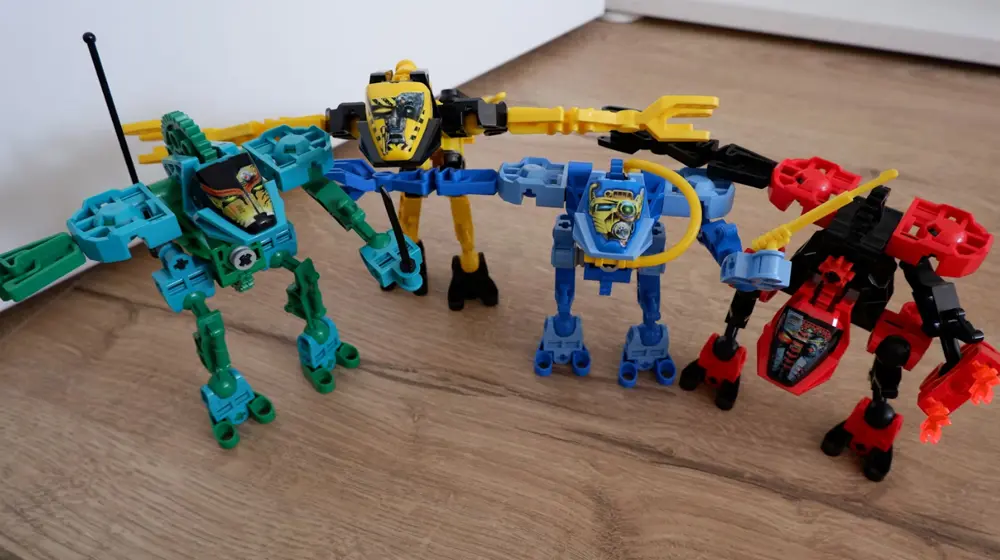 Children's Toy Compliance: Avoiding CPSC Recalls
 Export Electric Blanket Compliance: Preventing CPS
 What is LFGB Certification Meaning
 EU Food Contact Materials (FCM) EC 1935/2004 Stand
 LFGB Germany Food Contact Materials Official
Leave us a message
24-hour online customer service at any time to respond, so that you worry!