



FCC Part 15 Certification Costs
Overview of fcc Certification
The Federal Communications Commission (FCC) is an independent agency of the U.S. government, established in 1934 and directly accountable to Congress. The FCC regulates radio, television, telecommunications, satellite, and cable communications to ensure both domestic and international communication safety. It authorizes and manages radio frequency transmission devices and equipment used outside of federal government usage to ensure the safety of life and property communications. The FCC’s jurisdiction covers all 50 states, the District of Columbia, and U.S. territories.
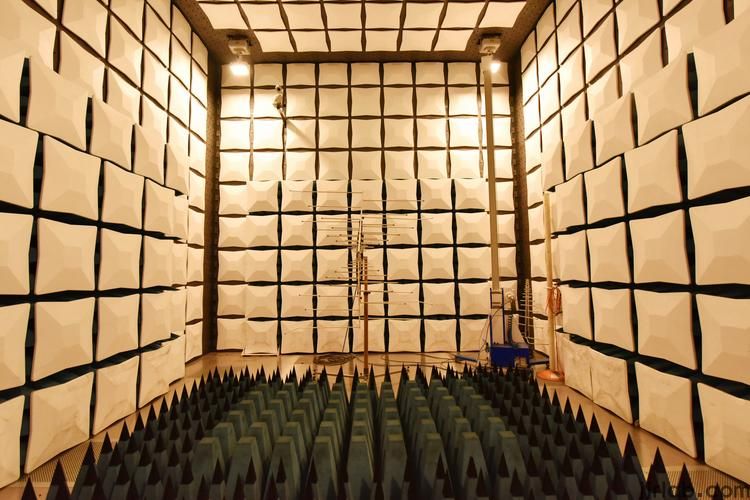
Benefits of FCC Certification
1. Market Competitiveness: Products with FCC certification have a competitive edge in the U.S. market.
2. Regulatory Compliance: Strict regulatory standards enhance the manufacturing precision of products.
3. Customs Clearance: Reduces the risk of being detained during customs inspections.
Primary fcc standards
- fcc part 15C/E/F: Intentional radiation devices
- fcc part 18: Industrial, scientific, and medical equipment
- FCC PART 22: Public mobile communication services
- FCC PART 24: Personal communication services
- FCC PART 25: Satellite communication services
- FCC PART 27: Other FCC wireless communication services
- FCC PART 68: Telecommunications terminal equipment
Among these, FCC PART 15 and PART 18 are the most widely used:
- FCC Part 15: Specifies regulations for intentional, unintentional, or incidental transmitters that do not require individual licenses. It includes technical standards, administrative requirements, and other market entry conditions. Products are mainly classified into four categories: unintentional radiators, intentional radiators, personal communication devices not requiring a license, and unlicensed information infrastructure equipment.
- FCC Part 18: Governs the electromagnetic energy emitted by industrial, scientific, and medical equipment operating at certain frequencies to prevent harmful interference with authorized wireless communication services.
FCC Certification Costs
1. Determine Certification Type: Identify whether the product requires FCC-sdoc or FCC-ID certification:
- Ordinary Products: Products like electronic scales, humidifiers, robotic vacuums, and fans without wireless functions require FCC-SDoC certification.
- Wireless Products: Products like mobile phones, wireless remotes, Bluetooth speakers, and tablets require FCC-ID certification.
- Other Wireless Products: Products that can operate without wireless functions or have USB interfaces for data transmission should consider both FCC-SDoC and FCC-ID certification.
2. Cost Evaluation Based on Product Category:
- Non-Wireless Ordinary Products: FCC-SDoC certification costs approximately $600, with a processing time of 10-15 business days.
- Wireless Products: FCC-ID certification costs around $900, with a processing time of about 4 weeks.
- Other Wireless Products: Both FCC-SDoC and FCC-ID certifications are recommended, costing over $1500.
fcc id Certification Documentation Requirements
1. FCC Application Form: Accurate details about the applying company, address, contact information, product name and model, and usage standards.
2. FCC Authorization Letter: Signed and stamped by the applicant’s contact person and scanned into an electronic file.
3. FCC Confidentiality Letter: An agreement between the applicant and TCB to keep product information confidential, signed and stamped by the applicant’s contact person.
4. Block Diagram: Illustrate all crystal oscillators and their frequencies, consistent with the circuit diagram.
5. Circuit Diagram: Must match the crystal oscillator frequency, quantity, and position in the block diagram.
6. Operational Description: In English, describing the principle of product functionality.
7. User Manual: Must include the FCC Statement.
8. Label and Label Location: The label must have the fcc id number and Statement, in a prominent location.
9. Internal and External Photos: Clear images with annotations if necessary.
10. Test Report: Comprehensive evaluation of the product based on standard clauses.
fcc certification process
1. Submit Application: Client submits the application form, signs the contract, and makes the payment.
2. Prepare Samples: Client prepares testing samples (wireless products need a fixed-frequency device) and provides product information (as per documentation requirements).
3. Draft Report: A draft report is issued, confirmed by the client, and a formal report is issued.
4. Completion for FCC-SDoC: Project completed if applying for FCC-SDoC. For FCC-ID, submit the report and technical data to TCB.
5. TCB Review: TCB reviews and issues the FCC ID certificate, sending the formal report and certificate to the client.
6. Use FCC Mark: Upon receiving FCC certification, the company can use the FCC mark and related Statement on their products.
Note: Manufacturers applying for fcc id certification must register an FCC-FRN to establish an applicant profile with FCC. The TCB-reviewed certificate will have an FCC ID number, usually composed of a "Grantee code" (three or five characters) assigned by the FCC and a "Product code" (numbers, letters, or "-"), with specific rules about the composition and length of the code.
Email:hello@jjrlab.com
Write your message here and send it to us
 What is UL 1642 Compliance Certification?
 What Is Amazon's UL 60335 Standard
 How to get a UL 60335 Test Report
 What is UL 60335 Certification Compliance?
 What is EN 61000 Certification Compliance?
 How to get an EN 61000 Test Report?
 What is the Amazon EN 55035 Standard?
What is EN 55035 Certification Compliance?
What is the Amazon EN 55035 Standard?
What is EN 55035 Certification Compliance?
Leave us a message
24-hour online customer service at any time to respond, so that you worry!