



How to get the EN 300328 Test Report?
EN 300328 applies to devices operating in the 2.4 GHz ISM band and using broadband digital transmission, including common products such as WiFi 2.4G, Bluetooth, and ZigBee. A large number of radio devices work in this frequency band, and the EN 300328 standard regulates such products to ensure that radio devices do not cause interference with each other or harm to human health. It also sets clearer requirements for the minimum performance of the wireless receiving part to improve the utilization rate of the wireless spectrum.
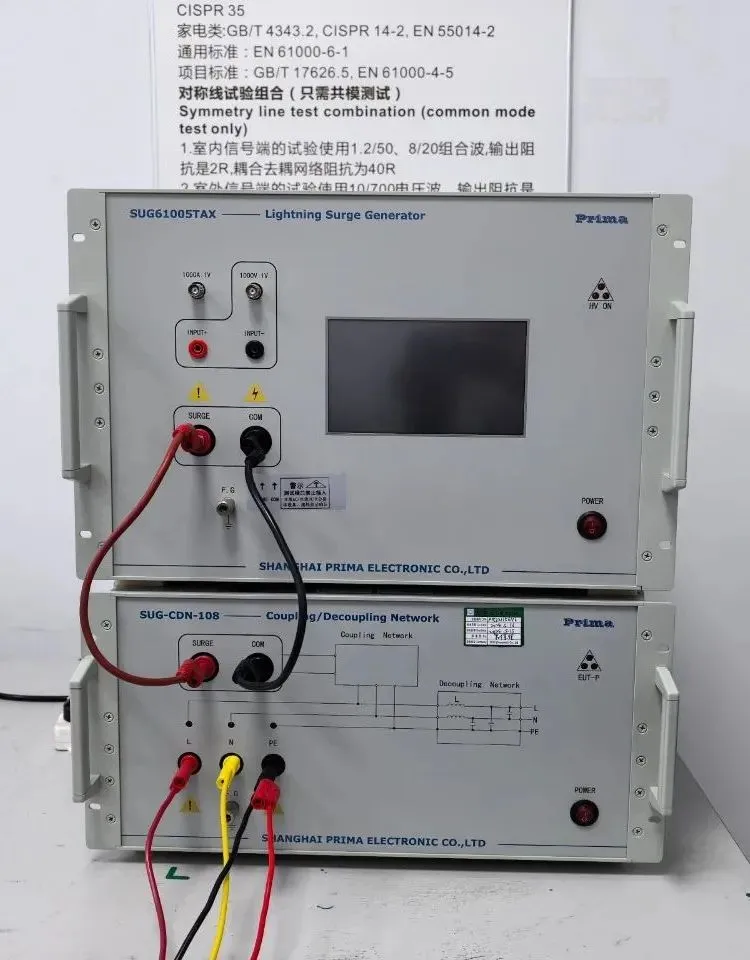
Main Test Items
① RF Output Power Test: Verify whether the transmit power of the device in different working modes complies with the limits specified in the standard, ensuring the device does not interfere with surrounding wireless devices and the electromagnetic environment.
② Power Spectral Density: Reflects the power intensity of the signal at different frequencies, especially suitable for the analysis of non-periodic signals or random signals.
③ Spurious Emission: Test emissions at one or more frequencies outside the necessary bandwidth, whose emission levels can be reduced without affecting the transmission of corresponding information. Spurious emissions include harmonic emissions, parasitic emissions, intermodulation products, and frequency conversion products, excluding out-of-band emissions.
④ Occupied Bandwidth: As a core parameter for measuring the efficiency of signal spectrum resource utilization and the intensity of potential spectrum interference, it refers to the frequency range where signal energy is concentrated.
⑤ Receiver Sensitivity: Verify whether the receiver sensitivity of the device meets the standard requirements to ensure the device can receive signals from other surrounding devices.
⑥ Receiver Spurious: Refers to the additional frequency components contained in the signals received by the receiver in a wireless communication system that do not belong to the target signal. These spurious signals may interfere with the normal operation of the receiver, affect signal demodulation and processing, thereby reducing the performance and reliability of the system.
⑦ Adaptivity: This test aims to determine the performance of the device under test when there is interference between wireless channels in the environment. During the test, the device under test needs to be affected by different artificially added test signals according to different working states: 1. Interference signals; 2. Receiver blocking signals. While the device under test is affected by the above two signals, a spectrum analyzer is used to monitor whether its performance within the working frequency range is normal, so as to determine whether the device under test meets the working requirements specified in the standard.
⑧ Receiver Blocking: Receiver blocking refers to the ability of the device to receive the desired signal on its working channel without degradation caused by unwanted signals (blocking signals) present at frequencies outside the working band listed in the following table.
Basis for Standard Application
① ETSI EN 300 328: For frequency hopping or spread spectrum products such as FHSS and DSSS.
② ETSI EN 300 440-2: For SRD devices operating in the frequency range of 1 GHz to 40 GHz.
In terms of scope, the products targeted by EN 300 440-2 include those covered by EN 300 328. Therefore, when selecting the applicable standard for 2.4 GHz products, it is mainly determined by whether their modulation method is frequency hopping or spread spectrum.
China JJR Laboratory provides EN 300328 Test Reports for electronic products. Compared with other laboratories, JJR can help enterprises save 40% of certification and test costs. Welcome to consult.
Email:hello@jjrlab.com
Write your message here and send it to us
 Electronic Product IEC 62368-1 Safety Testing
 What is an EU SDS (Safety Data Sheet)?
 What is the CA Prop 65 Warning Label?
 2026 Amazon TIC Mandatory Audit Catalog
 Australian Electrical EESS and RCM Compliance
 How to get Vietnam CR Certification
 What is a UN 38.3 Battery Test Report
 What is the UN38.3 Certification Test?
Leave us a message
24-hour online customer service at any time to respond, so that you worry!