



Introduction to GB/T 19865-2024 "Safety of Electric Toys"
The new national standard GB/T 19865-2024 "Safety of Electric Toys" officially took effect on August 1, 2026, fully replacing the GB 19865-2005 version. Initially released on July 24, 2024, this updated standard introduces major revisions in application scope, battery safety, optical radiation safety, software safety, and testing requirements. As the standard is now in its mandatory implementation phase, electric toy manufacturers must complete their ccc certificate renewals promptly.
Expanded Scope of Application
The new standard significantly broadens its scope to include:
Assembly electric toys
Experimental electric toys
Functional electric toys (toys operating like adult products, appliances, or devices, potentially as scale models)
Electric toy computers
Dollhouses with built-in lights
Note: Product packaging is now considered part of the electric toy if it is intended for play.
Stricter Battery Safety Requirements
Battery safety is a major focus of this revision:
Rechargeable Batteries: Must comply with lithium battery safety standards, such as GB/T 31241.
Button/Coin Batteries: The standard strictly prohibits designs that allow children to open the battery compartment without tools (even via two or more independent movements). Fasteners (e.g., screws) securing the battery door or cover must remain permanently attached to the door, cover, or device.
Small Battery Parts: Batteries and small toy components containing batteries must not be removable without tools. This applies to electric toys across all age groups.
Labeling: Added new labeling and instructional requirements specifically for button and coin batteries.
New Optical Radiation Safety Requirements
The standard systematically incorporates optical radiation safety for the first time:
Lasers: Must comply with relevant GB 7247.1 requirements.
LED Products: Require an assessment for retinal blue light hazards.
Measurements: Added specific optical radiation measurement requirements.
First-Time Software Safety Assessment
Safety-related software functions (e.g., charging protection, temperature monitoring) must now pass a reliability assessment. This establishes a new compliance threshold for smart toys, requiring manufacturers to thoroughly integrate software safety during the product design phase.
Stricter Testing Requirements
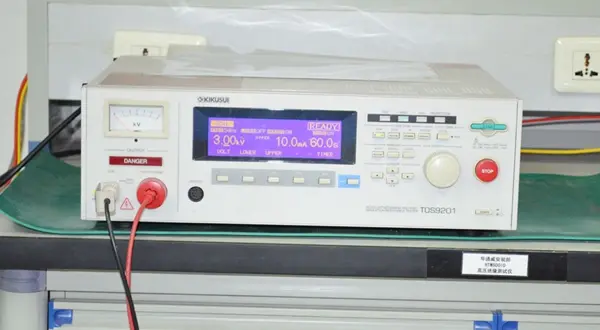
Electrical Strength: Increased the test voltage for reinforced insulation.
Temperature Rise: Adjusted the testing environment to (25±5)°C, prioritizing the thermocouple measurement method.
Drop Testing: Standardized at 93cm±5cm across all age groups. Large and heavy electric toys are exempt from drop testing.
CCC Certificate Renewal Guidelines
Based on the "Implementation Plan for 3c certificate Conversion of Children's Products (Toys and Strollers) to the New GB/T 19865-2024 Standard" issued by the China Quality Certification Centre (CQC):
6.1 Renewal Timeline
New Applications: Starting August 1, 2026, certifications and new certificates will be issued based on the updated standard.
Certified Products: Current certificate holders must apply for renewal with the CQC before their first supervisory inspection after August 1, 2026. Failure to comply will result in certificate suspension, followed by revocation if unresolved within three months.
Exemptions: Certified products already manufactured, marketed, and permanently discontinued before August 1, 2026, do not require renewal.
6.2 Application Methods
Independent Application: Apply separately after the announcement and submit samples for differential testing.
Combined Supervisory Application: Complete the renewal alongside a routine supervisory inspection, with samples drawn by inspectors for testing.
6.3 Priority Sampling Product Types
The following products are prioritized for differential testing:
Toys with remote controls
Products generating electromagnetic fields
USB-powered products
Products using liquids
Products containing small button batteries or battery-powered small parts
Products connectable to other devices
Products with battery chargers
Experimental electric toys
6.4 Key Application Steps
Clearly note "Independent Application" or "Combined Supervisory Application" on the form.
In the additional info section, select the standard renewal change: From GB 19865-2005 to GB/T 19865-2024.
Key Actions for Enterprises
With GB/T 19865-2024 now enforced, electric toy enterprises should prioritize:
Scope Check: Verifying if products fall under the newly expanded scope.
Battery Compliance: Evaluating battery and compartment structures against the updated requirements.
Radiation Safety: Assessing LED, laser, and light-emitting components for optical radiation safety compliance.
Software Reliability: Ensuring safety-related software has proper reliability evaluations.
CCC Updates: Confirming relevant CCC-certified products meet the renewal requirements.
Recommendation: Priority compliance assessments should be conducted for electric toys featuring charging capabilities, smart controls, LED lighting, or button battery designs.
JJR LAB Electric Toy Testing & Certification Services
JJR LAB provides comprehensive testing and technical support based on the new GB/T 19865-2024 standard. We offer new/old standard difference analysis, product pre-testing, and CCC certificate renewal consulting to help enterprises smoothly navigate standard transitions and certificate updates.
Email:hello@jjrlab.com
Write your message here and send it to us
 Australia RCM Certification for Radio Devices
 RED Cybersecurity EN 18031 Standard
 Compliance Testing for EMC
 What is Amazon Toy Compliance?
 What is Cytotoxicity ISO 10993-5
 What is Hemocompatibility Testing ISO 10993?
 What is ISO 10993-5 Tests for In Vitro Cytotoxicit
Electronic Product IEC 62368-1 Safety Testing
What is ISO 10993-5 Tests for In Vitro Cytotoxicit
Electronic Product IEC 62368-1 Safety Testing
Leave us a message
24-hour online customer service at any time to respond, so that you worry!