



New US CPSC eFiling Regulations Guide
How to Determine if a Product is Regulated by the CPSC?
1. Basic Criteria for Determination
A product must be certified (and therefore requires eFiling) if it meets the following conditions:
It is a finished product.
It is subject to a CPSC consumer product safety rule, ban, standard, or regulation.
It is imported for consumption or warehousing, or distributed in commerce.
2. High-Risk Products Listed by the CPSC
The CPSC provides a list of approximately 600 HTS codes that it believes may contain products subject to mandatory standards or considered high-risk. However, it is important to note that this list does not cover all HTS codes that might require an electronic certificate. To obtain a high-definition PDF version, you can send a private message with "CPSC税号清单" to our official WeChat account background.
This primarily covers the following categories of high-risk/common consumer products:
Children's Products: Such as toys, children's clothing, children's furniture, cribs, pacifiers, children's jewelry, etc.
Household Items: Such as furniture, mattresses, carpets, curtains, etc.
Apparel and Textiles (especially children's sleepwear, etc.).
Others: Helmets, matches, ATVs (all-terrain vehicles), etc.
3. Using Official CPSC Tools to Check (Recommended)
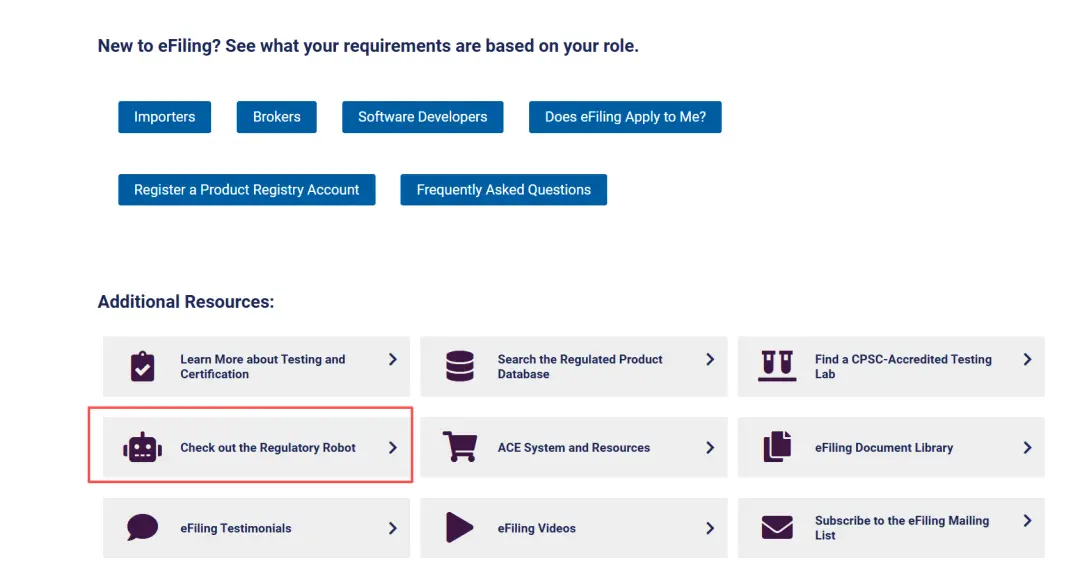
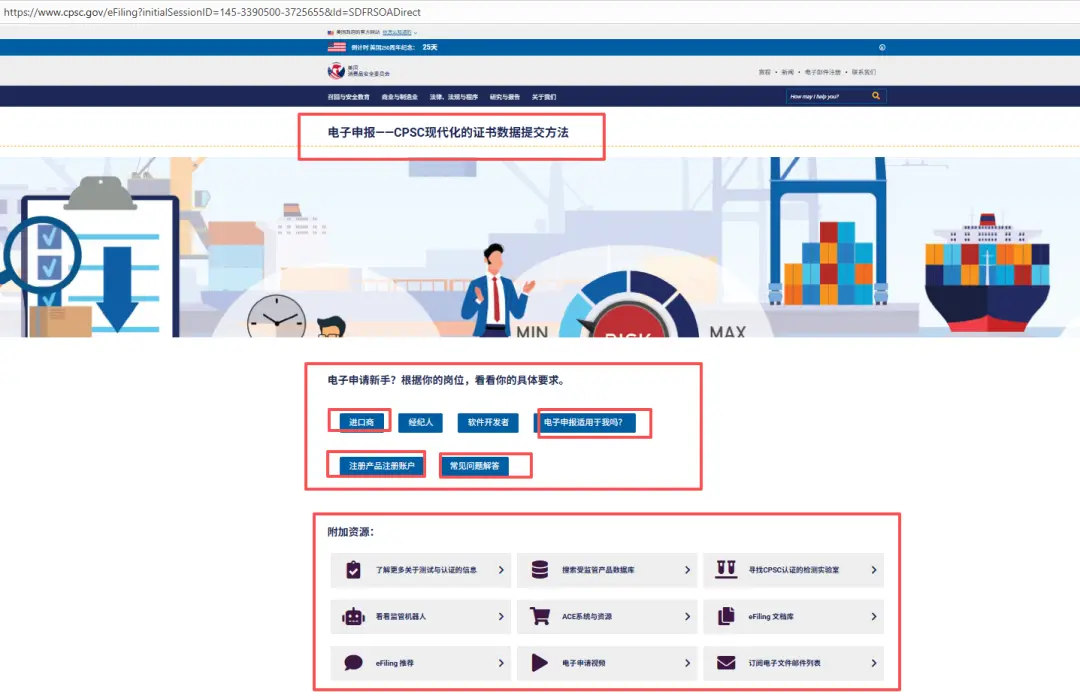
Use the Regulatory Robot tool: Log in to the official CPSC eFiling special page (cpsc.gov/eFiling), click the section below "Check out the Regulatory Robot" to self-check whether the product is regulated by the CPSC, and whether a CPC or gcc certificate is required. Enter or check the specific information that matches your product according to the system prompts and options.
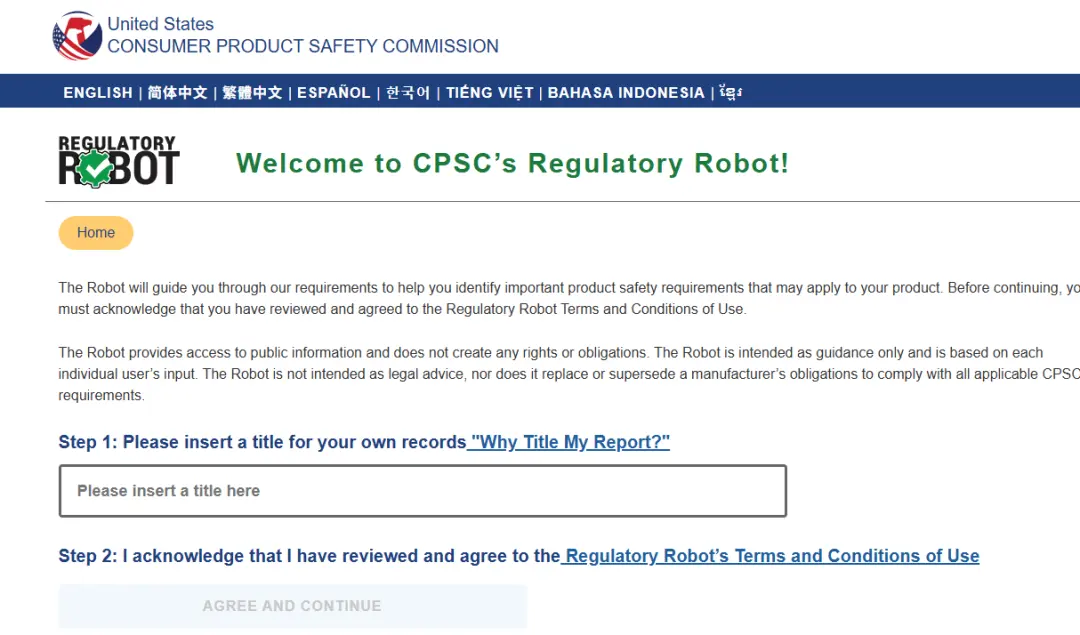
After filling it out, the system will generate a complete report showing:
Whether the product is regulated by the CPSC
Whether a GCC (General Certificate of Conformity) or CPC (Children's Product Certificate) is required
Which regulations and standards are involved
Whether laboratory testing is required
Core determination logic: As long as the product originally required a GCC or cpc certificate, then eFiling is required.
02 What to Do if Regulated?
1. Overall Process
If you determine that your product is regulated by the CPSC, you need to complete the following core tasks:
Ensure the product has undergone compliance testing.
Collect the 7 data elements required for the certificate.
Choose an eFiling method (Full Message Set or Reference Message Set).
Enter the certificate data into the CPSC Product Registry.
Collaborate with a customs broker to submit the Message Set in the CBP ACE system.
2. 7 Data Elements the Certificate Must Contain
Regardless of which eFiling method you choose, the following 7 pieces of information must be provided:
Product ID
Citation Codes
Manufactured Date
Manufactured Location
Product Test Date
Testing Laboratory
Point of Contact (for record maintenance)
3. Choosing an eFiling Method
You can choose one of the following two methods based on your business characteristics:
Method 1: Full PGA Message Set
Target Audience:
Participants importing a limited number of regulated consumer products.
Participants who do not repeatedly import the same product.
Operation Method:
The importer transmits all required product certificate data elements directly into the Message Set, which is then transmitted to CBP's ACE system.
Provide all 7 product certificate data elements in the Message Set.
Method 2: Reference PGA Message Set
Target Audience:
Participants repeatedly importing regulated consumer products where these products use the same product certificate.
Operation Method:
The importer enters the product certificate data elements into the CPSC's Product Registry.
Two input methods:
Manual upload via the user interface.
Batch upload via CSV file or API.
Then, provide the Certificate Identifiers corresponding to that certificate in the Message Set, which is then transmitted to CBP's ACE system.
Important Note: The CPSC assumes that importers will collaborate with their trade partners (including manufacturers, testing laboratories, customs brokers, software developers, and other third-party organizations) to implement eFiling. The CPSC does not regulate how trade partners support importers in entering product certificate data.
That is, the CPSC only cares that the importer ultimately submits the correct certificate data. They do not manage how the importer and the various intermediaries divide the work and cooperate, nor do they care whether you submit it yourself or a customs broker submits it.
4. Official Resource Documents
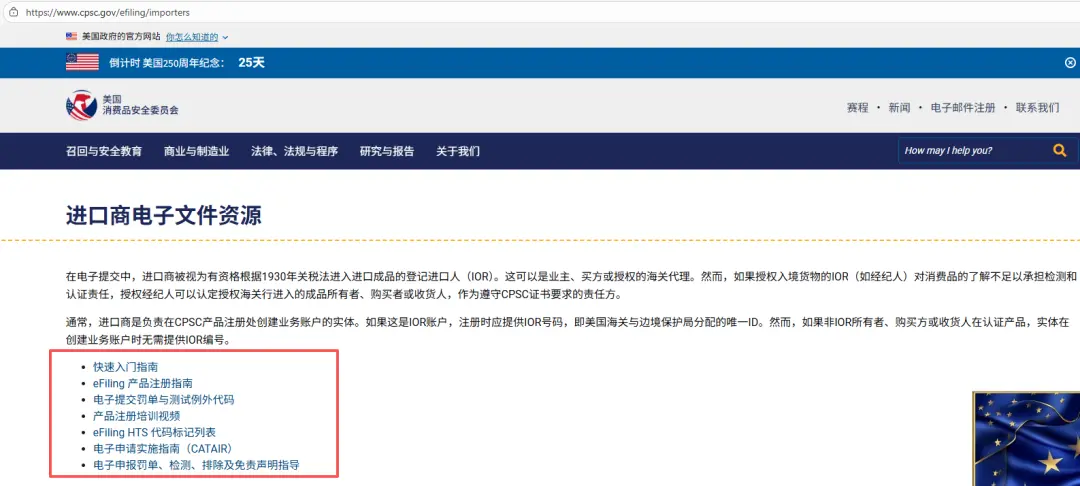
Log in to "eFiling Resources for Importers | CPSC.gov". Here you can find various resource documents compiled officially. You can download PDFs or watch videos to view detailed steps:
Quick Start Guide
eFiling Product Registry Guide
eFiling Citations and Test Exemption Codes
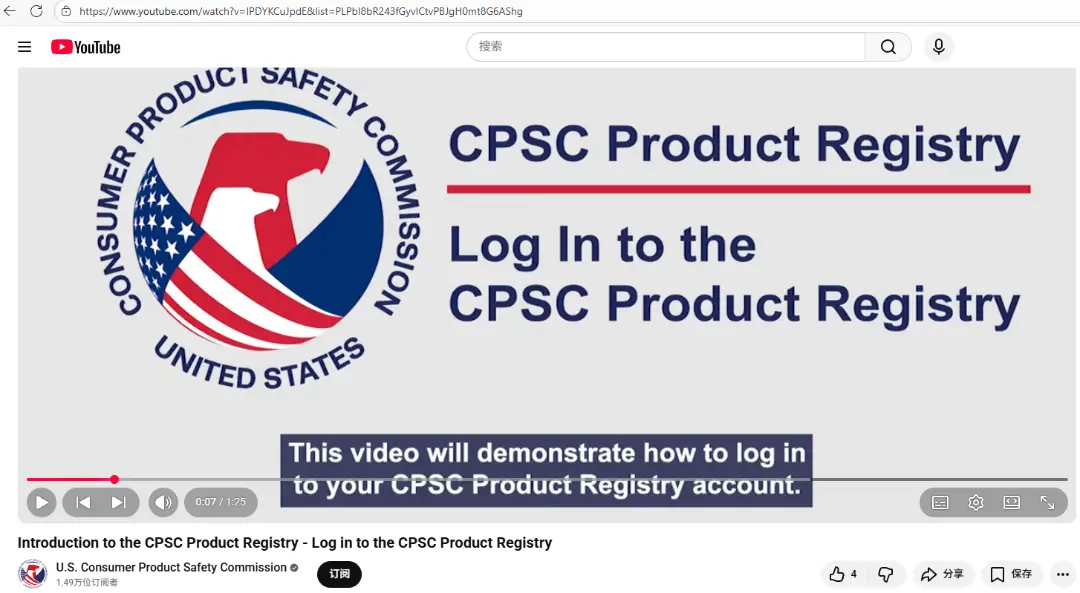
Product Registry Training Video (as shown below, you can jump to YouTube to watch)
eFiling HTS Code Flag List
eFiling Implementation Guide (CATAIR)
eFiling Citations, Testing, Exclusions, and Disclaimer Guidance
Log in to the official CPSC eFiling special page "cpsc.gov/eFiling", where you can find the registration portal, frequently asked questions, etc.
Email:hello@jjrlab.com
Write your message here and send it to us
 How to get SOR/2011-17 Compliance Certification
 What is DGCCRF Certification Testing
 Bow and Arrow Children's Toys CPC Certification
 POPs Testing Service Consultation
 EU PPWR New Packaging Compliance
How to Obtain an MSDS/SDS Report
EU PPWR New Packaging Compliance
How to Obtain an MSDS/SDS Report
 CPSIA Testing Service Consulting
 Food Contact Materials Testing Services
Leave us a message
24-hour online customer service at any time to respond, so that you worry!