



The Difference Between CPC and GCC Certificates
CPC and GCC are certifications required by manufacturers or importers under the U.S. Consumer Product Safety Improvement Act (cpsia) for their products.
What is the difference between CPC and GCC?
The main difference is: CPC is specifically for children's products, intended for children 12 years old and under, and is a mandatory requirement for all children's products exported to and sold in the U.S., while GCC applies to general or non-children's products. For children's products, a Children's Product Certificate (CPC) is required, while a General Certificate of Conformity (GCC) is not needed.
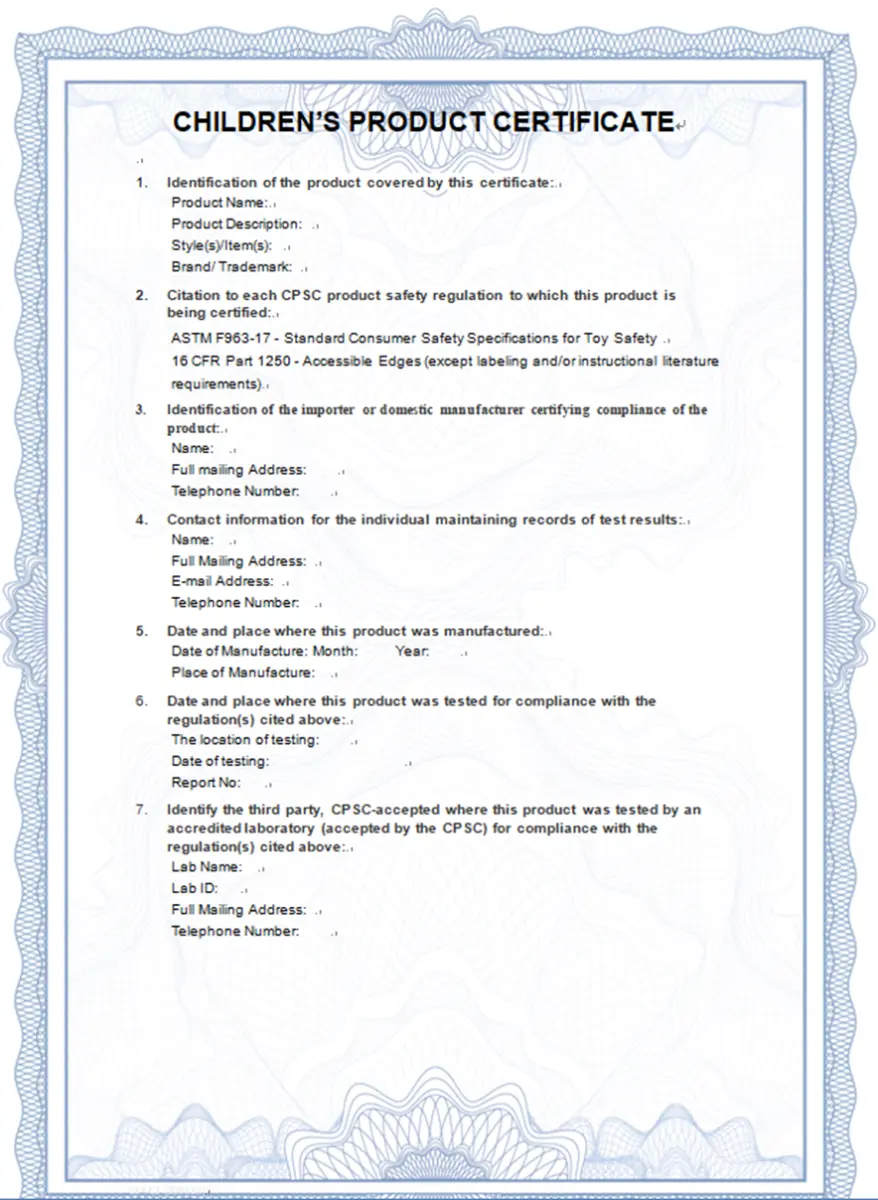
What information must a cpc certificate include?
1. Basic product information:
1) Product name
2) Product description
3) Style number
4) Brand name
2. Applicable test standards/regulations for the product
3. Basic information of the importer or domestic manufacturer:
1) Name of importer or domestic manufacturer
2) Contact email address
3) Contact phone number
4. Basic information of the entity holding the test report:
1) Name of the entity
2) Contact email address
3) Contact phone number
5. Production date and location:
1) Production year and month
2) Production address
6. Test report information:
Test report date, test location, test report number
7. Basic information of the CPSC-approved third-party laboratory issuing the report:
(Laboratory name, Laboratory CPSC official code Lab ID, laboratory contact email, laboratory contact phone number)
What information must a gcc certificate include?
1. Basic product information:
1) Product name
2) Product description
3) Style number
4) Brand name
2. Applicable test standards/regulations for the product
3. Basic information of the importer or domestic manufacturer:
1) Name of importer or domestic manufacturer
2) Contact email address
3) Contact phone number
4. Basic information of the entity holding the test report:
1) Name of the entity
2) Contact email address
3) Contact phone number
5. Production date and location:
1) Production year and month
2) Production address
6. Test report information:
Test report date, test location, test report number
7. Basic information of the laboratory issuing the report:
(Laboratory name, Laboratory code Lab ID, laboratory contact email, laboratory contact phone number)
gcc certificate template example:
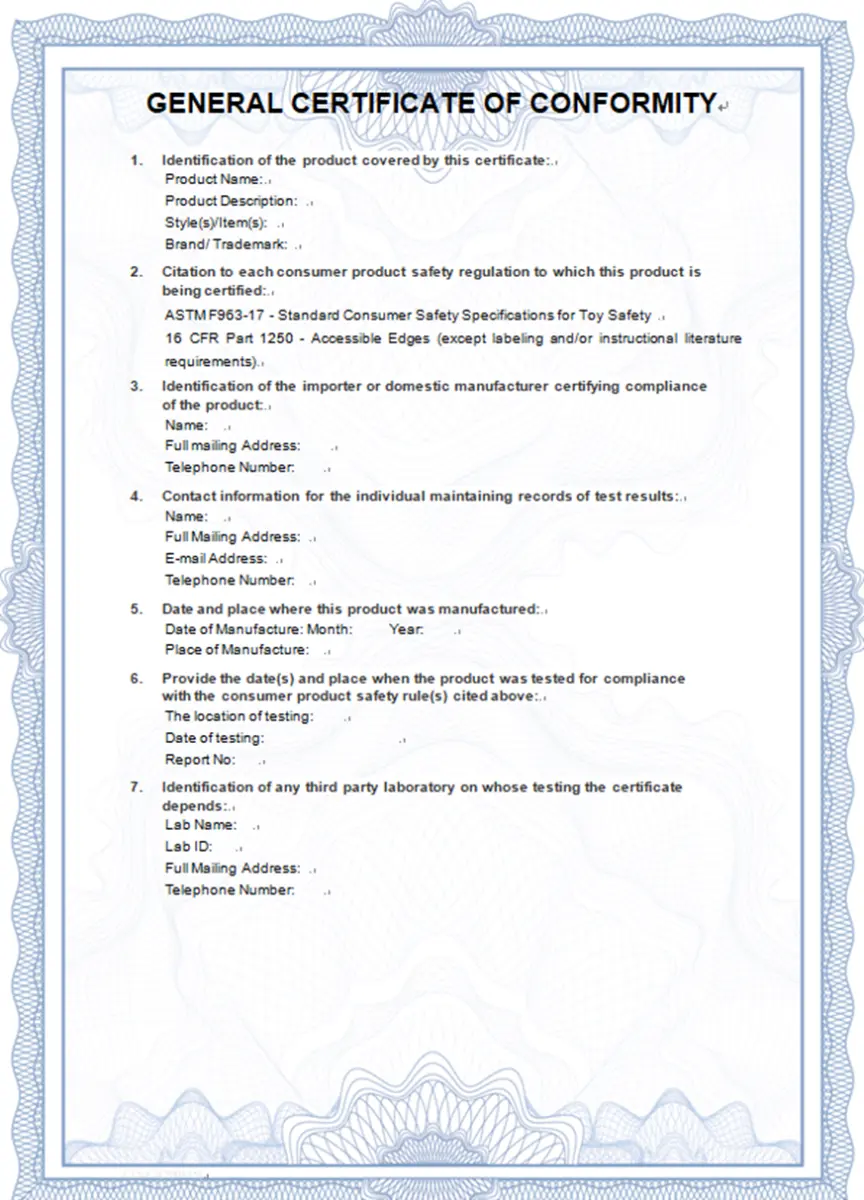
The difference in the basic information between the CPC and GCC certificates is: For CPC certificates, the test must be conducted by a CPSC-approved third-party laboratory for the report to be valid. However, for GCC certificates, the test does not need to be conducted by a CPSC-approved third-party laboratory and can be performed by a general laboratory.
Both CPC and GCC certificates are self-declared by manufacturers or importers, certifying that their products have been tested and meet the relevant regulatory requirements. These certificates serve as a guarantee of compliance and also enable traceability. In case of any incidents or non-compliance with regulations or quality standards during the sale of the product, the certificate allows for tracking and assigning responsibility.
Email:hello@jjrlab.com
Write your message here and send it to us
 What is EN 61000 Certification Compliance?
 How to get an EN 61000 Test Report?
 What is the Amazon EN 55035 Standard?
 What is EN 55035 Certification Compliance?
 How to get the EN 55035 Test Report?
 What is the Amazon EN 301 489 Standard?
 How to get an EN 301 489 Test Report?
 What is EN 301 489 Compliance Certification?
Leave us a message
24-hour online customer service at any time to respond, so that you worry!