



RCM Marking and AS/NZS 4268 Testing Requirements
Wireless communication devices sold in the Australian and New Zealand markets must obtain RCM (Regulatory Compliance mark) certification, which constitutes the core requirement under the mandatory regulations of the two countries. The rcm mark signifies that the product complies with multiple technical standards, including AS/NZS 4268. This document provides an in-depth analysis of the key points of this certification system.
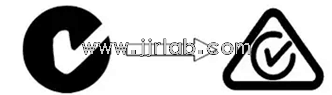
The full title of the AS/NZS 4268 standard is Standards for Electromagnetic Compatibility of Radio Equipment and Services. It is a core testing specification formulated by the Australian Communications and Media Authority (ACMA). The standard primarily evaluates the Electromagnetic Compatibility (EMC) and Radio Frequency (RF) characteristics of wireless devices, ensuring stable operation of the equipment in complex electromagnetic environments while preventing interference with other devices.
The rcm certification process consists of three critical phases:
1. Full-Scope Testing
The product must pass all test items specified in AS/NZS 4268, including emc tests such as conducted emissions, radiated emissions, and harmonic currents, as well as RF parameter measurements such as transmit power and frequency stability. Testing must be performed in laboratories accredited by ACMA, with a typical testing cycle of 4–6 weeks.
2. Technical Documentation Preparation
Manufacturers are required to compile a complete set of technical documentation, including circuit diagrams, user manuals, and test reports.
3. Registration and Declaration
A locally registered responsible party (which can be an Australian importer or an authorized representative) shall complete the registration and declaration in the ERAC database.
It is particularly noteworthy that the revised version AS/NZS 4268:2021 issued in 2021 has added testing requirements for 5G NR devices, extending the operating frequency range up to the 6 GHz band. The new regulation mandates that all wireless local area network (WLAN) devices supporting Wi-Fi 6E must undergo re-certification, imposing higher requirements on export-oriented enterprises. Additionally, adjustments have been made to the radiated power limits in the test items: the upper limit of Equivalent Isotropically Radiated Power (EIRP) in the 2.4 GHz band has been reduced from 4 W to 2 W.
Common non-conformities are concentrated in three aspects:
1. Missing RCM mark or certification number on product labels;
2. Omission of mandatory warning statements in user manuals;
3. Discrepancies between test samples and mass-produced versions.
A case in point: a Chinese manufacturer once invalidated its test results due to unauthorized modifications to the antenna design, ultimately incurring a rectification cost of 120,000 Australian dollars.
To achieve smooth certification, enterprises are advised to take the following measures:
① Initiate certification planning 6 months in advance and select a testing laboratory with proven experience in AS/NZS 4268 compliance testing (e.g., JJR);
② Conduct pre-testing to identify potential issues proactively;
③ Maintain complete records of product design changes.
For products exported to the EU simultaneously, enterprises may consider aligning RCM certification with CE certification, leveraging partial test results from harmonized standards such as EN 301 489 to reduce testing costs by approximately 30%.
With the surging export volume of Internet of Things (IoT) devices, Australian authorities have tightened market supervision. In 2023, ACMA random inspections revealed that 15% of wireless devices had certification non-conformities, leading to the mandatory removal of such products from the market. To achieve steady development in the Australian and New Zealand markets, enterprises must establish a long-term compliance mechanism, regularly review updates to relevant standards, and ensure that their products continuously meet the requirements of AS/NZS 4268.
Email:hello@jjrlab.com
Write your message here and send it to us
 What is Cytotoxicity ISO 10993-5
 What is Hemocompatibility Testing ISO 10993?
 What is ISO 10993-5 Tests for In Vitro Cytotoxicit
 Electronic Product IEC 62368-1 Safety Testing
 What is an EU SDS (Safety Data Sheet)?
 What is the CA Prop 65 Warning Label?
 2026 Amazon TIC Mandatory Audit Catalog
Australian Electrical EESS and RCM Compliance
2026 Amazon TIC Mandatory Audit Catalog
Australian Electrical EESS and RCM Compliance
Leave us a message
24-hour online customer service at any time to respond, so that you worry!