



Small Appliance CB Certification
Introduction to cb certification
The CB Scheme (IEC System for Conformity Testing and Certification of Electrical Equipment) is an international system operated by the IECEE (International Electrotechnical Commission for Electrical Equipment Testing and Certification). Certification bodies from IECEE member countries test the safety performance of electrical products based on IEC standards. The test results, known as the cb test report and cb certificate, are mutually recognized in IECEE member countries. The purpose of CB certification is to reduce international trade barriers caused by different national certification or approval criteria. A CB certification or test report is widely recognized, so if a product has CB certification, it can be converted into certifications for multiple IECEE member countries, reducing the need for additional samples or tests.
Electrical and electronic products used in homes, offices, workshops, and similar environments, or other products with potential safety hazards, are subject to mandatory certification in some countries (such as China's CCC certification). Only after obtaining a national certification certificate can the product be exported to and sold in that country. Even in countries without mandatory certification, consumers often prefer to buy products with CB certification and the CB mark for their safety.
Range of Products for CB Certification:
The CB Scheme covers products within the IEC standard scope recognized by the IECEE system, generally including electrically powered appliances or electronic products powered by batteries:
- Home Appliances: Rice cookers, refrigerators, air conditioners, washing machines, electric kettles, water heaters, printers, fresh air machines, etc.
- Lighting and LED Drivers: Ceiling lights, garden lights, floodlights, desk lamps, etc.
- Audio-Visual Equipment: Headphones, televisions, monitors, speakers, cameras, projectors, etc.
- IT Equipment: Mobile phones, computers, switches, servers, set-top boxes, smart bracelets, watches, etc.
- Switching Power Supplies: Switch controllers, adapters, DC power supplies (batteries, etc.)
Note: Electromagnetic compatibility (EMC) is not included in the CB scheme unless specifically required by the IEC standard used.
Testing Items:
- Input test
- Label durability test
- Hazardous energy test
- Capacitor discharge test
- Current-limiting circuit test
- Limited power source test
- Ground resistance test
- Moisture treatment test
- Dielectric strength test
- Fault condition test
- Glow wire test
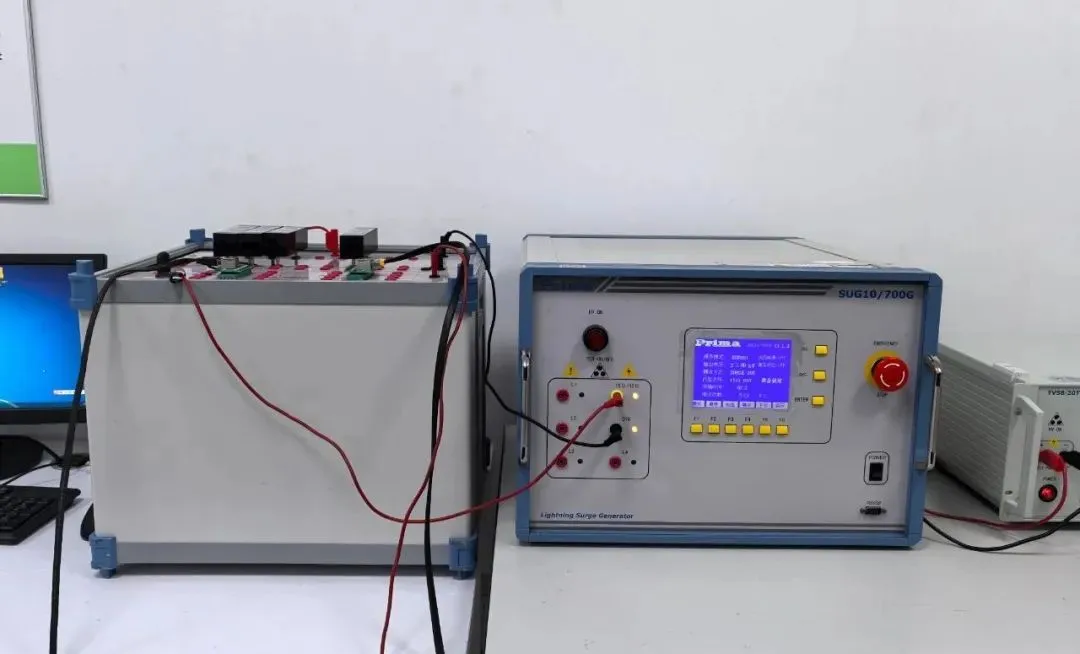
- Surge voltage test
- Insulation resistance test
- Operating voltage test
- Power cord tension test
- Stability test
- Impact test
- Drop test
- Plug torque test
- Temperature rise test
- Ball pressure test
- Touch current test
- Vibration test
- Needle flame test
- Horizontal and vertical flame test
- Tumbling barrel test
Testing Standards:
- Switching Power Supplies: IEC 61558-2-16
- LED Tubes: IEC 62776
- Old Standard for IT Equipment: IEC 60950
- Old Standard for AV Equipment: IEC 60065
- New Standard for IT & AV: iec 62368
- LED Bulbs: IEC 62560
- Household Appliances: iec 60335
- LED Drivers: IEC 61347-2-13
Required Documents for CB Certification:
1. Product user manual (in English)
2. Safety design documents (including critical structure diagrams reflecting creepage distances, clearances, insulation layers, and thicknesses)
3. Product technical specifications (or company standards)
4. Product circuit diagram
5. Product wiring diagram
6. List of key components or raw materials (choose components with European or American certification marks)
7. Copy of complete product or component certification documents
Note: If testing goes smoothly, the CB certification process generally takes 4-6 weeks.
Important Considerations for CB Certification of Home Appliances:
1. Product components should be certified, such as cables with VDE certification and components with UL, CCC/CQC certification, etc.
2. When exporting to different countries, differential testing may be required for CB certification (differences refer to deviations in a country's standards compared to international standards, such as differences in mains voltage and frequency). Confirm the target export country before applying for certification.
3. CB certification is stricter than CE certification, so ensure samples are well-prepared.
4. Factory inspections are not required for CB certification.
5. The cb test report will clearly present all test, measurement, verification, inspection, and evaluation results, along with photos, circuit diagrams, images, and product descriptions. Ensure all submitted materials are accurate, as errors could result in test failure.
Email:hello@jjrlab.com
Write your message here and send it to us
 ISO 10993 Biocompatibility Standards
 Medical TPV ISO 10993 Biocompatibility Testing
 FDA Requirements for Biocompatibility under ISO 10
 Amazon Spain WEEE Compliance Deadline: September 3
 What is the ASTM F2264 Certification Test?
 What is ASTM F2194 Certification Testing?
 What is the ASTM F2167 Certification Test?
 What is the ASTM F2050 Certification Test?
Leave us a message
24-hour online customer service at any time to respond, so that you worry!