



What is Australian RCM certification?
How much does rcm certification cost?
Many clients often ask me, "How much does it cost to register for RCM certification for exporting electronic products to Australia?" Today I will explain: Our RCM certification fee is $450 USD; this fee is low because we are a laboratory in China, so we can offer such a low cost. Of course, we also want to save certification costs for manufacturing companies. I believe you must have compared the fees of many laboratories and found that our price saves you 40% of the certification costs.

Email:chen18814186731@gmail.com
What is Australian RCM certification?
RCM certification is an identification introduced by Australia and New Zealand to achieve unified marking of electrical products. This mark is a trademark owned by regulatory authorities in Australia and New Zealand, indicating that the product complies with both safety and EMC requirements and is mandatory. Electronic and electrical products entering Australia must pass RCM certification to be legally sold.
The Regulatory Compliance mark (RCM) is a registration mark, CM = Safety (product safety certification) + EMC + Importer Declaration. It indicates that the supplier declares that the product complies with the safety and other requirements specified in Australia's and New Zealand's electrical safety laws/regulations and also complies with the electromagnetic compatibility (EMC) requirements specified in Australia's and New Zealand's Radiocommunications Act.
Which products need RCM certification?
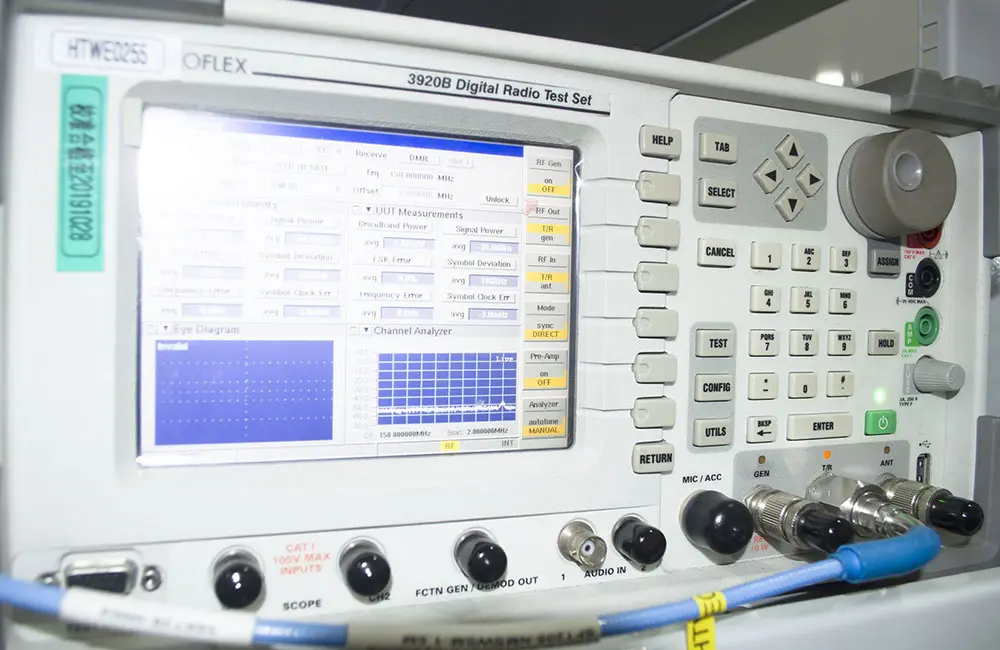
RCM certification controls electrical products mainly divided into non-regulated and regulated products, as not all products marked with the RCM label require registration. Non-regulated products do not need to be registered, and currently only Level 3 electrical products are required to be registered, including 56 major categories such as power adapters, vacuum cleaners, and other high-risk items.
In general, the RCM label should be affixed to the product label. The previously required agent number is no longer needed for the new RCM.
Since the requirement was issued on March 1, 2013, there has been a three-year transition period, which was mandatory from March 1, 2016. Therefore, manufacturers must strictly follow the requirements of this standard-related testing. Due to the new RCM requirements, unlike before, in addition to bearing the high risk of product quality failure, importers also need to pay registration and annual fees for registration, so there are very few companies that can provide this service.
We can provide RCM certification registration and testing services, and our laboratory is located in China!
Basic information about RCM certification
Certification nature: Mandatory certification
Factory inspection required: No
Local representative required: Yes
Certificate validity period: 2 years, 3 years, 5 years
Application period: One week after obtaining safety certification and C-Tick/emc report
RCM certification content
1. Safety (product safety certification)
Product safety certification includes two parts: regulated electrical products (Prescribed Products) and non-regulated products (Non-prescribed products).
1) Regulated electrical products are divided according to AS/NZS4417.2 and include electrical heating equipment, refrigeration equipment, power tools, components, etc. Among them, the three issuing units, Queensland, New South Wales, and Victoria, dominate the certification process. Regulated electrical appliances must obtain an accreditation certificate issued by the monitoring department, and the certificate number must be specified (the certificate number must be stamped). The first letter of the certificate number indicates which state or region issued the certificate. Such as:
(Q04051 (Queensland) --- Q Number
(W2015 (Western Australia) --- W Number
(V03101 (Victoria) --- ESV Certificate V Number
(NSW18099 (New South Wales) --- DOFT Certificate NSW Number
2) Non-regulated electrical appliances can be sold directly without certification, but manufacturers must ensure that the electrical safety of the products complies with the Australian standard AS/NZS3820:1998 (Essential Safety Requirements for Low Voltage Electrical Equipment); the monitoring department will issue a compliance certificate for products that meet the standard requirements. Electrical products that have obtained a compliance certificate can be stamped with a certificate number. The last letter of the certificate indicates which state or region issued the certificate, such as:
(CS/431/Q (Queensland)
(CS/108/NSW (New South Wales)

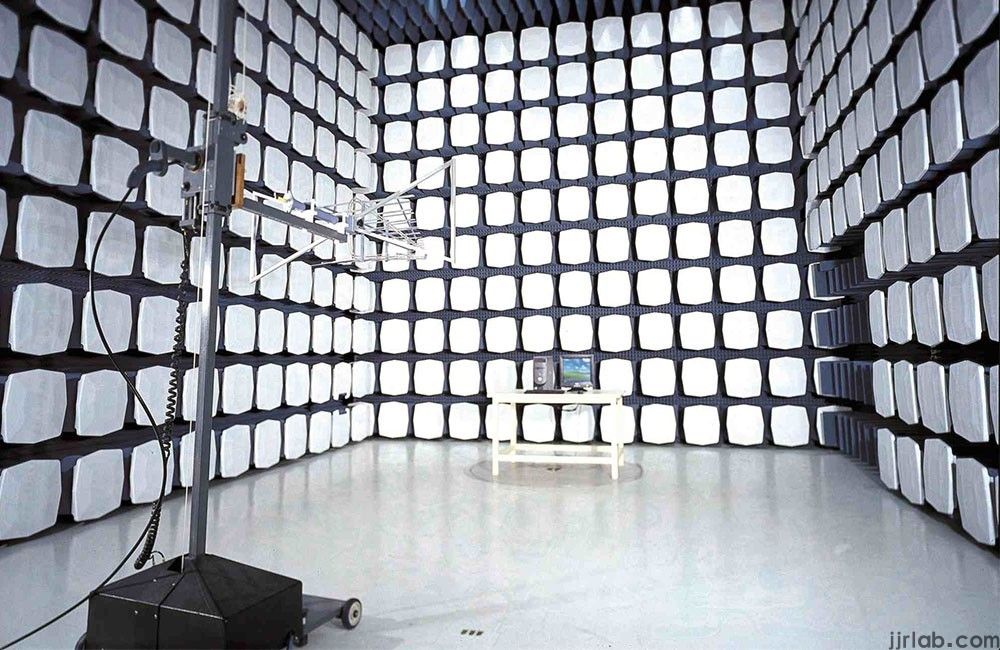
2. emc testing (Electromagnetic Compatibility)
The Australian electromagnetic compatibility compliance program is based on the Radio Communications Act 1992, which covers a wide range of products, including electric motor-driven and heat-generating electrical products, power tools and similar products, lighting and similar equipment, television receivers and audio equipment, information technology products, industrial, scientific, and medical instruments and devices, and ignition engines and arc welding equipment, etc. According to the level of electromagnetic interference generated by the product, the program divides the products into three categories. Second and third-class products must be marked with a C-Tick. However, regardless of the category of the product, it must comply with the relevant EMC standards.
Class I products: Products that have a slight impact on devices using wireless spectrum, such as manual switches, simple relays, brushless squirrel-cage induction motors, AC power supplies/power transformers, and resistors, etc. These products can voluntarily apply for the use of the C-Tick logo during production and sales.
Class II products: Products that have a significant impact on devices using wireless spectrum, such as digital devices with microprocessors or synchronous clocks, rectifiers or slip-ring motors, arc welding equipment, switch-mode power supply units, light intensity regulators and motor speed controllers, information technology (CISPR 22) category telecommunications terminal equipment (changed from Class III to Class II since November 7, 2003).
Class III products: Products that have a severe impact on devices using wireless spectrum, such as industrial, scientific, and medical instruments and devices, group 2 (CISPR11).
RCM certification application process
Third-party testing laboratory evaluates the product and determines the test standards to be implemented;
If there are non-compliant items during testing, the laboratory will make corrections to the product to meet and comply with Australian standard requirements;
After passing the test, a test report is issued;
Submit the test report to the Australian certification authority for document review;
After approval by Australia, issue the rcm certificate;
Customers can register on the Australian website by themselves or through the laboratory.
RCM certification considerations
1. The rcm logo needs to be uniformly added to the product by the specified time, note that this requirement was announced by Australia on April 19, 2013;
2. When applying for RCM certification for plug-in adapters, random tests of plugs must be conducted;
3. For products such as fluorescent lamps, such as T8 LED lamps, because users can directly replace them, there is a higher safety risk, and samples need to be sent to Australia for evaluation;
4. The time required by different issuing authorities may vary.
Email:hello@jjrlab.com
Email:hello@jjrlab.com
Write your message here and send it to us
What is UL 1642 Compliance Certification?
 What Is Amazon's UL 60335 Standard
 How to get a UL 60335 Test Report
 What is UL 60335 Certification Compliance?
 What is EN 61000 Certification Compliance?
 How to get an EN 61000 Test Report?
What is the Amazon EN 55035 Standard?
How to get an EN 61000 Test Report?
What is the Amazon EN 55035 Standard?
 What is EN 55035 Certification Compliance?
Leave us a message
24-hour online customer service at any time to respond, so that you worry!