



What Products Need CE Certification?
What is CE certification?
CE is the abbreviation of "Conformité Européenne," meaning "European Conformity" in French. The "CE" mark is a safety certification mark and is considered the passport for manufacturers to open and enter the European market. All electronic consumer products exported to the EU must comply with the requirements of relevant directives and standards and must bear the ce mark. If a product falls within the scope of the relevant directives, it must meet all applicable directive requirements to bear the CE mark. CE certification is one of the necessary conditions for product market entry, customs clearance, and market inspection.
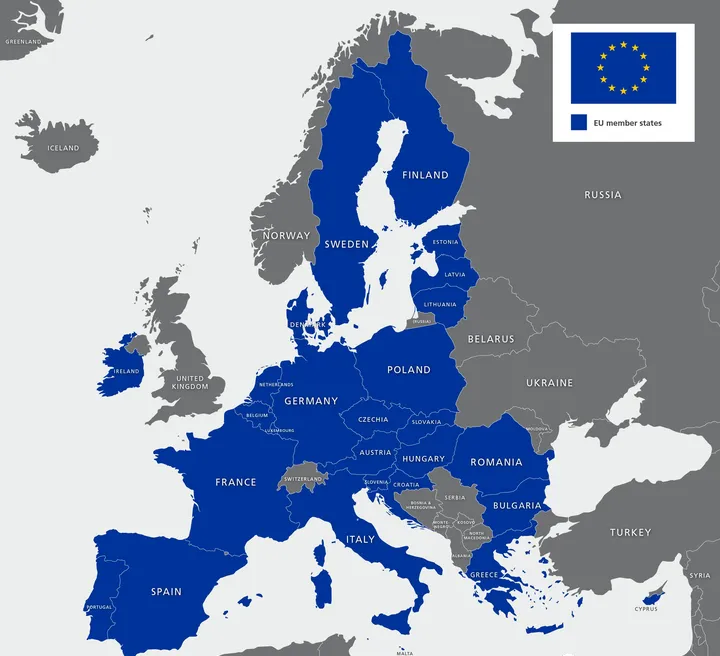
EU Directives (EU Directive)
An EU Directive represents a unified requirement agreed upon by all EU member states, and once a directive comes into effect, it becomes formal law that all member states must follow. For electronic and electrical products, they must comply with at least one or more of the following directives to bear the CE mark and enter the EU market:
- Electromagnetic Compatibility (EMC Directive) | Directive 2014/30/EU
- Low Voltage (LVD Directive) | Directive 2014/35/EU
- Radio Equipment (RED Directive) | Directive 2014/53/EU
- Restriction of the Use of Certain Hazardous Substances (RoHS Directive) | Directive 2011/65/EU
For more EU directives, please visit the following URL:
Harmonised Standards
After an EU directive comes into effect, to ensure accurate implementation, the member states discuss and establish unified execution standards known as "Harmonised Standards," which are published by the EU's Official Journal (OJ). You can find the harmonised standards for each directive at the following URL:
Choosing the Harmonised Standard
After confirming the applicable EU directives for product certification, you can look up the corresponding harmonised standards on the EU website. Generally, if there is a specific product standard for your product, it should be selected first. If not, choose a general standard; if none exists, then select a basic standard.
CE Certification Models and Certificate Types
The CE certification model can be selected according to the risk level and complexity of the product.
- Declaration of Conformity: This self-declaration should not be issued by a third party (intermediary or testing certification body) but by the manufacturer or the manufacturer's representative within the EU. If the product is sold in multiple EU countries with different languages, a declaration in each relevant language is required. All manufacturers entering the EU market must provide this document.
- Verification of Conformity: This self-declaration is issued by a third-party testing body, stating that the product test results comply with a specific EU standard or directive.
- EC-type Examination Certificate: Issued by a Notified Body (NB). After the manufacturer provides the complete test report, product technical documentation, risk assessment report, and complete Declaration of Conformity (DoC), the NB reviews the materials and issues the EU type examination certificate for the product.
- EC Design Examination Certificate: Issued by an NB. After a comprehensive quality system evaluation and audit, the manufacturer's production quality system is recognized. After obtaining the Mode H certificate, the manufacturer must add the NB's code after the CE mark on the product.
Accredited Testing Laboratories
Testing reports and Verification of Conformity certificates can be completed by laboratories that comply with ISO 17025 and whose scope of accreditation includes the testing standards for the product. However, if an NB certificate is required, the NB must audit the testing laboratory’s capabilities before accepting the NB certificate application.
EU Standard Voltage and Plug Interface
- Standard Voltage: AC 230V, 50Hz
How to Obtain CE Certification for Wireless Transmission Equipment
1. Confirm the Applicable CE Directive: For wireless transmission products using wireless modes, the RED (2014/53/EU) directive applies. If the product has other main functions, it may also need to comply with other directives such as the RoHS directive or the ATEX directive. RED stands for Radio Equipment Directive, which applies specifically to wireless communication products such as mobile communication devices, short-range wireless transmission devices, broadcasting equipment, etc.
2. Confirm the Testing Standards for the RED Directive: The RED directive includes requirements for Radio Spectrum (Article 3.2, Article 3.3), EMC (Article 3.1b), and Safety & Health (Article 3.1a). Below are some common testing standards for RED. For non-common products, you can refer to their corresponding frequencies.
- Spectrum Article 3.2
- GSM | EN 301 511
- WCDMA | EN 301 908-1, EN 301 908-2
- LTE | EN 301 908-1, EN 301 908-13
- BT, WiFi, ZigBee | EN 300 328
- WLAN 5G | EN 301 893
- GPS, GLONASS | EN 303 413
- Custom above 1GHz | EN 300 440
- Custom below 1GHz | EN 300 220
- EMC Article 3.1b
- GSM | EN 301 489-1, EN 301 489-52
- WCDMA | EN 301 489-1, EN 301 489-52
- LTE | EN 301 489-1, EN 301 489-52
- BT, WiFi, ZigBee | EN 301 489-1, EN 301 489-17
- WLAN 5G | EN 301 489-1, EN 301 489-17
- GPS, GLONASS | EN 301 489-1, EN 301 489-3
- Custom above 1GHz | EN 301 489-1, EN 301 489-3
- Custom below 1GHz | EN 301 489-1, EN 301 489-3
- Safety Article 3.1a
- Information | EN 60950
- Multimedia | EN 62368
- Battery | EN 62133
- Radiation Exposure Assessment Standards:
- en62479: For low-power devices (power less than 20mW)
- EN62311: For devices with power greater than 20mW and a distance greater than 20cm from the human body (no sar test required)
- en50385: For base stations and fixed terminals with power ≥20mW
- SAR Test Requirement: When the usage distance is ≤20cm, and power is ≥13dBm
3. Types of RED Certification:
- Initial Application
- Derivative (Record) Application: Includes changing the applicant, product model, updating components, etc.
4. Sample Preparation and Debugging:
- Provide the appropriate number and type of samples according to the testing content.
- EMC Test: 1 complete unit + accessories
- RF Test: 1 complete unit + accessories + fixed frequency sample (connect or solder RF line, serial port line, able to achieve fixed frequency/hopping/TX/RX/channel switching, etc.)
- Safety Test: 1 complete unit + accessories
- SAR Test: 1-2 complete units + accessories if required
- Debugging: The customer needs to provide fixed frequency software and tools or guide us to complete the sample debugging to enter the testing mode.
5. Verification of Application Documents:
- Application Form: Must include product name, model, trademark, applicant, manufacturer, and factory information in English.
- Product Manual (English): Must include product name, model, technical parameters, precautions, manufacturer contact information, accessory description, CE logo, CE DOC declaration, and operating temperature.
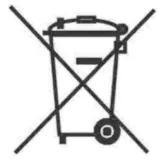
- Label (Nameplate): Must include the trademark, product name, model, input/output parameters, certification logo, recycling symbol, manufacturer information, and country of origin.
- Product Circuit Diagram: Provide as a PDF document.
- PCB Layout: Provide as a PDF document (both sides of the PCB).
- Plastic Shell UL Certificate: If no plastic shell, this is not required.
- PCB Base Material UL Certificate: Obtain from the supplier.
- Internal Lithium Battery Specification: If applicable, obtain from the battery supplier; if not shipped with batteries, this is not required.
- Display Specification: Provide if applicable; otherwise, it is not required.
- Internal Lithium Battery IEC62133 Report: If applicable, obtain from the battery supplier; if not shipped with batteries, this is not required.
- External Power Adapter IEC/EN
62368 Report: If applicable, obtain from the supplier; if not shipped with a charger, this is not required.
- Other Key Component Specifications: Provide as applicable, such as motors, cameras, displays, etc.
6. Project Testing and Timeline:
- Normal Circumstances: The initial application period for a single wireless mode project, not including the sample rectification period, can be expedited upon request.
- Sample Debugging: 1 working day
- EMC + RF Testing: 1 week
- sar testing: 1 week
- Safety Testing: 1 week
- Test Report: 1-2 working days
- Derivative (Record) Application Period: 1 week
7. Submission of Application for Certification:
After the customer confirms the draft report, the formal report is issued. The test report and documents are submitted to apply for the certificate.
8. Comments Handling:
Modify the test report or documents based on the review body’s comments, resubmit the application, and the certificate will be issued upon approval.
China JJR Laboratory offers CE certification services and can help you save up to 30% on costs.
Email:hello@jjrlab.com
Write your message here and send it to us
 ISO 10993 Biocompatibility Standards
 Medical TPV ISO 10993 Biocompatibility Testing
 FDA Requirements for Biocompatibility under ISO 10
 Amazon Spain WEEE Compliance Deadline: September 3
 What is the ASTM F2264 Certification Test?
 What is ASTM F2194 Certification Testing?
 What is the ASTM F2167 Certification Test?
 What is the ASTM F2050 Certification Test?
Leave us a message
24-hour online customer service at any time to respond, so that you worry!