



Wireless Product CE Certification Standard ETSI EN 301489-1 Testing
CE certification is required for wireless products exported to the European Union. The "CE" mark in the EU market is a mandatory certification mark. Whether the products are manufactured within the EU or in other countries, they must bear the "CE" mark to freely circulate in the EU market, indicating that the product complies with the basic requirements of the EU Directive on "Technical Harmonization and Standardization."
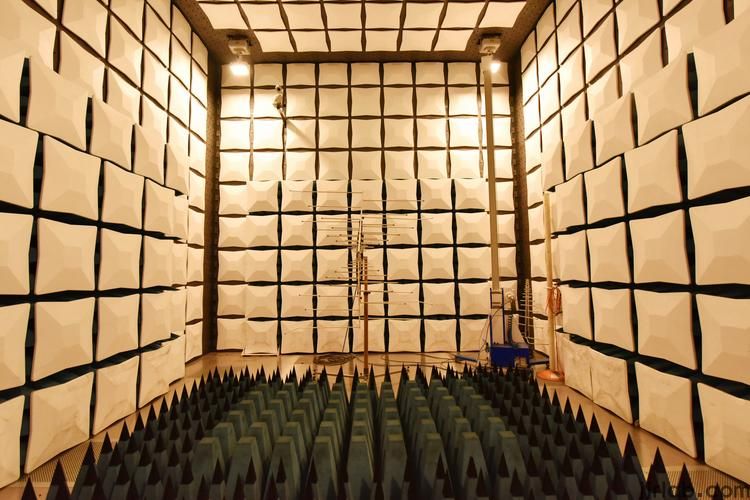
The following documents are required for wireless product CE certification:
1. Operational Description: A statement of the circuit principles, including the components used and the modulation method to achieve the functions of each part.
2. Block Diagram: The product's major components, with the crystal oscillator frequency marked, especially for products with Bluetooth and Wi-Fi, ensuring consistency with the frequency on the schematic.
3. User Manual
4. Schematic: The complete schematic of the product.
5. Label: Product label.
6. CE Key Components or Materials List (BOM)
7. Safety Component List (CDF), Safety Component Certificates, or Specifications
8. Declaration of Differences for Multiple Models
9. One fixed frequency prototype, two regular prototypes
Wireless Product CE Certification Standards:
- ETSI EN 301489-1: General requirements for the EMC part of wireless products.
- ETSI EN 301489-3: Special EMC requirements for short-range wireless products under CE certification, such as 433.92 MHz wireless doorbells.
- ETSI EN 301489-7: Special EMC requirements for wireless products with GSM functionality under CE certification, such as GSM mobile phones.
- ETSI EN 301489-17: General EMC requirements for broadband modulation products under CE certification, such as Bluetooth headsets and tablets with Wi-Fi functionality.
- ETSI EN 300220-1/-2: Testing standards for short-range wireless products with frequencies between 25~1000 MHz and power less than 500mW under CE certification.
- ETSI EN 300330-1/-2: Testing standards for short-range wireless products with frequencies between 9KHz~25MHz under CE certification, such as 13.56MHz RFID products.
- ETSI EN 300440-1/-2: Testing standards for broadband modulation products (excluding Bluetooth and Wi-Fi) under CE certification, such as 2.4G game controllers using FSK modulation. Note that for products using frequency hopping (FHSS), the design must include at least 20 channels.
- ETSI EN 300328: Testing standards for broadband modulation products operating in the 2.4G ISM band under CE certification, such as Bluetooth headsets and tablets with Wi-Fi functionality.
- ETSI EN 301511: Testing standards for electronic products with GSM communication functionality under CE certification, such as GSM mobile phones and tablets with GSM functionality. The SAR standard follows EN 62209.
- ETSI EN 301908-1/-2: Testing standards for electronic products with WCDMA functionality under CE certification, such as WCDMA 3G mobile phones and tablets with WCDMA 3G functionality.
- en 62479: Health assessment requirements for low-power, portable wireless products under CE certification, with RF output power (EIRP) less than 20mW.
- en 62311: Health assessment requirements for wireless products under CE certification, where the distance between the product and the human body is at least 20 cm, such as wireless cameras with Wi-Fi functionality.
China's JJR Laboratory is an IEC 17025 authorized laboratory, providing ETSI EN 301489-1 testing services for wireless product CE certification. Feel free to request a quote.
Email:hello@jjrlab.com
Write your message here and send it to us
 EU PPWR New Packaging Compliance
 How to Obtain an MSDS/SDS Report
 CPSIA Testing Service Consulting
 Food Contact Materials Testing Services
 California 65 Testing Service Consultation
 REACH Chemical Testing Services
 Electronic Vaporizers EU TPD / US PMTA / UK MHRA
 ISO 10993 Biocompatibility Standards
Leave us a message
24-hour online customer service at any time to respond, so that you worry!