



ASTM F963-16 Fidget Spinner Compliance Testing
As early as August 10, 2017, the U.S. Consumer Product Safety Commission (CPSC) issued the Fidget Spinner Business Guidance. Pursuant to this guidance, fidget spinners must first be classified as either general-use products or children's products based on the intended age group (with 12 years as the threshold):
(1) Fidget spinners classified as general-use products are not subject to mandatory CPSC requirements. However, if a product contains rechargeable batteries, it must operate properly under rated voltage, current, and temperature conditions. The CPSC recommends that all fidget spinners with rechargeable lithium batteries—whether general-use products or children's products—comply with the requirements for rechargeable toys (Section 4.25) in the U.S. Toy Safety Standard (ASTM F963-16).
(2) Fidget spinners intended for use by children aged 12 and under must meet the following testing and labeling requirements:
① Total lead content requirements
② Lead content requirements in paint
③ Phthalate limit requirements
④ Requirements of the U.S. Toy Safety Standard ASTM F963-16
⑤ Permanent traceability information must be affixed to both the product and its packaging
In addition, manufacturers and importers of fidget spinners intended for children aged 12 and under must provide a Children’s Product Certificate (CPC) to certify that the products comply with the above requirements.
Detailed Explanation of ASTM F963-16 Fidget Spinner Test Items
ASTM F963-16 is a series of Toy Safety Standards developed by the American Society for Testing and Materials (ASTM), designed to ensure toy safety and prevent injuries to children during use. The standard covers safety requirements for toys in terms of mechanical, physical, chemical, flammability, labeling, and packaging.
For fidget spinners, ASTM F963-16 testing primarily includes the following items:
① Mechanical and Physical Performance testing: This is the core test for evaluating the structural safety of fidget spinners, including small parts testing (to prevent choking hazards), torsion testing, drop testing, sharp point and sharp edge testing, etc. These tests ensure that the spinner does not pose hazards under normal use and reasonably foreseeable abuse.
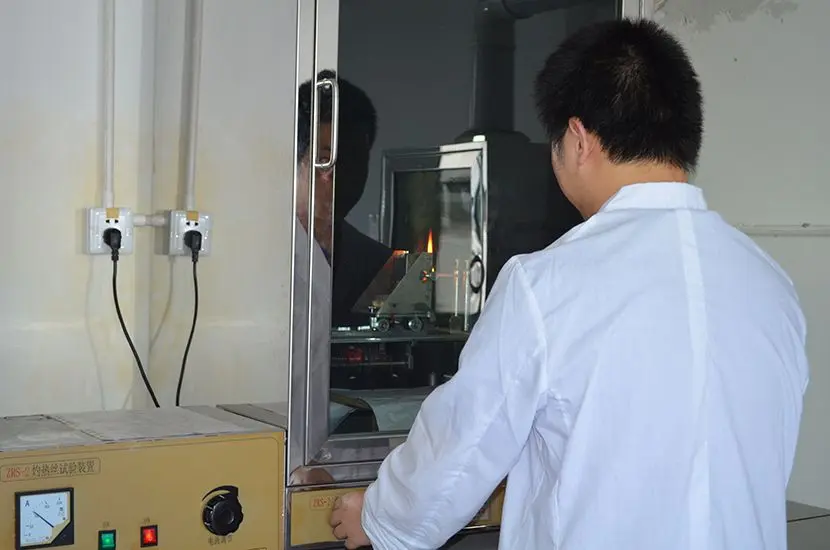
② Flammability Testing: Assesses the burning performance of fidget spinner materials to ensure they are not easily ignitable or do not burn at an excessive rate, reducing fire risks.
③ Heavy Metal Content Testing: Detects the levels of migratable heavy metal elements in fidget spinner materials to ensure they do not exceed safe limits. This test focuses on hazardous elements including antimony, arsenic, barium, cadmium, chromium, lead, mercury, and selenium.
④ Chemical Performance Testing: Includes total lead content testing and phthalate content testing. These chemical substances pose potential risks to children's health and must be strictly controlled within specified limits.
Furthermore, fidget spinners must also comply with the requirements of the Consumer Product Safety Improvement Act (cpsia), including lead and phthalate restrictions, as well as relevant provisions of California Proposition 65.
The surging popularity of fidget spinners has attracted numerous manufacturers to enter the market, resulting in a large number of non-compliant products being circulated. Many fidget spinners sold on the market have obvious design defects, such as overly sharp edges that may cause skin cuts, and easily accessible button batteries.
Subsequently, various accidents, especially injuries to children, have occurred frequently. As a result, countries and regions including the European Union and Australia have successively recalled, destroyed, or removed such products from shelves, leading to increasing risks for both export and domestic sales of fidget spinners.
Recent Fidget Spinner Recalls
Notified Country/Region | Reason for Recall | Violated Standard | Number of Notifications | Country of Origin |
European Union | Chemical hazards, injuries<br>Battery cover can be easily opened without tools, exposing accessible button batteries | EN 62115 | 4 | China |
Australia | Injuries<br>Battery cover can be easily opened, exposing accessible button batteries | AS/NZS 62115 | 2 | Unknown |
JJR LAB is a third-party laboratory accredited by the U.S. Consumer Product Safety Commission (CPSC). We provide professional and efficient testing services for fidget spinners in accordance with national standards worldwide. We also offer amazon tic Verification and Audit services to safeguard the safe export of your products!
Email:hello@jjrlab.com
Write your message here and send it to us
 EU PPWR New Packaging Compliance
 How to Obtain an MSDS/SDS Report
 CPSIA Testing Service Consulting
 Food Contact Materials Testing Services
 California 65 Testing Service Consultation
 REACH Chemical Testing Services
 Electronic Vaporizers EU TPD / US PMTA / UK MHRA
 ISO 10993 Biocompatibility Standards
Leave us a message
24-hour online customer service at any time to respond, so that you worry!