



How to Apply for Brazil ANATEL Certification?
Brazil is the largest economy in South America. With a consumer market of nearly 200 million people, it strictly requires anatel certification for all communication and wireless products. Without this certificate, products cannot clear customs or be placed on shelves.
This article clearly explains the product scope, application process, certificate validity period, and common pitfalls of ANATEL certification all at once, helping you avoid detours.
What is ANATEL Certification?
ANATEL stands for Agência Nacional de Telecomunicações (the Brazilian National Telecommunications Agency). Established in 1997 under Brazil's General Telecommunications Law (Law No. 9472), it is responsible for regulating the Brazilian telecommunications industry.
Its functions cover spectrum management, telecommunication service licensing, and telecommunication equipment complianCE certification. Among these, equipment certification is closely related to export enterprises—any telecommunication terminal equipment and radio equipment sold, imported, or used within Brazil must obtain ANATEL's type approval (Homologação), commonly referred to as the ANATEL certification certificate.
Resolution No. 715 (Resolução nº 715), issued in 2019, is the current core regulatory document, providing systematic provisions on equipment classification, conformity assessment procedures, and certificate management.
Which Products Require Certification?
ANATEL divides products requiring certification into three categories, with significant differences in testing scope and certificate validity across different categories:
Category I · Terminal Products
Directly connected to the public telecommunications network.
Mobile phones, satellite phones, VOIP phones, mobile phone batteries, mobile phone chargers, telephone signal cables, modems, etc. These products directly affect the security of public communication networks, so the review requirements are relatively strict.
Category II · Radio Frequency Products
Equipment that uses radio frequencies but is not directly connected to the public telephone network.
Wi-Fi routers, Bluetooth headsets, wireless modules, wireless transmitters/receivers, RF automation equipment, TV and radio antennas, etc. This is a broad category covering most wireless consumer electronic products.
Category III · Other Telecommunication Equipment
Regulated equipment not covered by Category I and II.
Optical cables, cable connectors, mobile network signal transmitters, etc. These products are mainly passive components, and the regulatory requirements are relatively lenient.
Summary in One Sentence:
If a product can "transmit wireless signals" or "connect to a telephone network" → it requires ANATEL certification. Purely passive components (such as ordinary cables) may also fall into the scope of Category III.
Brazil ANATEL Certification Process
A key feature of ANATEL certification is that testing must be completed in a local laboratory in Brazil; pure overseas reports are not accepted for direct certificate conversion. However, if there are fcc or CE reports, some test items can be exempted.
The complete process is as follows:
Determine Product Category and Sample Requirements: Confirm whether the product belongs to Category I, II, or III based on its functions, and clarify the test items and the number of samples required. Usually, 1 conducted fixed-frequency sample and 1 normal sample are needed.
Pre-testing (Completed Domestically): Samples are mailed to a domestic laboratory for EMC and RF pre-testing. Any issues discovered during pre-testing can be rectified promptly, avoiding repeated modifications after the samples are sent to Brazil and saving the overall cycle time. If FCC or CE reports are already available, some test items can be exempted.
Send Samples to a Local Laboratory in Brazil: Once the pre-testing is passed, the samples are mailed to an ANATEL-approved local laboratory in Brazil for formal testing and the issuance of a test report. This step is the longest part of the entire process.
OCD Issues CoC Certificate: A Designated Certification Organization (OCD) in Brazil reviews the test report and technical documents and issues a Certificate of Conformity (CoC).
ANATEL Issues CoH Certificate: The OCD submits the CoC certificate and test report to the official ANATEL agency. After reviewing them, ANATEL issues the Certificate of Homologation (CoH). This certificate is the actual "ANATEL Certification."
Certification and Labeling: After obtaining the CoH, the product must be affixed with the ANATEL certification mark and certification number (format like HHHHH-AA-FFFFF). If the product itself is too small to be labeled, the mark and number can be placed in the user manual.
Certificate Validity and Renewal
Under the ANATEL certification system, there are two key documents: CoH (Certificate of Homologation) and CoC (Certificate of Conformity). The ANATEL ID number corresponding to the CoH is permanently valid, but the CoC needs regular updates.
Attention: If the product hardware changes (e.g., replacing the antenna, adjusting RF parameters), a new certification application is required. If a software upgrade affects RF characteristics, it must also be evaluated to determine if re-testing is necessary. ANATEL conducts random market inspections, and non-compliant products will have their certificates revoked.
Key Precautions
The Certificate Holder Must Be a Local Brazilian Company: Chinese factories cannot directly hold an ANATEL certificate. The holder can be your subsidiary, importer, distributor, or authorized representative in Brazil. If you do not have a local entity in Brazil, you can entrust a professional agency to provide local representation services.
Multiple Models Can Be Applied Together: If multiple models have completely identical wireless modules and internal structures, they can be included in a single certificate. However, if the wireless modules are the same but the internal structures are different, the RF test only needs to be done for one model, but each model requires a separate application for its own ANATEL certificate.
The User Manual Must Be in Portuguese: User manuals, installation guides, and warning signs must use Portuguese. Other technical documents can be in English. This is a detail easily overlooked by many companies, leading to application rejections.
Pre-testing is Crucial: Conduct pre-testing before mailing samples to Brazil to discover and rectify issues domestically. There is an 11-hour time difference between Brazil and China; if issues are only found after samples reach Brazil, the time cost of back-and-forth communication and re-sending samples is exceedingly high.
Category I Requires an ISO 9001 Certificate: Manufacturers of Category I products (terminal equipment like mobile phones and modems) must provide an ISO 9001 quality management system certificate, and the factory may be subject to annual audits. Category II and III typically do not have this requirement.
FAQ (Frequently Asked Questions)
Q1: How long does it take to process the ANATEL certification?
The overall cycle is usually 8-10 weeks. If the pre-testing goes smoothly and the materials are complete, it can be controlled to around 8 weeks. If problems are found during pre-testing that require rectification, or if technical documents are incomplete, the cycle may be extended to over 12 weeks. Preparing Portuguese manuals and technical specifications in advance can effectively shorten the cycle.Q2: If I already have FCC or CE reports, can I directly convert them to ANATEL?
Direct certificate conversion is not possible. ANATEL requires testing to be completed in a local Brazilian laboratory and does not accept pure overseas reports. However, existing FCC or CE reports can exempt some safety test items, reducing the testing workload in Brazil. If your product needs to be exported to other markets simultaneously, getting FCC/CE first and then ANATEL is a more economical route.Q3: What if I don't have a local company in Brazil?
This can be solved in two ways: one is to find your importer or distributor in Brazil to act as the certificate holder; the other is to entrust a professional certification agency to provide local representative services. It should be noted that a change of the certificate holder is equivalent to re-applying, so long-term cooperation stability should be considered when choosing a holder initially.Q4: My certificate is about to expire. Is the renewal process complicated?
Renewals for Category II typically do not require re-testing; simply submit a renewal application and relevant documents. Category I requires re-testing to prove that the product characteristics remain unchanged. Renewal applications should be initiated 3-6 months before expiration to avoid product sales interruptions caused by expired certificates.Q5: How much does anatel certification cost?
Costs vary greatly depending on product categories and test items, typically including pre-testing fees, local testing fees in Brazil, OCD issuance fees, and agency service fees. It is recommended to provide product specifications and technical parameters for a professional engineer to evaluate and give an accurate quote.
Practical Advice
Confirm the Product Category Before Starting: There are huge differences in testing scope, cycle, and cost among different categories. Before starting, confirm with an engineer which category the product belongs to, avoiding going down the wrong path and wasting time.
Get Pre-testing Right in One Go: Domestic pre-testing is a crucial step in saving the overall cycle time. Solving problems domestically is much more efficient than modifying them after the samples arrive in Brazil. It is recommended to reserve 2-3 weeks for pre-testing.
Prepare Portuguese Documents in Advance: Portuguese manuals and warning signs are mandatory requirements, and many companies get stuck here. It is recommended to prepare translations synchronously during the pre-testing phase, rather than waiting until the testing passes to realize documents are missing.
Plan Multi-country Synchronous Certification Routes: If the product is simultaneously exported to North America, Europe, and Brazil, obtaining FCC and CE-RED reports first before transitioning to ANATEL can exempt some test items. Using one report for multiple countries can significantly reduce overall costs.
Pay Attention to Certificate Validity Management: Category I must be renewed annually, and Category II every two years. It is advised to establish a certificate ledger and initiate the renewal process 3 months before expiration to prevent supply interruptions in the Brazilian market due to an expired certificate.
Brazil is a major communication consumer market in Latin America, and ANATEL certification is the passport for products to enter this market. The process may seem cumbersome, but as long as pre-testing is done well, documents are ready, and the right certificate holder is chosen, the overall cycle is controllable. The key is to plan ahead and not wait until the product is about to be shipped to start the certification process.
Advantages of JJR Lab:
JJR directly cooperates with local issuing agencies in Brazil, offering controllable cycles and favorable prices.
JJR has signed an MRA (Mutual Recognition Agreement) with the local inmetro issuing agency in Brazil. IEC standard safety reports issued by JJR can be directly accepted to transfer to an inmetro certificate without needing to send samples to Brazil for local testing.
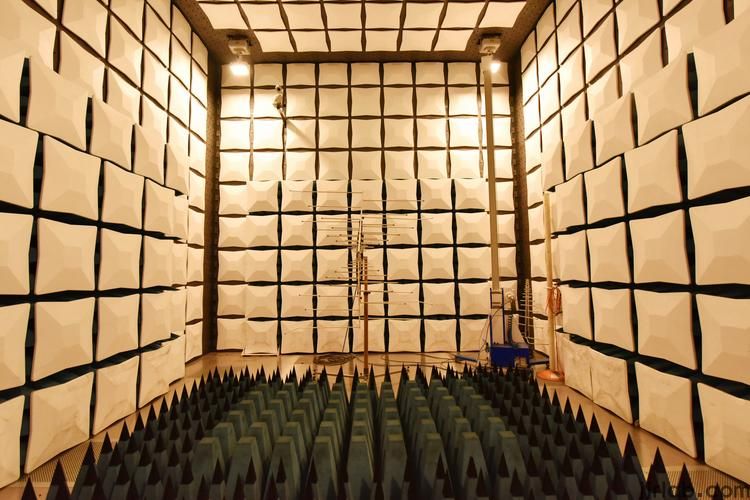
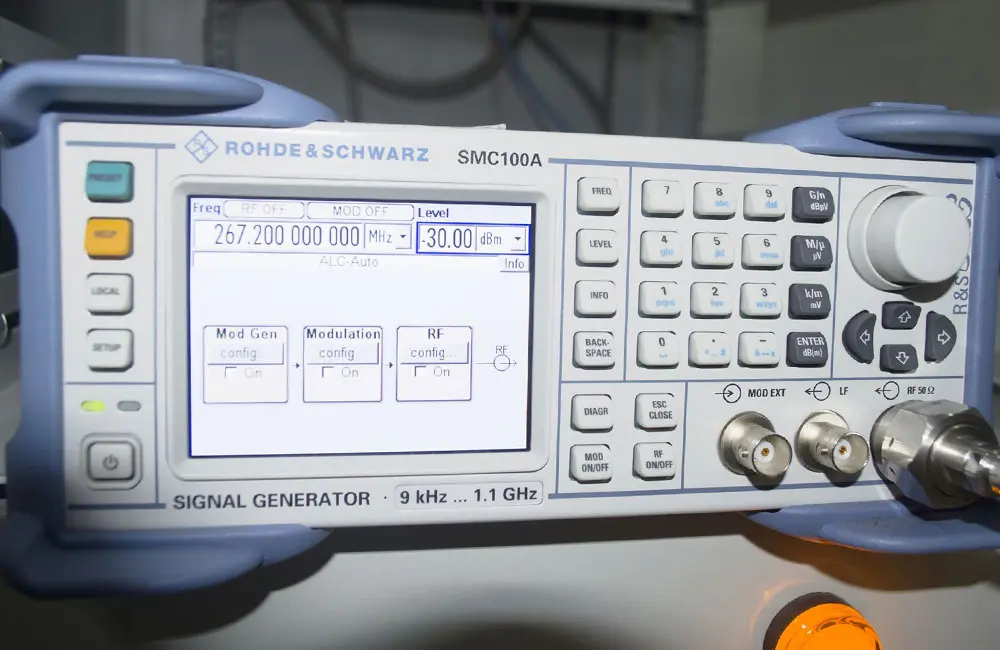
For ANATEL certification, JJR can provide pre-testing services for clients. Samples will undergo pre-testing before being mailed to Brazil and will only be dispatched to Brazil once they pass the pre-test.
Email:hello@jjrlab.com
Write your message here and send it to us
 How to get an EN 301 893 test report?
 What is EN 301 893 Certification Compliance
 What is the CSA 62368-1 Standard?
 Canadian Pacifier Compliance SOR/2016-184
 US Agent for FCC & EC REP for CE: Compliance R
 What is Recycling of WEEE
 What is PPWR Packaging Compliance
What is Extended Producer Responsibility
What is PPWR Packaging Compliance
What is Extended Producer Responsibility
Leave us a message
24-hour online customer service at any time to respond, so that you worry!