



How to get India WPC Certification for Wireless Products?
Bluetooth earphones, Wi-Fi routers, smartwatches... If you want to sell products with wireless functions to India, you cannot bypass a specific certificate—the WPC certification. Without it, your products will not be able to clear Indian customs.
What Exactly is WPC Certification?
WPC stands for Wireless Planning & Coordination Wing.
It is the radio regulatory authority under the Indian Ministry of Communications, with functions quite similar to the department managing srrc certification in China.
Its responsibility is straightforward: to regulate all devices utilizing the radio frequency spectrum within India. If a product features wireless transmission capabilities and is intended for sale in India, it must obtain the approval certificate issued by the WPC.
As long as the product has a wireless transmission function, it must undergo WPC certification to enter the Indian market.
There are no exceptions.
The legal basis includes the Indian Telegraph Act and the Wireless Telegraphy Act. Similar to China's SRRC, WPC focuses on whether the radio frequency (RF) parameters comply with regulations and whether they will cause interference with the local spectrum.
One crucial point to note: The holder of the wpc certificate must be a locally registered company in India. This differs from the certification systems of many other countries, and we will explain how to address this later.
Which Products Require It?
There is only one judgment criterion: whether the product contains a radio transmission module. If it transmits, it requires certification; if it is purely for receiving, it does not.
Requires WPC Certification
Bluetooth earphones · Bluetooth speakers · Wi-Fi routers
Smartwatches · Smart bands · Zigbee devices
LoRa devices · NB-IoT modules · RFID readers
Active RFID tags · WiMAX devices · Wireless keyboards and mice
Does Not Require WPC Certification
Pure receiving devices that only have GPS functionality and lack any transmitting modules do not fall under WPC jurisdiction. If a product has both transmitting and receiving functions, it requires certification as long as it contains a transmitting module.
Supplement: ETA and License are Two Different Things
WPC certification is divided into two modes, depending on the type of frequency band used by the product:
① ETA (Equipment Type Approval) — For free, de-licensed frequency bands (2.4GHz, 5.8GHz, 13.56MHz, etc.), such as Bluetooth, Wi-Fi, Zigbee, and LoRa (865-867MHz). This article focuses entirely on the ETA process.
② License — For licensed/restricted frequency bands, such as 2G/3G/4G/5G cellular devices, and NB-IoT/LTE-M modules. This requires an application through a local Indian telecom operator, and the process is significantly more complex.
How to Obtain India WPC Certification
① Prepare the RF Test Report
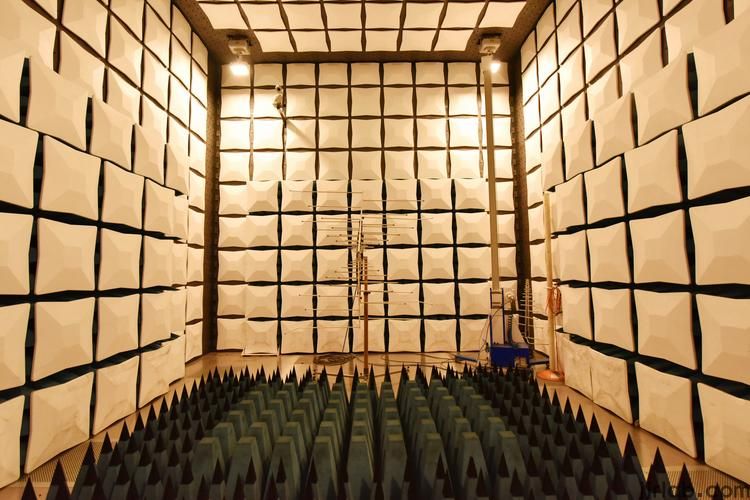
WPC does not require physical samples to be sent to India, but a compliant RF test report must be provided. The standard practice: first, obtain CE-RED or fcc id certification, and then use that report for the WPC application. WPC recognizes either of the two, so existing reports can be used directly without the need for re-testing.
② Determine the Local Certificate Holder in India
The certificate holder must be a locally registered company in India; this is a mandatory requirement. Usually, applicants cooperate with Indian agents, distributors, or importers for the application. If you don't have a local partner, this step can easily become a bottleneck, so it is recommended to advance this as early as possible.
③ Submit the Application in the WPC System
The Indian certificate holder registers an account on the WPC online system and uploads the RF report and technical documents. Required documents include: product specification sheets, circuit diagrams, block diagrams, BOM (Bill of Materials), and user manuals—all must be submitted in English. The more complete the documentation, the smoother the review process will be.
④ WPC Reviews and Issues the Certificate
Upon passing the review, the ETA certificate is issued. The cycle takes about 3-4 weeks. It is an electronic certificate with long-term validity, meaning there are no issues regarding expiration or renewal.
How Long is the India WPC Certification Cycle? How Much Does It Cost?
Processing Cycle
3-4 weeks
Counted from when all documents are complete. Including RF testing, the overall timeframe is 6-8 weeks.
India WPC Certification Cost
Varies by product
Testing fee + Official fee + Agency service fee.
Certificate Validity
Long-term validity
No periodic renewal is required, but changes to RF parameters require a re-application.
Regarding the cycle: The 3-4 weeks are calculated from the moment all documentation is fully prepared. Incomplete documents will require supplementation, which will extend the cycle. Adding the preliminary RF testing preparation, the overall time is 6-8 weeks, so advance planning is highly recommended.
Regarding the cost: It mainly consists of two parts—the RF testing fee (which can be saved if you already have a CE-RED or fcc ID report) + WPC official application fees and agency service fees. The exact amount varies depending on the product type and the number of frequency bands, so it is advisable to consult for an accurate quote.
Regarding validity: It is valid long-term without the need for periodic renewals. However, if there are changes to the radio frequency parameters (e.g., changing the chip, modifying the antenna), a new application must be submitted.
Q&A (Frequently Asked Questions)
What if I don't have an Indian partner?
The certificate holder must be a local Indian company; this is a hard requirement. There are two common solutions: First, find an Indian agent or importer to cooperate with; Second, apply through a professional certification agency, as they typically have partner companies in India to assist in completing the process. This practice is very common in the industry.
Can I use an FCC ID report directly?
Yes. WPC recognizes both CE R&TTE/RED reports and FCC ID reports, accepting either one. If you have an existing FCC ID test report, it can be used directly for the WPC application without re-testing. If your product is also destined for the EU or US markets, doing CE-RED or fcc certification first and then transferring to WPC is the most cost-effective path.
What is the format of the certificate? How long is it valid?
It is an electronic certificate with long-term validity. There is no issue of expiration or renewal fees. Once you obtain the certificate, it can be used permanently, saving you from worrying about the maintenance costs of an expiring certificate.
Can 2G/3G/4G/5G cellular devices also be certified?
Cellular communication devices (2G/3G/4G/5G mobile phones, NB-IoT/LTE-M modules, etc.) use non-free/licensed frequency bands and must apply for a License instead of an ETA. This type of application must be initiated by a local mobile operator in India, and the process is much more complex than that for standard short-range wireless devices. For products involving cellular communication functions, it is recommended to communicate with professional agencies in advance.
What is the relationship between WPC and India's BIS certification?
They are two entirely independent systems. WPC regulates wireless radio frequencies, while BIS regulates product safety. If a wireless product also involves safety requirements (such as chargers or power adapters), both certifications may need to be completed. They can be processed in parallel and do not conflict with each other.
Five Practical Suggestions
1. Plan your timeline in advance.
The 3-4 week timeframe starts from when all documents are complete. Including RF testing, the overall cycle is 6-8 weeks. Initiate your certification planning during the R&D phase; do not wait until the market launch date to realize you haven't obtained the certificate.
2. Prioritize CE-RED or FCC certification.
WPC recognizes these two reports. Using one report for multiple countries offers high cost-effectiveness. This is especially true if the product is being exported to other markets simultaneously—doing CE/FCC first and then transferring to WPC will save you a lot of trouble.
3. Determine the Indian certificate holder in advance.
This step can easily become a bottleneck. Confirm your Indian partner before initiating the certification process; don't wait until the application stage to discover you lack a certificate holder.
4. Pay attention to frequency band matching.
Available frequency bands in India may differ from those in China, Europe, and the US. During the product design phase, make sure to confirm whether your target frequency band is permitted for use in India to avoid costly rework later on.
5. Keep comprehensive technical documentation.
Supplementary materials may be requested during the review process. Preparing the English versions of product specifications, circuit diagrams, block diagrams, BOMs, and user manuals in advance will significantly speed up the progress.
Email:hello@jjrlab.com
Write your message here and send it to us
 How to get an EN 301 893 test report?
 What is EN 301 893 Certification Compliance
 What is the CSA 62368-1 Standard?
 Canadian Pacifier Compliance SOR/2016-184
 US Agent for FCC & EC REP for CE: Compliance R
 What is Recycling of WEEE
 What is PPWR Packaging Compliance
What is Extended Producer Responsibility
What is PPWR Packaging Compliance
What is Extended Producer Responsibility
Leave us a message
24-hour online customer service at any time to respond, so that you worry!