



What is Ingress Protection (IP) Testing and Standards?
Before discussing IP protection, we first need to understand what Ingress Protection (IP) Testing is, why it is required, and how the testing process works. JJR LAB will provide you with a detailed introduction below.
What is Ingress Protection (IP)?
IP is the abbreviation for Ingress Protection, referring to an internationally recognized protection rating. This rating does not only indicate water resistance; it represents the degree of protection provided by enclosures.
An IP rating typically consists of two digits or supplementary letters:
• The first digit indicates the level of protection against solid foreign objects.
• The second digit indicates the level of protection against water ingress.
Generally, the higher the digit, the higher the protection level. For example, in IP68, 6 represents Level 6 dust protection, and 8 represents Level 8 water protection.
Explanation of Ingress Protection (IP) Digits for Solid Particle Protection
1. 0: No protection – No specific protection provided.
2. 1: Protection against solid objects larger than 50mm in diameter – Prevents ingress of large foreign objects.
3. 2: Protection against solid objects larger than 12.5mm in diameter – Prevents ingress of medium-sized foreign objects.
4. 3: Protection against solid objects larger than 2.5mm in diameter – Prevents tools, wires, or similar small objects over 2.5mm from touching internal electrical components.
5. 4: Protection against solid objects larger than 1.0mm in diameter – Prevents tools, wires, or similar small objects over 1.0mm from touching internal electrical components.
6. 5: Protection against foreign objects and dust – Prevents ingress of foreign objects; dust ingress is limited and will not affect normal operation.
7. 6: Protection against foreign objects and dust – Complete protection against ingress of foreign objects and dust.
Explanation of Ingress Protection (IP) Digits for Water Protection
1. 0: No protection – No specific protection provided.
2. 1: Protection against dripping water – Vertical dripping water causes no damage.
3. 2: Protection against dripping water when tilted up to 15° – No damage when the enclosure is tilted 15° from vertical.
4. 3: Protection against spraying water – Water sprayed at angles up to 60° from vertical causes no damage.
5. 4: Protection against splashing water – Water splashing from any direction causes no damage.
6. 5: Protection against water jets – Water sprayed from any direction causes no damage.
7. 6: Protection against powerful water jets – Powerful water spray from any direction causes no damage.
8. 7: Protection against temporary immersion – No damage when submerged under specified time and water pressure conditions.
9. 8: Protection against continuous immersion – No damage when submerged indefinitely under specified water pressure.
10. 9: Protection against high-temperature / high-pressure water jets – No damage when sprayed with high-temperature, high-pressure water from all directions.
Why Conduct Ingress Protection (IP) Testing?
IP testing evaluates a product enclosure’s resistance to solid foreign objects (e.g., dust) and liquids, ensuring reliability and safety in various environments. Testing complies with the international standard iec 60529, covering common ratings such as IP68 and IP54.
The core purpose of IP testing is to verify the claimed protection level, confirming that the product meets its declared IP rating. Effective dust and water resistance extends the service life of equipment.
Is a Higher Ingress Protection (IP) Rating Always Better?
A higher IP rating is not necessarily better. The appropriate rating should be selected based on the product.
How to Choose the Right IP Rating?
The suitable IP rating depends primarily on the product’s operating environment or buyer requirements. If unsure, consult a third-party laboratory or refer to ratings used by industry peers.
How to Obtain an Ingress Protection (IP) Testing Report?
1. Complete and submit the laboratory application form.
2. Prepare test samples: one unit is standard; two units are recommended to separate dust and water testing and shorten the testing cycle.
3. If external devices are required, provide matching loads, external cables, and waterproof/dustproof cable glands.
4. A formal test report will be issued upon completion of testing.
JJR LAB Capabilities
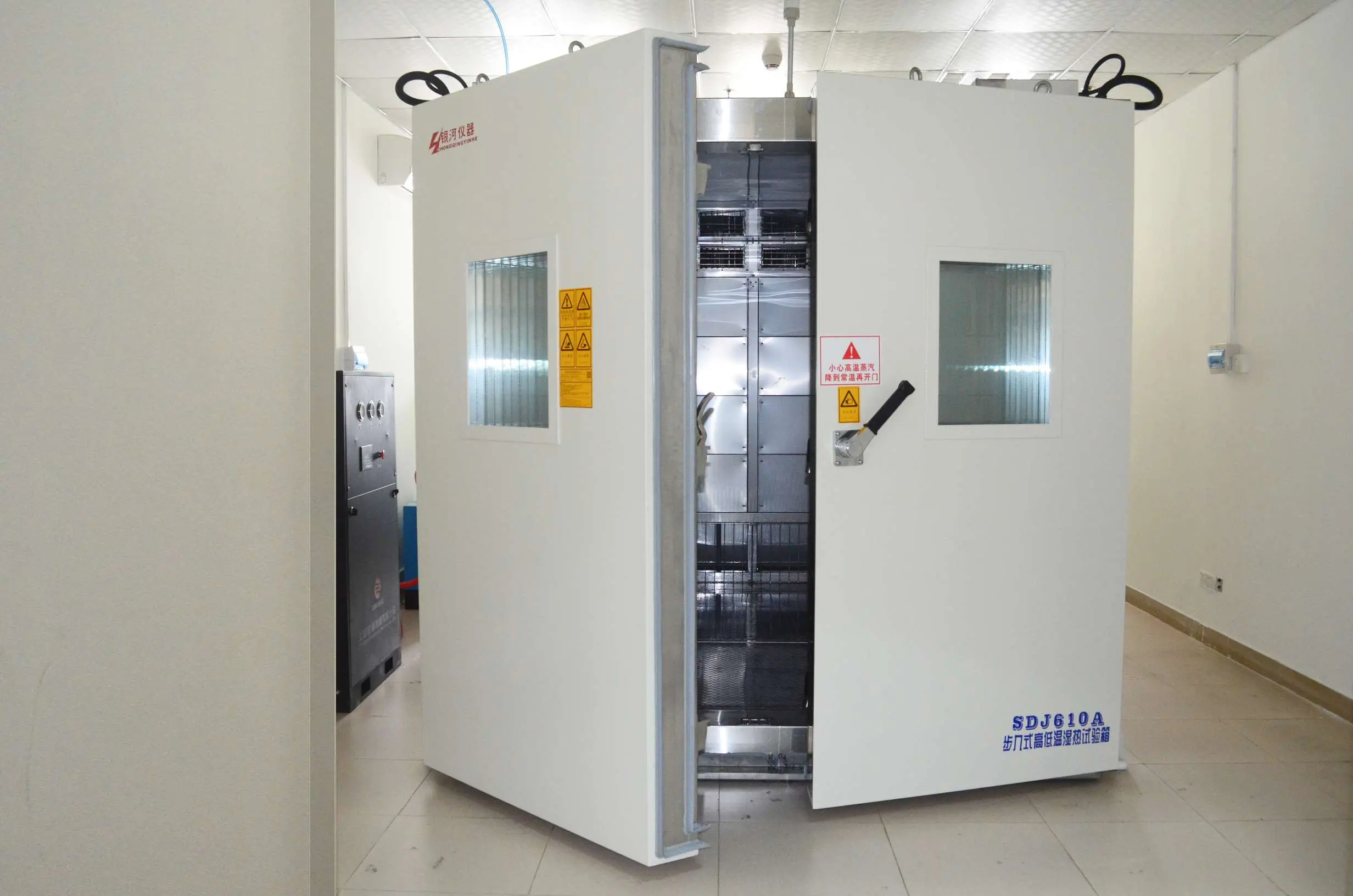
JJR LAB’s large-scale dust and water test chambers are officially operational, with CNAS and CMA accreditations complying with IEC 60529-2013.
• Dust test chamber (L×W×H): 10m × 4.3m × 4.5m
• Water test chamber (L×W×H): 10m × 9.5m × 4.1m
These facilities fully meet IP testing requirements for various battery packs, industrial and commercial cabinets, and mainstream 20-foot energy storage containers on the market.
Email:hello@jjrlab.com
Write your message here and send it to us
 RoHS Compliance Testing Services
 Amazon Toy Seller Exporting to Europe Compliance
US Jewelry Compliance Guide
Amazon Toy Seller Exporting to Europe Compliance
US Jewelry Compliance Guide
 FCC Certification Requirements and Costs for Consu
 EMC Testing Lab IEC 60601 Medical Electrical Safet
 What are the FCC Testing Requirements for Bluetoot
 Australia RCM Certification for Radio Devices
 RED Cybersecurity EN 18031 Standard
Leave us a message
24-hour online customer service at any time to respond, so that you worry!