



What Are the Cytotoxicity Assay Methods?
With the emergence of new materials or drugs, we are always eager to understand their cellular safety. However, the wide variety of cell viability assays can be overwhelming, causing confusion and adding unnecessary stress. In this article, JJR Lab will briefly introduce several commonly used cytotoxicity assay methods to help you quickly understand and apply these techniques.
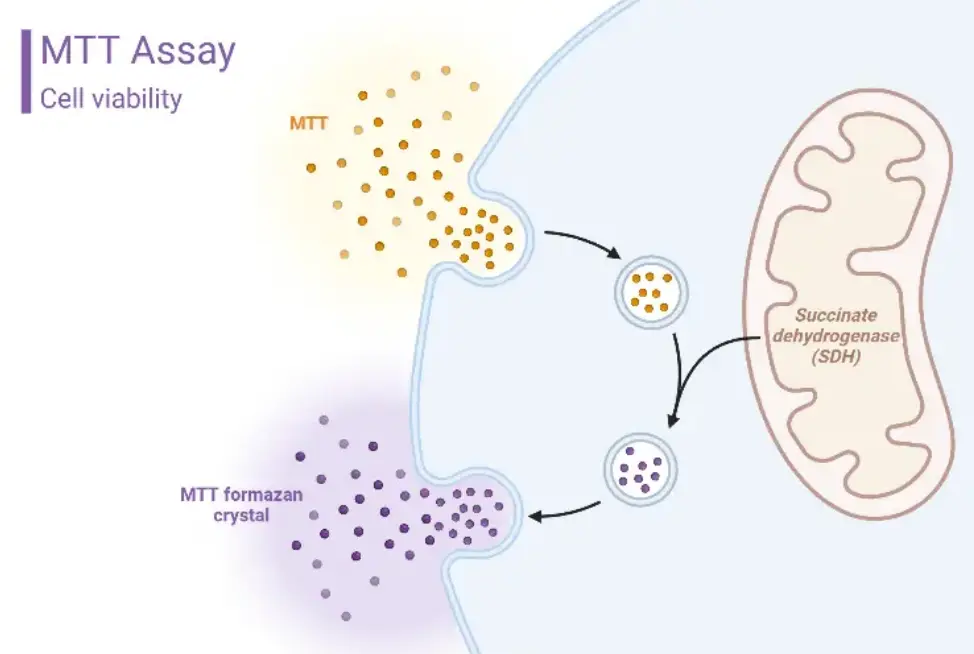
MTT Assay
① Principle: MTT [3-(4,5-dimethylthiazol-2-yl)-2,5-diphenyltetrazolium bromide] is a yellow dye. Succinate dehydrogenase in the mitochondria of living cells can reduce exogenous MTT to water-insoluble blue-purple formazan crystals. Dead cells lack this ability. By measuring the amount of formazan crystals, the number of living cells can be indirectly reflected.
② Applications: The MTT assay is widely used in detecting the activity of bioactive factors, screening antitumor drugs, performing cytotoxicity tests, and determining tumor radiosensitivity. It features high sensitivity and cost-effectiveness.
CCK-8 Assay
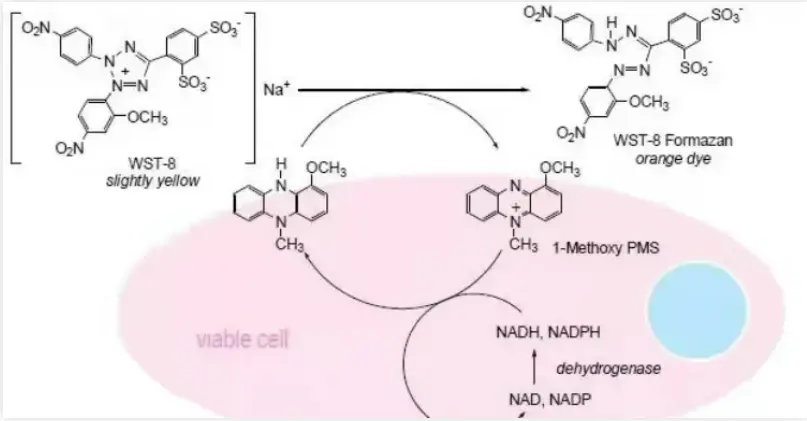
① Principle: CCK-8 (Cell Counting Kit-8) is based on WST-8 [2-(2-methoxy-4-nitrophenyl)-3-(4-nitrophenyl)-5-(2,4-disulfophenyl)-2H-tetrazolium monosodium salt]. In the presence of an electron coupling reagent, WST-8 is reduced by mitochondrial dehydrogenases to a highly water-soluble yellow formazan product. The amount of formazan produced is proportional to the number of living cells.
② Applications: The CCK-8 assay is convenient, rapid, highly sensitive, and reproducible. It is suitable for drug screening, cell proliferation measurement, cytotoxicity determination, and tumor drug sensitivity testing.
LDH Assay
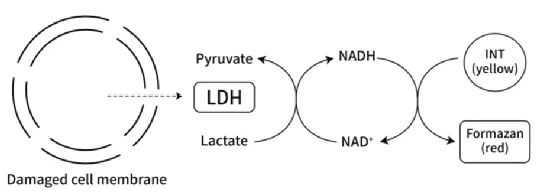
① Principle: Lactate dehydrogenase (LDH) is an enzyme present in the cytoplasm of living cells and cannot normally pass through the cell membrane. When cells are damaged, LDH is released extracellularly. Its activity can be detected via enzymatic reactions to evaluate the degree of cell injury.
② Applications: By measuring the enzymatic activity of LDH in cell culture supernatants, the LDH assay can be used to assess cytotoxicity. The method is simple to operate and yields reliable results.
Trypan Blue Staining
① Principle: Trypan blue is an azo, hydrophilic acidic blue dye. It can penetrate the cell membranes of dead and dying cells, staining them blue. Living cells, due to intact cell membranes, exclude trypan blue.
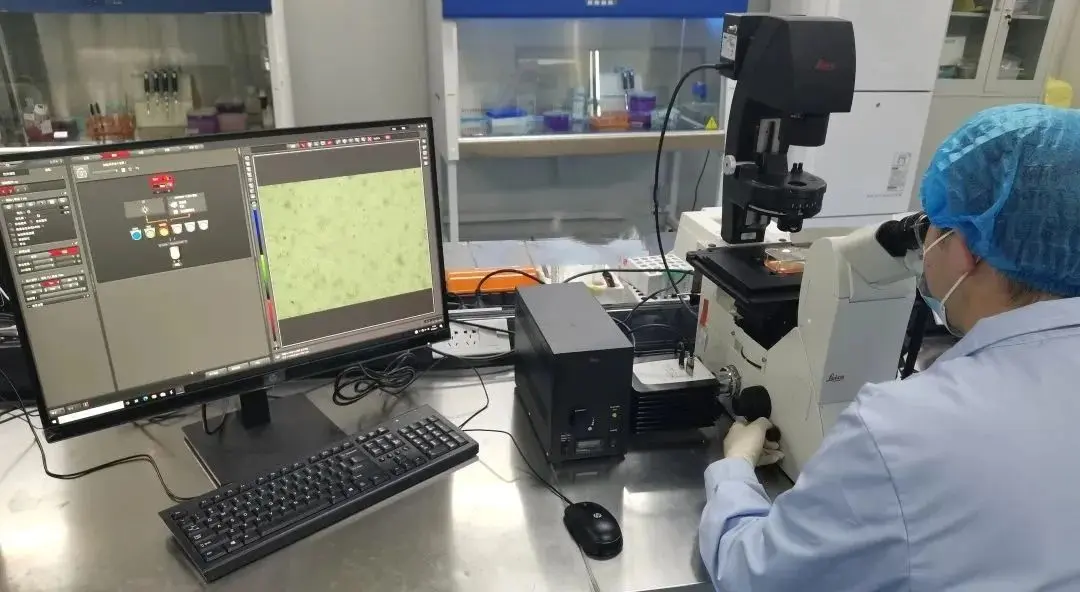
② Applications: Trypan blue staining distinguishes living and dead cells by observing color changes under a microscope, allowing accurate calculation of cell viability.
Sulforhodamine B (SRB) Assay
① Principle: SRB is a water-soluble protein dye that binds to basic amino acids in cellular proteins to form complexes. The amount bound to total cellular protein reflects cell number.
② Applications: The absorbance measured at 515 nm in the SRB assay shows a good linear relationship with cell number, making it suitable for rapid detection of cell proliferation and cytotoxicity.
Alamar Blue Assay
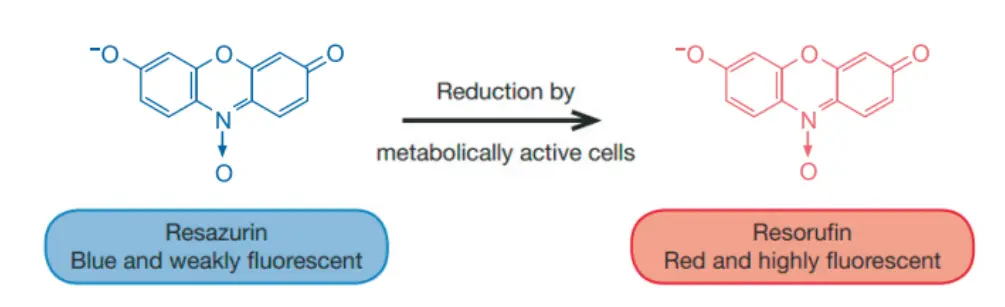
① Principle: Alamar Blue contains resazurin, a membrane-permeable, non-toxic, weakly blue fluorescent indicator. Depending on cellular metabolic reduction, oxidized resazurin is converted to the reduced product resorufin, changing color from violet-blue to pink and emitting fluorescence.
② Applications: The Alamar Blue assay is increasingly recognized by researchers for its low toxicity, simple and flexible operation, high sensitivity, and wide applicability to various cell types.
Cytotoxicity assay methods are essential tools in biomedical research and medical
Email:hello@jjrlab.com
Write your message here and send it to us
 RoHS Compliance Testing Services
 Amazon Toy Seller Exporting to Europe Compliance
US Jewelry Compliance Guide
Amazon Toy Seller Exporting to Europe Compliance
US Jewelry Compliance Guide
 FCC Certification Requirements and Costs for Consu
 EMC Testing Lab IEC 60601 Medical Electrical Safet
 What are the FCC Testing Requirements for Bluetoot
 Australia RCM Certification for Radio Devices
 RED Cybersecurity EN 18031 Standard
Leave us a message
24-hour online customer service at any time to respond, so that you worry!