



NFC/RFID Product Compliance Testing
NFC (Near Field Communication) is a contactless identification and connectivity technology that enables short-range wireless communication between mobile devices, consumer electronics, and other equipment. RFID (Radio Frequency Identification) is a radio-based identification technology categorized into passive RFID, active RFID, and semi-active RFID based on the power supply method of its tags.
This is a systematic overview of NFC/RFID product testing, covering test content, methodologies, standards, and key industry application considerations:
Classification of Test Content
1. Basic Performance testing
(1) Communication Distance
Maximum read/write range (typically <10 cm for NFC; up to several meters for UHF RFID).
(2) Sensitivity
Minimum activation field strength (e.g., NFC must meet the 1.5 A/m threshold specified in ISO/IEC 14443).
(3) Compatibility
① NFC: Supported protocols (ISO/IEC 14443 Type A/B, FeliCa, MIFARE).
② RFID: Frequency band compatibility (LF 125 kHz, HF 13.56 MHz, UHF 860–960 MHz).
(4) Anti-Interference Capability
Multi-tag collision handling, stability under electromagnetic interference (EMI).
2. Protocol and Function Testing
(1) Protocol Conformance
① NFC: Verification of NDEF (NFC Data Exchange Format) and SNEP (Simple NDEF Exchange Protocol).
② RFID: EPC Gen2 protocol, ISO/IEC 15693 (electronic tag) command set.
(2) Data Integrity
Read/write error rate, data storage durability (e.g., 100,000-cycle read/write endurance test).
(3) Security Mechanisms
Encryption algorithms (AES, DES), anti-collision capability, anti-cloning/tampering features.
3. Environmental Adaptability Testing
(1) Temperature Cycling
Tag readability at high temperatures (+85℃) and low temperatures (-25℃).
(2) Mechanical Strength
Vibration and drop tests (e.g., 1.5 m drop onto concrete surfaces).
(3) Weather Resistance
Humidity (95% RH), salt spray (48 hours), UV aging (for outdoor tags).
4. Application Scenario Validation
(1) Payment Scenarios
NFC POS terminal transaction success rate, response time (<0.5 seconds).
(2) Logistics Tracking
RFID batch reading efficiency (e.g., 200 tags read per second).
(3) Embedded Devices
Impact of metal/liquid environments on antenna performance (e.g., NFC in smartwatches).
Test Methods and Tools
1. Laboratory Testing
(1) RF Parameter Testing
① Use a Vector Network Analyzer (VNA) to measure antenna impedance and resonant frequency.
② Use a field strength tester to verify read range (e.g., RSSI signal strength for RFID).
(2) Protocol Analysis
① Tools: Proxmark3, ACR122U reader/writer, NFC Forum Certification Test Suite.
② Verification: Command set interaction (e.g., APDU command flow for NFC).
2. Scenario Simulation Testing
① Multi-Tag Collision: Activate hundreds of RFID tags simultaneously to test anti-collision algorithms.
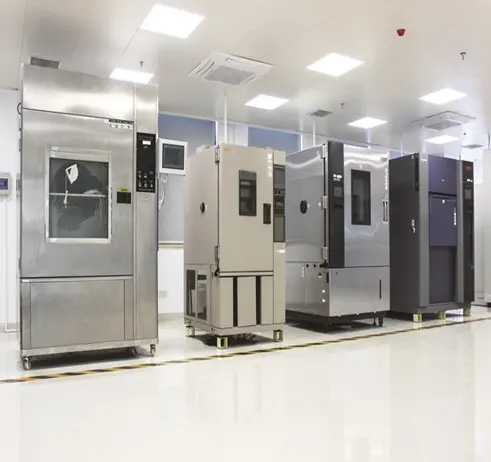
② Extreme Environment Simulation: Use temperature chambers to test tag performance under extreme temperatures.
③ Security Attack Simulation: Man-in-the-Middle (MITM) attacks, eavesdropping tests (NFC security vulnerability scanning).
3. Field Validation
① Payment Terminal Compatibility: Cross-brand POS terminal transaction tests (e.g., Visa, Mastercard).
② Industrial Environment Testing: Impact of metal shelves and liquid containers on RFID read rates.
Industry Testing Standards
1. International Standards
① ISO/IEC 14443: NFC near-field communication protocol (Type A/B).
② ISO/IEC 15693: Long-range communication specification for RFID electronic tags.
③ EMVCo: NFC terminal certification for payment scenarios (e.g., Apple Pay, Google Wallet).
④ EPCglobal Gen2: UHF RFID standard for supply chain applications.
2. National Standards (China)
① GB/T 28925-2012: General technical requirements for RFID tags in China.
② JR/T 0025: Technical specification for financial mobile payments (NFC-related).
3. Security Certifications
① CC EAL4+: Chip security level certification.
② FIPS 140-2: Encryption module compliance (U.S. government standard).
Key Testing Considerations for Typical Products
1. NFC Smart Cards/Mobile Phones
① Focus: Payment transaction success rate, HCE (Host Card Emulation) compatibility.
② Test Case: Simulate transaction retry mechanisms after POS terminal power failure recovery.
2. RFID Warehouse Tags
① Focus: Batch reading speed, performance optimization for metal surface attachment.
② Test Case: Read accuracy in high-density shelves (tag spacing <5 cm).
3. Medical RFID Tags
① Focus: biocompatibility (safety for human contact), high-temperature sterilization resistance.
② Test Case: Verify tag data integrity after gamma-ray sterilization.
Testing Challenges and Trends
① Miniaturized Antenna Design: RF performance optimization for ultra-thin devices (e.g., smart rings).
② Dual-Frequency/Dual-Mode Technology: Testing of composite tags supporting both NFC and UHF RFID.
③ Passive Sensor Tags: Energy consumption testing for RFID tags integrated with temperature/humidity sensors.
④ Security Enhancement: Side-channel attack (SCA) resistance testing, pre-research on quantum encryption.
Testing Services and Certifications
1. Third-Party Laboratories
JJR LAB
2. Certification Marks
NFC Forum Certification, EMVCo L1/L2 Compliance, RoHS/REACH Environmental Certification.
Systematic testing ensures that NFC/RFID products meet performance, security, and reliability requirements in complex scenarios. Strict adherence to industry specifications is critical, especially in key fields such as payments, logistics, and healthcare. Testing should incorporate application-specific extreme use cases (e.g., metal interference, high-concurrency reading).
Email:hello@jjrlab.com
Write your message here and send it to us
 RoHS Compliance Testing Services
 Amazon Toy Seller Exporting to Europe Compliance
US Jewelry Compliance Guide
Amazon Toy Seller Exporting to Europe Compliance
US Jewelry Compliance Guide
 FCC Certification Requirements and Costs for Consu
 EMC Testing Lab IEC 60601 Medical Electrical Safet
 What are the FCC Testing Requirements for Bluetoot
 Australia RCM Certification for Radio Devices
 RED Cybersecurity EN 18031 Standard
Leave us a message
24-hour online customer service at any time to respond, so that you worry!