



Refrigerator Energy Testing in Australia
In recent years, China's home appliance exports have experienced rapid growth, not only in terms of quantity but also in quality. Chinese home appliance companies have gained wide recognition in the international market for their high cost-performance ratio and the application of new technologies. The Australian market, as a significant overseas market, has become a destination for many companies to set sail. For companies producing household refrigerators and freezers, energy efficiency testing is crucial before entering the Australian and New Zealand markets. Household refrigerators and freezers sold in these markets must meet minimum energy efficiency standards and display energy efficiency labels if they fall within the mandatory regulatory requirements. This is a fundamental requirement for exporting household refrigerators and freezers to the Australian market.
Export products need to comply with the Australian Equipment Energy Efficiency (E3) Program, an initiative by the Australian government, state and territory governments, and the New Zealand government aimed at improving the energy efficiency of appliances and equipment. The E3 Program seeks to provide a unified and comprehensive approach to energy efficiency standards and labeling, specifying the minimum energy efficiency levels that appliances must meet before sale.
Testing Requirements
- Testing Standards: AS/NZS IEC 62552.1, AS/NZS IEC 62552.2, AS/NZS IEC 62552.3, AS/NZS 4474
- Test Voltage: 230V, 50 Hz
- Main Testing Items: Storage temperature, cooling test, temperature deviation during defrost and recovery periods, power consumption testing, volume measurement
Products Within the Mandatory Scope
- Household cooling appliances that can be connected to the mains electricity and have a vapor-compression refrigeration system.
- Products falling under the scope of Part 1 of the testing standards.
- Household cooling appliances suitable for use in commercial environments.
Products Outside the Mandatory Scope
- Products with a total volume of less than 80L specifically designed for caravans and other vehicles.
- Horizontal portable products or vertical portable products with a total volume of less than 80L.
- Products with a total volume of less than 30L where refrigeration is a secondary function, such as hot and cold water dispensers.
- Products that cannot be connected to 230V or 400V, 50Hz mains electricity.
- Products using refrigeration technologies other than vapor-compression cycles.
- Wine storage appliances.
- Standalone ice makers.
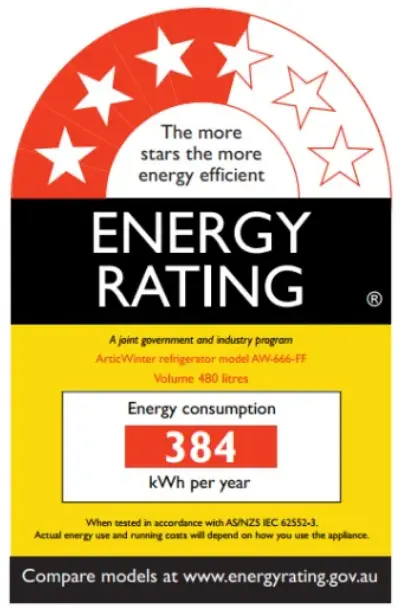
Certification Process
01 Step One
Submit application
02 Step Two
Send samples to China JJR Laboratory for product testing and report issuance
03 Step Three
Register energy efficiency label
Email:hello@jjrlab.com
Write your message here and send it to us
 ISO 10993 Biocompatibility Standards
 Medical TPV ISO 10993 Biocompatibility Testing
 FDA Requirements for Biocompatibility under ISO 10
 Amazon Spain WEEE Compliance Deadline: September 3
 What is the ASTM F2264 Certification Test?
 What is ASTM F2194 Certification Testing?
 What is the ASTM F2167 Certification Test?
 What is the ASTM F2050 Certification Test?
Leave us a message
24-hour online customer service at any time to respond, so that you worry!