



USA Amazon Toy Safety Compliance
In this era of global procurement, brand owners, retailers, importers, and manufacturers are all faced with significant challenges. Especially for the toy and children’s products industry, it is absolutely one of the most heavily regulated sectors. Non-compliant toys and childcare products pose severe threats to children’s health and your business reputation if recalled by the authorities.
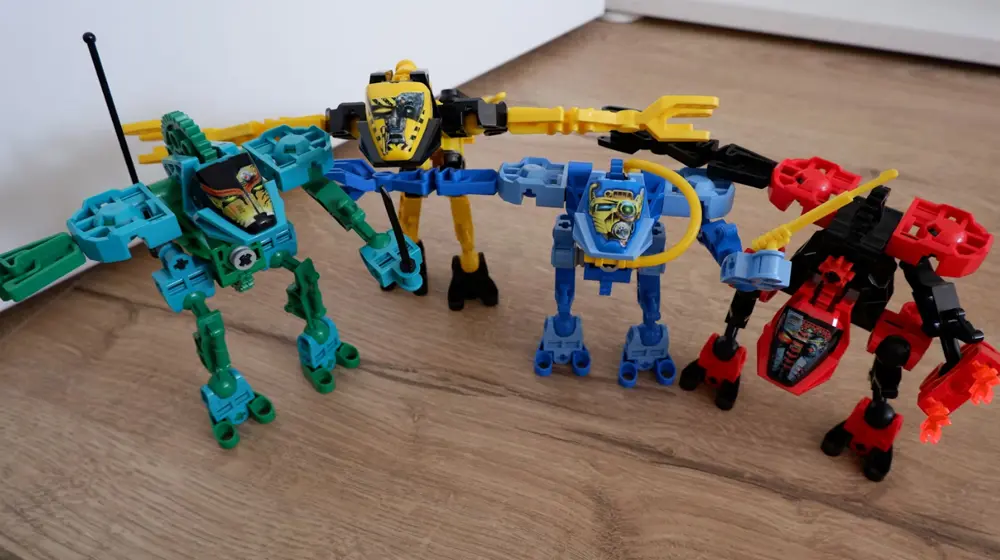
U.S. Toy Safety Standards
Product | Testing Requirements |
Regular toys suitable for children aged 12 and under | ASTM F 963 Toy Safety Standard cpsia testing (Lead, Phthalates) cpsia Tracking Label Small Parts Warning Children’s Product Certificate (CPC) California Proposition 65 Legal URN Number Registration (for soft stuffed toys) Textile Label Care Label Country of Origin |
ASTM F 963
ASTM F 963 focuses on reducing potential safety hazards of toys. This standard covers a wide range of toys, including balls, plush toys, dolls and action figures, games, infant and preschool toys, ride-on toys, battery-operated toys, projectile toys, etc.
ASTM F 963 consists of several sections, covering safety requirements in terms of material quality, flammability, toxicology, small objects, accessible edges, sharp points, electrical/thermal energy, and other aspects.
ASTM F 963 mandates that all toys undergo simulated use and abuse testing procedures, as well as potential safety hazard assessments. The regulation specifies different requirements for different age limits, reflecting the nature of hazards and children’s expected ability to cope with such hazards—physically, mentally, or both.
cpsia testing
The Consumer Product Safety Improvement Act (CPSIA) regulates all children’s products sold in the United States. A children’s product is defined as a product intended for use by children aged 12 or younger. CPSIA requires mandatory third-party laboratory testing for each type of children’s product sold in the U.S.
① CPSIA Total Lead Content
② CPSIA Phthalate Content
CPSIA Tracking Label
Toys must be affixed with the tracking label required by CPSIA. The tracking label shall include the following information:
① Importer’s company name
② Place of production
③ Date of production
④ Batch number
Country of Origin
Toy products sold in the U.S. must be marked with their country of origin. You must affix a permanent country-of-origin label on both the product and its packaging. Therefore, stickers are not acceptable.
Electronic Toys
If you plan to sell electronic toys such as remote-controlled toys in the U.S., in addition to the regular toy standards mentioned above, you must understand the following regulations and standards.
fcc part 15
FCC Part 15 regulates electronic toys with a CPU operating frequency of 9 kHz or higher. It also covers most consumer electronic products and electrical equipment imported into the U.S.
FCC Mark
After passing fcc part 15 testing, the FCC mark can be added to both the product and its packaging.
FCC Supplier’s Declaration of Conformity (sdoc)
Manufacturers or importers are required to provide the SDoC for electronic toy products. This document shall include the following information:
① Issuing company
② Address
③ Telephone/fax number
④ Product name
⑤ Model number
⑥ Applicable standard (e.g., FCC Part 15)
⑦ Representative’s signature
⑧ Date
U.S. Electrical Product Safety Standards
Electrical product safety standards are voluntary in the United States. However, you can apply for the etl certification mark and UL mark to ensure compliance with the electrical safety standards for toy products sold in the U.S.
If your imported toy products cause any property damage or personal injury, you shall bear the liability. Therefore, you need to ensure product safety before importing them into the U.S.
UL Standards
Underwriters Laboratories (UL) develops safety standards for electronic toy products, such as:
① UL 696 – Standard for Electric Toys
② UL 498 – Standard for Attachment Plugs and Receptacles
③ UL 83 – Standard for Thermoplastic-Insulated Wires and Cables
Amazon
Amazon generally requires a ul test report to ensure your product’s compliance. Retailers in the U.S. also tend to require their suppliers to provide a UL test report.
Wooden Toys
Certain wooden products, including some wooden toys, are regulated by the U.S. Department of Agriculture Animal and Plant Health Inspection Service (USDA APHIS). Manufacturers must be approved wooden crafts manufacturers. Approved manufacturers comply with the facility requirements agreed upon by the U.S. and China. These include requirements for facility sanitation, pest control, material quarantine, traceability, fumigation, and heat treatment:
① Quarantine treatment of wooden crafts
② Heat treatment and/or fumigation
③ Clean and tidy production areas
④ Quality management, such as pest control and traceability systems
Children’s Toys Containing Composite Wood Panels
Certain children’s toys containing composite wood panels (plywood, medium-density fiberboard, particleboard) must obtain EPA/CARB certification.
Email:hello@jjrlab.com
Write your message here and send it to us
 How to get an EN 301 893 test report?
 What is EN 301 893 Certification Compliance
 What is the CSA 62368-1 Standard?
 Canadian Pacifier Compliance SOR/2016-184
 US Agent for FCC & EC REP for CE: Compliance R
 What is Recycling of WEEE
 What is PPWR Packaging Compliance
What is Extended Producer Responsibility
What is PPWR Packaging Compliance
What is Extended Producer Responsibility
Leave us a message
24-hour online customer service at any time to respond, so that you worry!