



What is RCM Compliance Testing?
Introduction to the rcm mark
The Regulatory Compliance mark (RCM) is a trademark owned by Australia's electricity regulatory authority (Regulatory Authority, RA) and the Australian Communications and Media Authority (ACMA).
RCM stands for Regulatory Compliance Mark, an identification mark introduced in Australia and New Zealand to replace the previous saa, C-Tick, and A-Tick marks. It serves as a unified certification for electrical products, owned by the regulatory authorities of Australia and New Zealand. The mark indicates that a product complies with both safety and EMC (Electromagnetic Compatibility) requirements, primarily applicable to radio communication products and electrical equipment.
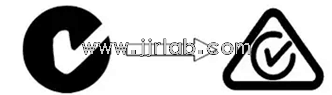
Scope of Electrical and Electronic Products for RCM Registration
① Household appliances (e.g., washing machines, refrigerators)
② Electronic devices (e.g., computers, telephones)
③ Electrical lighting (e.g., lamps, light bulbs)
④ Power tools (e.g., drills, lawnmowers)
⑤ Telecommunications equipment (e.g., routers, televisions)
⑥ Medical devices (e.g., electrocardiographs, X-ray machines)
⑦ Laboratory equipment (e.g., spectrometers, meters)
⑧ Electrical accessories (e.g., power sockets, extension cords)
⑨ Industrial equipment (e.g., production machinery, robots)
⑩ Renewable energy products (e.g., photovoltaic panels, electric vehicle chargers)
Risk Classification of Electrical Equipment in Australia
Electrical equipment is classified into three risk categories based on the level of risk to humans and assets as defined in relevant standards:
① Category 1 (Low Risk): Requires emc test report.
② Category 2 (Medium Risk): Requires EMC test report and safety test report.
③ Category 3 (High Risk): Requires EMC test report, saa certification, and EESS (Electrical Equipment Safety System) registration.
Specific product classification must be evaluated by a laboratory to confirm the applicable category and test standards.
Key Notes for RCM Registration
① All suppliers of regulated electrical equipment for sale must be legal entities in Australia or New Zealand (including foreign companies registered for business in Australia or New Zealand) and must be registered as Responsible Suppliers in the national database.
② All certificates used as compliance evidence must have appropriate details recorded in the national database.
③ All regulated electrical equipment must bear the Regulatory Compliance Mark (RCM).
④ Responsible Suppliers must declare that all regulated electrical equipment supplied is electrically safe.
⑤ Failure to fulfill obligations under the EESS may result in significant penalties and potential deregistration for Responsible Suppliers.
RCM Registration Process for Australia
① Laboratory evaluates the product's risk category.
② Submit product samples for testing.
③ Conduct testing and certification in accordance with the requirements of the corresponding category.
④ Laboratory provides test results.
⑤ Rectify non-conforming products until they meet standards (if applicable).
⑥ Submit original test reports and certificates for RCM registration.
⑦ Upon successful registration, issue RCM documentation.
Email:hello@jjrlab.com
Write your message here and send it to us
 RoHS Compliance Testing Services
 Amazon Toy Seller Exporting to Europe Compliance
US Jewelry Compliance Guide
Amazon Toy Seller Exporting to Europe Compliance
US Jewelry Compliance Guide
 FCC Certification Requirements and Costs for Consu
 EMC Testing Lab IEC 60601 Medical Electrical Safet
 What are the FCC Testing Requirements for Bluetoot
Australia RCM Certification for Radio Devices
What are the FCC Testing Requirements for Bluetoot
Australia RCM Certification for Radio Devices
 RED Cybersecurity EN 18031 Standard
Leave us a message
24-hour online customer service at any time to respond, so that you worry!