



Electronic Product Labeling Requirements
The EU imposes generally strict product certification standards. To sell legally in the EU, sellers must comply with multiple certification regulations. Below is an overview of common certifications for electronic and electrical products, along with labeling and packaging requirements.
Common Certifications
1. EPR Registration (Extended Producer Responsibility)
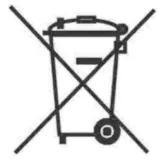
- Includes WEEE, Packaging Law, and Battery Law.
- Applies differently depending on product category.
- Currently enforced in Germany, France, Spain, and Austria on TEMU.
- Non-compliance may result in withheld payments, delisting, or frozen funds.
2. EU Representative (EU Rep)
- A natural or legal person in the EU designated to fulfill legal duties on behalf of manufacturers outside the EEA.
3. UK Representative (UK Rep)
- A UK-based natural or legal person designated by manufacturers to fulfill obligations under UK regulations.
4. EU Energy Labeling
- Requires display of energy efficiency, consumption, and other resource-related data on product labels.
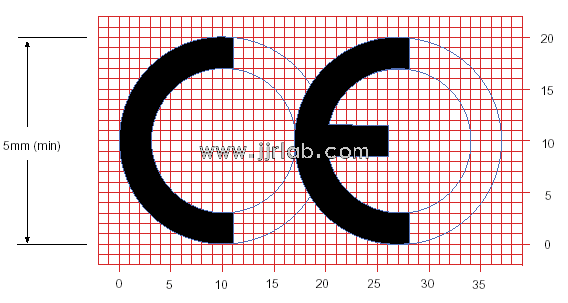
5. CE certification (EU)
- Required for electronics to enter the European market.
- ce mark must be displayed on the product.
6. ukca certification (UK)
- The UK equivalent of ce marking, mandatory for market access in the UK.
- Limits hazardous substances in electrical/electronic equipment.
- Part of CE directives, focused on environmental safety.
8. RSL Report (Restricted Substances List)
- Ensures compliance with changing safety regulations and standards.
Labeling and Photography Requirements
- Labels must be photographed clearly in real, unedited environments.
- Labels must be attached or printed directly on the product or its outer packaging.
- No handwritten, altered, or tampered labels.
- Labels must not be reused or re-applied.
Mandatory Labeling Information
- Product name and model
- Manufacturer/importer/distributor name
- Manufacturer/importer/distributor address
- Country of origin (e.g., Made in China)
- Product details: model, voltage/current (input/output)
- Contact info for responsible party (EU/UK Rep): name and address
- Mandatory certification marks: CE (EU), G-Mark (Middle East), KC (Korea), etc.
- fcc id (for wireless products sold in the U.S.)
Recommended (Optional) Information
- Product features and functions
- Component description
- Usage instructions
- Safety precautions
- Maintenance and care
- Installation and placement instructions
Product Information Consistency Requirements
1. Physical Product vs. Listing Image
- The product shown in real photos must exactly match the SKU listing image.
- For CE-RoHS Compliance, sample photos must be identical in every detail.
2. Qualification Documents vs. Product Images
- Product name, model, and manufacturer info in documents must match product photos.
- Sample product images in test reports must also be consistent with actual product.
3. Shipped Product vs. Product Images
- Shipped product and label details must match physical images exactly.
- Includes model number, origin, instructions, production date, etc.
4. Certificates and Test Reports (if applicable)
- Names, models, report numbers, standards, and manufacturer details must be consistent across all documents.
- Ensures reliable and unified traceability of product info.
Key Electrical Regulations/Directives and Testing Requirements
EU low voltage directive (LVD) - Directive 2014/35/EU
- Applies to equipment with 50V–1000V AC or 75V–1500V DC.
- Covers most household appliances, power tools, lights, electronics, etc.
- Testing includes:
- Electrical Safety: Insulation, voltage withstand, grounding
- Mechanical Safety: Enclosure strength, stability
- Thermal Safety: Normal/abnormal temperature
- Other: Creepage, clearance, component safety
EU Electromagnetic Compatibility (EMC) Directive - Directive 2014/30/EU
- Applies to devices that emit or are affected by electromagnetic interference.
- Relevant for industrial equipment, IT, telecom, and home electronics.
- Testing includes:
- EMI: Conducted and radiated emissions
- EMS: ESD, RF immunity, EFT, surge, magnetic fields
EU Radio Equipment Directive (RED) - Directive 2014/53/EU
- Applies to wireless devices and telecom terminals.
- Ensures EMC, safety, and efficient radio spectrum use.
- Testing includes:
- EMC: Emissions, harmonics, flicker
- RF: Power output, bandwidth, frequency error
- Safety: Insulation, touch current, voltage withstand
EU RoHS Directive - Directive 2011/65/EU
- Restricts hazardous substances in electronics.
- Applies to home appliances, IT devices, lighting, tools, toys.
- Substance limits:
- Cadmium (Cd): < 100 ppm
- Lead (Pb), Mercury (Hg), Hexavalent Chromium (Cr VI), PBB, PBDE: < 1000 ppm each
- DEHP, BBP, DBP, DIBP: < 1000 ppm each
Application Process & Timeline
1. Fill in the application form
2. Submit product samples
3. Testing arranged by JJR Lab (China)
4. Draft report issued upon passing tests
5. Final report confirmation
Typical timeline: 5–7 working days (expedited processing available)
Email:hello@jjrlab.com
Write your message here and send it to us
 FDA Requirements for Biocompatibility under ISO 10
 Amazon Spain WEEE Compliance Deadline: September 3
 What is the ASTM F2264 Certification Test?
 What is ASTM F2194 Certification Testing?
 What is the ASTM F2167 Certification Test?
 What is the ASTM F2050 Certification Test?
 What is ASTM F1967 Certification Testing? How to g
 What is the ASTM F1917 Certification Test?
Leave us a message
24-hour online customer service at any time to respond, so that you worry!