



How Much Does C-Tick Certification Cost for Electronic?
In addition to safety marks, electrical and electronic products entering Australia and New Zealand must also bear the EMC mark, namely the C-Tick mark. Its purpose is to protect the resources of radio communication frequency bands. The C-Tick mark imposes mandatory requirements only on EMI (Electromagnetic Interference) testing and RF (Radio Frequency) parameter testing, so manufacturers/importers can make self-declarations. However, before applying for the C-Tick mark, products must be tested in accordance with AS/NZS CISPR or relevant standards. Test reports shall be endorsed and submitted by Australian or New Zealand importers, and uniformly accepted by ACMA (Australian Communications and Media Authority) for the issuance of registration numbers. Communication products may apply for A-Tick certification, while electronic products apply for c-tick certification.

Steps for Manufacturers/Importers to Use A/C-Tick
1. Conduct product testing in accordance with ACAQ technical standards.
2. Register with ACA (Australian Communications Authority) to use the A/C-Tick mark.
3. Complete the "Declaration of Conformity Form" and retain it together with product compliance records for C-Tick certification.
4. Attach a label with the A/C-Tick mark to communication products or equipment.
5. Sell to consumers.
Note: A-Tick is only applicable to communication products, and most electronic products apply for C-Tick. However, if an electronic product has obtained A-Tick certification, there is no need to apply for C-Tick separately. Since November 2001, EMI applications in Australia and New Zealand have been merged. For products to be sold in these two countries, the following documents must be prepared before marketing for random inspections by ACA, New Zealand's Ministry of Economic Development, or other relevant authorities.
C-Tick Certification Costs
Costs vary by product type and specifications. (For example, the cost of rcm compliance testing for wired products at JJR Laboratory is 1000 US dollars.)
Classification of C-Tick Certified Products
Electromagnetic compatibility in Australia is supervised by ACA. Under Australia's EMC system, products are classified into three categories. Suppliers must register with ACA to use the C-Tick mark before selling Category 2 and 3 products:
① Category 1 Products: Products with low interference radiation to wireless spectrum devices, such as manual switches, simple relays, single-phase squirrel-cage induction motors, and resistors. Manufacturers may voluntarily apply for the C-Tick mark for these products during production and sales.
② Category 2 Products: Products with moderate interference radiation to wireless spectrum devices, such as switching power supplies, welding machines, dimmers, and most household appliances.
③ Category 3 Products: Products with high interference radiation to wireless spectrum devices, i.e., products covered by CISPR11 and CISPR22. Only registered companies in Australia or New Zealand are eligible to apply for the C-Tick mark with ACA. Overseas manufacturers can apply through Australian/New Zealand buyers or certification bodies with branches/partners in Australia or New Zealand.
C-Tick Certification Sequential Label Requirements
Radio communication equipment or specific electrical and electronic equipment must comply with relevant label notice requirements; otherwise, they cannot be sold or supplied in Australia. The C-Tick is a sequential label applicable to items covered by the following label notices:
1. Radio Communications (Sequential Labeling with Emissions) Notice 2001: Outlines compliance arrangements for EMC regulations.
2. Radio Equipment (Sequential Labeling) Notice No. 1 1996: Details compliance arrangements for radio communications regulations.
3. Radio Communications (Sequential Labeling - Electromagnetic Radiation) Notice 2003: Specifies compliance arrangements for EMR (Electromagnetic Radiation) regulations.
Under EMC regulatory arrangements, the sequential label must be affixed to products before they are supplied in Australia. It also serves as the sequential label for non-radio communication products required to comply with EMR rules. For telecommunications products, EMR compliance is covered by the A-Tick sequential label. The C-Tick sequential label must include supplier identification information, which may take the form of a supplier code issued by ACA, an Australian Company Number, or other formats specified in relevant label notices. For more information on using the C-Tick mark, please visit the ACA official website.
C-Tick Certification Standards
① General standard for lighting equipment: AS/NZS CISPR15
② Standard for information technology equipment: C-TICK AS/NZS CISPR 22: 2009+A1:2010
③ Standard for audio and video products: C-TICK as/nzs cispr 32: 2015
④ Standard for household appliances: C-TICK AS/NZS CISPR 13
Email:hello@jjrlab.com
Write your message here and send it to us
 What is Cytotoxicity ISO 10993-5
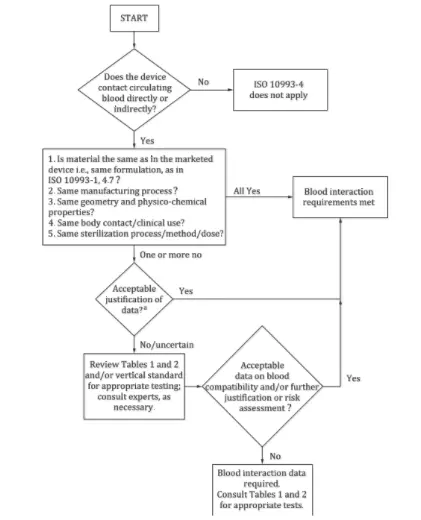 What is Hemocompatibility Testing ISO 10993?
 What is ISO 10993-5 Tests for In Vitro Cytotoxicit
 Electronic Product IEC 62368-1 Safety Testing
 What is an EU SDS (Safety Data Sheet)?
 What is the CA Prop 65 Warning Label?
 2026 Amazon TIC Mandatory Audit Catalog
Australian Electrical EESS and RCM Compliance
2026 Amazon TIC Mandatory Audit Catalog
Australian Electrical EESS and RCM Compliance
Leave us a message
24-hour online customer service at any time to respond, so that you worry!