



How to Get a Qi Certification?
Certification Overview
The Qi standard is a wireless charging standard introduced by the Wireless Power Consortium (WPC), a global organization dedicated to promoting the standardization of wireless charging technology. It adopts the mainstream electromagnetic induction technology and features both compatibility and universality. Any product with the Qi logo can be charged using a Qi wireless charger. Certified products that are listed comply with relevant safety and performance specifications, ensuring compatibility across different brands and models that have passed certification.
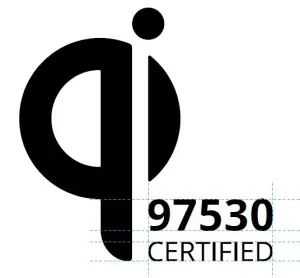
Certification Mark
Product Scope
1. Based on product usage and form, Qi-certified products are categorized into:
- Power bank products
- Embedded products
- Charging products
2. Based on the type of transmitter, Qi-certified products are divided into:
- Single-transmitter products: Can charge only one device at a time
- Multi-transmitter products: Can charge multiple devices simultaneously
Testing Items
1. Compliance testing
Several compliance testing laboratories are available in China. At least five sample devices must be submitted for testing, and one of them will first undergo compliance testing. If the compliance test is successful, the sample will be retained at ATL. The key testing items include:
- (1) Timing of the communication protocol between the transmitter and receiver
- (2) Power output capability via XYZ-axis translation tests
- (3) Maximum power supply capacity during energy transmission
- (4) Foreign object detection
2. Compatibility Testing
There are only two IOC-certified compatibility testing laboratories worldwide—one in Belgium (Europe) and one in South Korea (Asia).
After passing compliance testing, ATL will send the test samples to the Belgium or South Korea laboratory for compatibility testing. Once the compatibility testing is completed, the submitter can execute the "confirmation of completion" action on the official WPC website. The product will then be listed on the WPC website, and users can search for it by entering the product ID. The tested product will be retained in the test bed.
According to WPC requirements, all test samples must undergo compatibility testing with previously certified Qi products. For example, if the product being tested is a wireless charging transmitter, it must be compatible with all previously Qi-certified receivers (including smartphones).
Following the Qi testing process, a product must pass compliance testing before undergoing compatibility testing. If it fails the compatibility test, it must be modified and retested. However, after modification, it cannot directly proceed to compatibility testing; instead, it must first undergo compliance testing again before another round of compatibility testing.
Certification Process
1. Provide product information and request a quotation
2. After signing the contract, the client submits the required documentation
3. Apply for WPC membership
4. Submit product specifications and parameters for review
5. Provide test samples for compliance testing at a local laboratory
6. Submit test samples for compatibility testing
7. Final confirmation of product information
8. Complete product registration on the WPC website
Note: Different types of products require different qi certification processes.
- Products with power above 5W that use the Qi protocol must pass EPP certification
- Products with power above 5W that use a private protocol only need to pass BPP certification
Certification Duration & Validity
Under normal testing conditions, if the product passes all tests without failure, the entire process takes about 4-5 weeks. Including additional turnaround time, the total certification period is typically 1.5 to 2 months.
Factory Inspection
Factory inspection is not required.
8. Important Notes
1. Qi certification is available only to WPC members, meaning manufacturers must first become WPC members.
2. Qi certification is only valid when conducted at WPC-authorized laboratories.
3. Qi certification is voluntary and is not a regulatory requirement for local markets. Certified products must also comply with relevant regulations such as CE, RoHS, REACH, fcc, etc.
4. Currently, manufacturers producing products under the Qi standard are exempt from paying patent technology fees. However, whether this will remain free in the future is subject to further notice.
Logo Usage Guidelines
The Qi logo can be combined with the product identification code ("Qi-ID") and the text "Certified." It must follow the alignment, size, and font requirements specified in the Trademark Guidelines.
Email:hello@jjrlab.com
Write your message here and send it to us
 ISO 10993 Biocompatibility Standards
 Medical TPV ISO 10993 Biocompatibility Testing
 FDA Requirements for Biocompatibility under ISO 10
 Amazon Spain WEEE Compliance Deadline: September 3
 What is the ASTM F2264 Certification Test?
 What is ASTM F2194 Certification Testing?
 What is the ASTM F2167 Certification Test?
 What is the ASTM F2050 Certification Test?
Leave us a message
24-hour online customer service at any time to respond, so that you worry!