



IECEE CB Certification, Global Compliance Certificate
In the fierce competition of the global market, one of the severe challenges faced by manufacturers of electrical and electronic products is the complex mandatory safety certifications in various countries. Certification standards, testing requirements and application procedures vary across different countries or regions. Applying for certifications one by one is not only time-consuming and costly, but also seriously delays product launch and misses market opportunities. Against this background, the value of the IECEE CB Scheme stands out prominently, and it is widely hailed as the "international passport" for product safety certification in the industry.
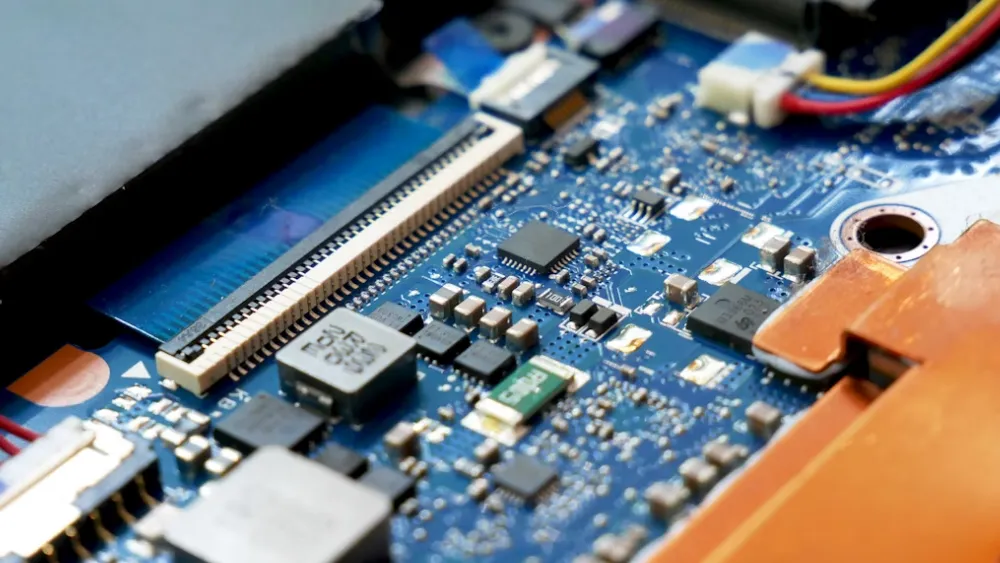
What is IECEE cb certification? Why is it the "Golden Key" to the Global Market?
The IECEE CB Scheme (IEC System of Conformity Testing and Certification of Electrical Equipment) is a global multilateral recognition system based on international standards (IEC standards). Its core logic is "one test, accepted globally".
Specifically, manufacturers can conduct a complete test and assessment at a National Certification Body (NCB) in any IECEE member country to obtain a cb test Report and cb certificate. This document serves as a critical foundation for obtaining national certifications in other member countries, such as china ccc, EU CE, US UL/cTUVus, South Korea KC, Saudi SABER, etc.
Its core advantages are:
• Time Saving: Avoid repeated testing in each target market, shortening the certification cycle by several months.
• Cost Reduction: Significantly reduce testing fees, as well as logistics and management costs of multiple sample submissions.
• Simplified Process: With the cb test report and Certificate, the subsequent certification conversion process will be greatly simplified, usually only requiring supplementary testing for national differences (e.g., local plugs, voltage and frequency, language requirements, etc.).
Latest Updates of the CB Scheme and Key Compliance Points in 2026
With technological iteration and adjustments to trade policies, the practical application of the CB Scheme is continuously evolving. Enterprises planning global certification for 2026 and beyond should pay close attention to the following points:
1. Revision of Key Standards and Impacts
Many important IEC basic standards have issued new editions. For example:
• IEC 62368-1:2023 (Safety standard for audio/video, information technology and communication technology equipment) has replaced the old version and become the latest harmonized standard in the EU, North America and other regions. CB Test Reports issued under the old standard cannot be used for new certification conversions.
• IEC 61347-1:2024 (General safety requirements for lighting control devices) has also entered into force. Lighting enterprises must ensure that new product designs comply with the latest requirements.
Practical Suggestion: Before launching a CB project, be sure to confirm the latest valid version of the applicable standards for your product with the certification body.
2. New Conversion Regulations and Practical Difficulties in Key Markets
• European Union (CE certification): The CB Test Report is an important basis for CE Declaration of Conformity. Note that the CB Scheme mainly covers safety (LVD Directive), while electromagnetic compatibility (EMC Directive) usually requires separate testing. EU requirements for Technical Construction Files (TCF) are becoming increasingly stringent.
• United States (NRTL Certification): NRTLs recognized by the Occupational Safety and Health Administration (OSHA) (e.g., UL, Intertek, TÜV, etc.) all accept CB Test Reports. The key to conversion is to supplement US national differences, such as 120V/60Hz testing, US-standard plugs, specific safety warning labels, and assessment compliant with the National Electrical Code (NEC).
• Kingdom of Saudi Arabia (SABER Certification): The CB Certificate is a mandatory access document. When applying for SABER PCoC (Product Certificate of Conformity) and SCoC (Shipment Certificate of Conformity), the Saudi Standards, Metrology and Quality Organization (SASO) will strictly review whether the CB Test Report includes 220V/60Hz test data, BS 1363 plug assessment and other differences. Common failure points: inconsistent product family division in the report with Saudi requirements, or key components without Saudi-recognized certificates.
• Australia / New Zealand (rcm mark): In addition to safety (based on CB Test Report), supplementary energy efficiency testing (e.g., MEPS) and emc testing are mandatory, followed by registration in the EESS national database.
3. Common Enterprise Misunderstandings
• Misunderstanding 1: Holding a CB Certificate equals obtaining all global certifications.
Correction: The CB Certificate is a qualification document for "certification conversion", not the final market access certificate. Conversion must be applied for from the issuing body of the target country.
• Misunderstanding 2: CB Test Reports issued by any laboratory are equivalent.
Correction: Only CB Test Reports and Certificates issued by IECEE-recognized NCBs are accepted globally. It is crucial to select an experienced and widely networked NCB.
A single CB Certificate is the key to opening the global market. However, using this key to efficiently unlock every national border tests profound understanding of national "lock cylinders" (national differences) and systematic compliance management capabilities.
From standard interpretation, difference prediction, test planning to final certification conversion, every step requires forward-looking professional layout and efficient process execution. On the journey of global market access, professional compliance management is your most reliable accelerator.
Email:hello@jjrlab.com
Write your message here and send it to us
 ISO 10993 Biocompatibility Standards
 Medical TPV ISO 10993 Biocompatibility Testing
 FDA Requirements for Biocompatibility under ISO 10
 Amazon Spain WEEE Compliance Deadline: September 3
 What is the ASTM F2264 Certification Test?
 What is ASTM F2194 Certification Testing?
 What is the ASTM F2167 Certification Test?
 What is the ASTM F2050 Certification Test?
Leave us a message
24-hour online customer service at any time to respond, so that you worry!