



LED Display Export to the EU CE-EMC + RoHS Directives
In the EU display equipment market, LED displays are widely used in scenarios such as commercial advertising, sports stadiums, and transportation hubs due to their high-definition image quality and energy-saving features, with an annual demand growth rate of over 8%. However, many export enterprises have repeatedly encountered obstacles during customs clearance: a Guangzhou-based LED display manufacturer had a batch of outdoor large screens worth 8 million yuan detained at the Port of Hamburg due to non-compliant emc testing. The rework and rectification took one and a half months, causing the manufacturer to miss the customer's opening schedule and face a 30% order penalty for breach of contract. Another Shenzhen enterprise had its goods detained at the Port of Rotterdam because the ROHS Test report did not cover all key components, resulting in port detention fees and storage fees exceeding 30,000 US dollars.
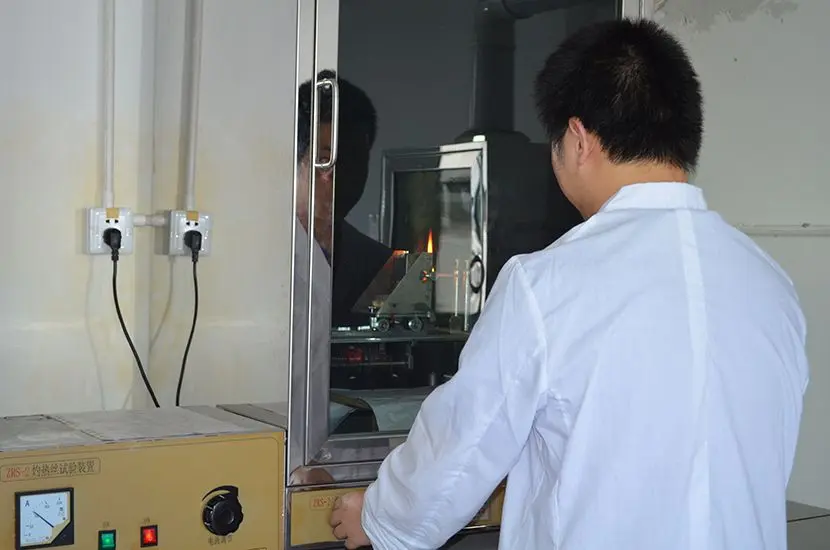
In fact, the EU's access regulation for LED displays focuses on the dual directives of CE-EMC (Electromagnetic Compatibility) and RoHS (Restriction of Hazardous Substances). As long as enterprises fully understand the requirements of the two directives and ensure full-process compliance, unimpeded customs clearance can be achieved. This article provides a practical export guide for enterprises from four dimensions: directive interpretation, testing key points, customs clearance procedures, and pitfall avoidance tips.
EU Directives for LED Displays
LED displays (including indoor small-pitch screens, outdoor full-color screens, transparent screens, etc.) must comply with both the CE-EMC Directive (2014/30/EU) and the RoHS 2.0 Directive (2011/65/EU, amended by 2023/1535) to enter the EU market. The two directives set access thresholds from the perspectives of "electromagnetic compatibility" and "ecological environmental protection" respectively, and neither can be omitted.
1. CE-EMC Directive: Core Requirements for Addressing "Electromagnetic Interference"
The EMC Directive targets two major indicators of LED displays: Electromagnetic Emission (EMI) and Electromagnetic Susceptibility (EMS), and is implemented in accordance with the standard en 55032 (Electromagnetic Compatibility Standard for Multimedia Equipment). This is a key difference from ordinary lighting products, which follow EN 55015.
Electromagnetic Emission (EMI)
It restricts the electromagnetic noise generated by the display itself to avoid interfering with surrounding equipment (such as TV station signals, airport radars, and hospital instruments). The core test items include:
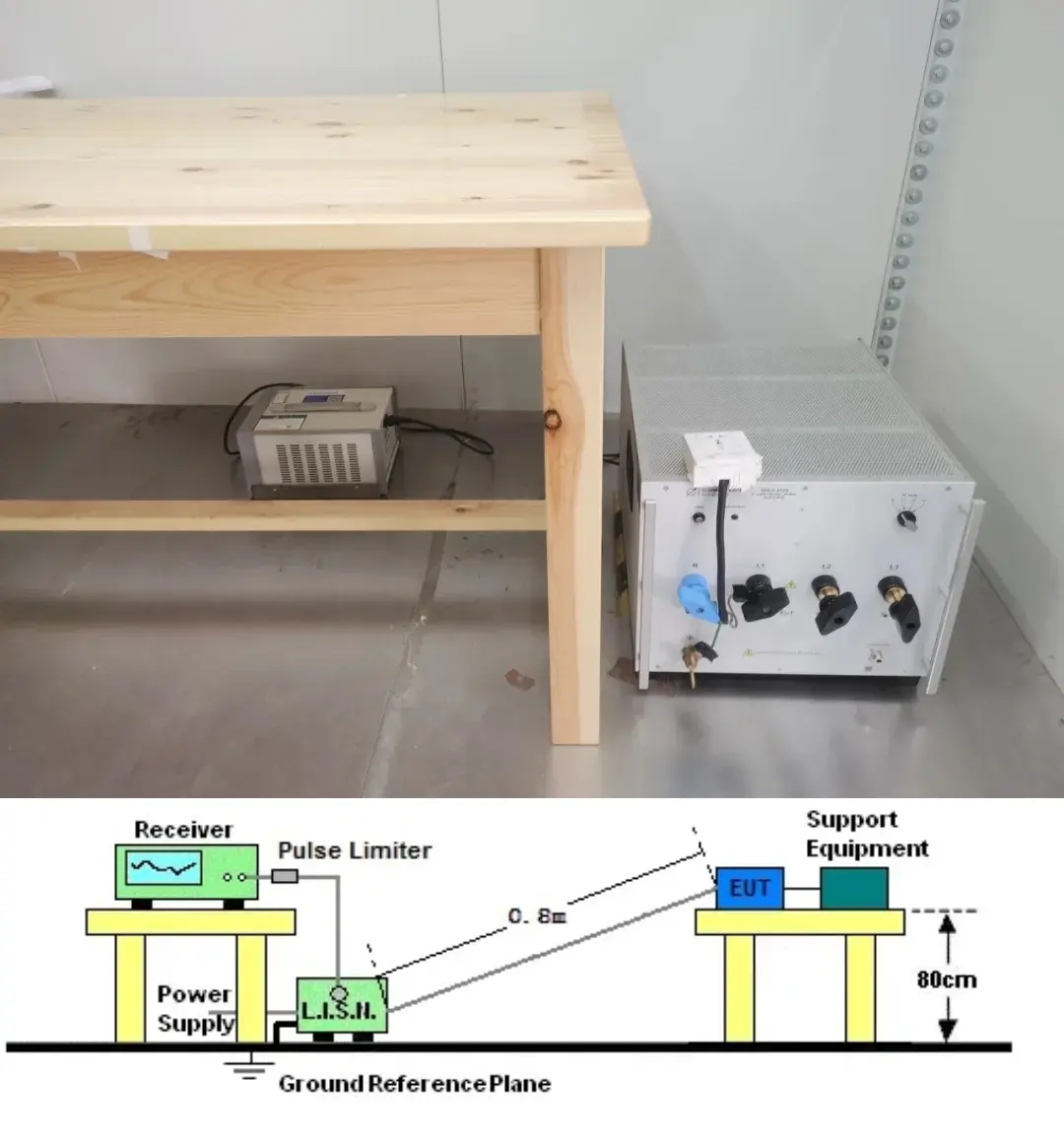
① Conducted Emission (150kHz–30MHz): Assesses electromagnetic noise conducted through power cables and signal cables, with a limit requirement of ≤ 60dBμV (quasi-peak value).
② Radiated Emission (30MHz–1GHz): Controls electromagnetic waves radiated outward by the entire display unit. Outdoor large screens have stricter limit requirements due to their high power (e.g., ≤ 40dBμV/m in the 30–230MHz frequency band).
③ Harmonic Current (en 61000-3-2): For displays with power > 75W, the 3rd and 5th harmonic currents must be controlled to avoid power grid pollution.
Electromagnetic Susceptibility (EMS)
It ensures the display operates normally in a complex electromagnetic environment. Key tests include:
① Electrostatic Discharge Immunity (EN 61000-4-2): Contact discharge ±6kV, air discharge ±8kV. No black screen or distorted screen shall occur on the display after the test.
② Surge Immunity (EN 61000-4-5): Power cable ±2kV, signal cable ±1kV, simulating lightning strikes or power grid fluctuations. The display shall automatically resume normal operation.
③ Radio Frequency Field-Induced Conducted Immunity (EN 61000-4-6): 80–1000MHz frequency band, field strength 10V/m. No abnormalities shall be observed in the displayed content during the test.
Special Note: The "control card", "power adapter", and "signal transmission cable" of the LED display must all be included in the EMC test scope. Testing only the display module alone shall be deemed "incomplete testing", and the ce certificate shall be invalid.
2. RoHS 2.0 Directive
The RoHS 2.0 Directive sets limits for 10 hazardous substances in LED displays (four additional phthalates were added in 2023), requiring that "the content of hazardous substances in homogeneous materials of the entire product does not exceed the standard". The core controlled substances and their limits are as follows:
Substance Name | Limit Requirement (in Homogeneous Materials) | Main Sources in LED Displays |
Lead (Pb) | ≤ 1000ppm (0.1%) | Solder, PVC sheath of power cables, coating of display backplates |
Mercury (Hg) | ≤ 100ppm (0.01%) | Some old backlight modules, phosphors |
Cadmium (Cd) | ≤ 100ppm (0.01%) | Certain capacitors, connector plating |
Hexavalent Chromium (Cr⁶⁺) | ≤ 1000ppm (0.1%) | Passivation layer of metal brackets, screw plating |
Dibutyl Phthalate (DBP) | ≤ 1000ppm (0.1%) | PVC material of display frames, cable sheaths |
Benzyl Butyl Phthalate (BBP) | ≤ 1000ppm (0.1%) | Same as above |
Bis(2-ethylhexyl) Phthalate (DEHP) | ≤ 1000ppm (0.1%) | Same as above |
Diisobutyl Phthalate (DIBP) | ≤ 1000ppm (0.1%) | Same as above |
Different from ordinary LED lamps, LED displays have a complex structure (including modules, control cards, power supplies, metal brackets, etc.), and testing must be conducted by "component disassembly": for example, testing the backlight and PCB board of the display module, the plating of metal brackets, and the sheath material of cables, to ensure that the homogeneous materials of each component meet the limit requirements.
Full Compliance Process
To achieve unimpeded customs clearance for LED displays exported to the EU, the process must be carried out in four steps: Testing and Certification → Labeling → Document Preparation → Customs Declaration, with strict compliance in each link.
1. Testing and Certification: Choose Authoritative Institutions to Avoid "Invalid Reports"
(1) Institution Selection: Entrust EU Notified Bodies (such as TÜV Rheinland, SGS, Intertek) or domestic laboratories accredited by CNAS and qualified for EMC/rohs testing. Avoid unqualified "small third-party institutions", as their reports may not be recognized by EU customs.
(2) Test Sample Requirements:
① RoHS Testing: Provide samples disassembled by component, such as 1 set of display modules, 2 control cards, 2 power adapters, 1 metal bracket, and 1 meter of cable. Each component must be labeled with "component name + material".
② EMC Testing: Provide a "complete finished product" (including display modules, control cards, supporting power supplies, and signal cables), and the samples must be consistent with mass-produced products (e.g., the shell material and component models cannot be changed).
(3) Certification Cycle: EMC testing takes 5–7 working days, RoHS testing takes 3–5 working days. If the test fails, rectification (such as replacing filter components or non-environmental protection materials) is required, with a rectification cycle of usually 3–10 working days. It is recommended to start the certification process 1 month in advance.
2. Labeling: CE Mark and RoHS Mark Are "Dual Marks Required"
LED displays must be labeled with compliant marks on both the product body and the outer packaging. The specific requirements are as follows:
CE Mark
① Size: Height ≥ 5mm. For small-sized displays (such as indoor small-pitch screens), the minimum size can be reduced to 3mm, but it must be clearly legible.
② Position: Affixed to a "visible and wear-resistant" location on the back or side of the display, and not on detachable components (such as power adapters).
③ Additional Information: The "Notified Body code" must be labeled (e.g., TÜV Rheinland code is 0197). For tests conducted by non-Notified Bodies, the "manufacturer's name + address" must be labeled.
RoHS Mark
① Format: Adopt the "green circular arrow" mark (diameter ≥ 5mm), with "Compliant with RoHS 2011/65/EU" labeled below.
② Position: Adjacent to the CE mark for easy customs verification.
Other Mandatory Labeling
Product model, rated voltage/power, manufacturer's name (or eu authorized representative's name), and production batch number. The text must be in English or the language of the importing country (e.g., German for Germany, French for France).
Document Preparation: Build an "Impeccable" Customs Clearance Document Package
The following documents must be submitted for EU customs verification. It is recommended to organize them into a book by "document category + number" for quick reference:
Certification Documents
① CE-EMC certification certificate (test standard EN 55032).
② EMC test report (including test data, waveform diagrams, and sample photos).
③ rohs test report (listing test results by component, labeled with "homogeneous material name + hazardous substance content").
Product Documents
① Product specification (in English, including technical parameters, circuit schematic diagrams, and component list, with the RoHS Compliance of each component marked in the list).
② Declaration of Conformity (DoC): Issued by the manufacturer, declaring that "the product complies with the requirements of the CE-EMC and RoHS 2.0 directives". It must include the manufacturer's signature, date, and contact information.
Customs Clearance Documents
① Commercial invoice (stating that "the product complies with CE/RoHS compliance requirements").
② Packing list (listing item by item according to "product model + quantity + CE/RoHS mark").
③ Contact information of the EU Authorized Representative (EU AR): If the manufacturer is outside the EU, the EU AR's name, address, and telephone number must be provided. The EU AR shall be responsible for product recalls, complaint handling, and other responsibilities.
Customs Declaration: Fill in Accurately to Avoid "Declaration Errors"
① HS Code Confirmation: The HS code for LED displays is 90138030 (display panels), which must be filled in accurately to avoid customs classification errors due to incorrect coding.
② Declaration Content: In the "goods description", state "LED Display, Compliant with CE-EMC Directive 2014/30/EU and RoHS 2.0 Directive 2011/65/EU", and attach the CE certificate number and RoHS test report number.
③ Response to Customs Verification: If EU customs requires on-site inspection, cooperate to provide test samples (it is recommended to carry 1 set of spare samples with the goods) and original documents. If customs has questions about the test data, supplementary explanations can be provided by the laboratory or EU AR to avoid cargo detention due to poor communication.
Pitfall Avoidance Guide: 5 High-Frequency Problems and Solutions
Most customs clearance risks for LED displays exported to the EU stem from neglect of directive details. The following 5 high-frequency problems must be avoided in advance:
Problem 1: Only Testing the "Display Module" Without Testing Supporting Equipment
Many enterprises mistakenly believe that "only testing the display module is sufficient", ignoring the EMC testing of control cards and power adapters, resulting in non-compliant EMC of the entire machine.
Solution: Submit test samples as a "complete system", including display modules, control cards, supporting power supplies, and signal cables, and ensure that the models of all components are consistent with mass-produced products.
Problem 2: RoHS Testing "Misses Components" Such as Metal Brackets and Cables
The plating of LED display metal brackets may contain hexavalent chromium, and cable sheaths may contain phthalates. If these components are missed in testing, the RoHS report shall be deemed "incomplete".
Solution: Conduct disassembly testing one by one according to the "component list", ensuring coverage of six core components: "display module, control card, power adapter, metal bracket, cable, and shell". At least 3 homogeneous material samples shall be tested for each component.
Problem 3: CE Mark Without "Notified Body Code" Labeled
Some enterprises only affix the CE mark without labeling the Notified Body code, and EU customs may determine that the "certification process is incomplete".
Solution: If tested by a Notified Body, label the institution code next to the CE mark (e.g., SGS code is 0120). For self-declaration (only applicable to low-risk products tested by non-Notified Bodies), label the manufacturer's name and address.
Problem 4: No "EU Authorized Representative" Appointed, Resulting in Invalid Documents
Non-EU enterprises exporting LED displays must appoint an EU AR; otherwise, the Declaration of Conformity (DoC) is invalid, and customs has the right to detain the goods.
Solution: Select a qualified EU AR (providing a local EU address and business license), sign a formal entrustment agreement, and ensure that the EU AR can promptly receive notifications from EU regulatory authorities (such as product recall directives).
Problem 5: Inconsistency Between Test Report and Product, Such as Changed Component Models
Some enterprises use Brand A capacitors for testing but switch to Brand B capacitors for mass production. If Brand B capacitors have not passed RoHS testing, the actual product will be inconsistent with the report.
Solution: Check the "test sample component list" against the "mass-produced product component list" before mass production. If components need to be changed, re-test or provide RoHS compliance certificates for the new components.
Long-Term Compliance Recommendations: Establish a "Dynamic Control" System
Compliance for LED displays exported to the EU is not a "one-time certification". A long-term control system must be established to respond to regulatory updates and market changes:
① Regulatory Tracking: Regularly pay attention to official EU websites (such as the Directorate-General for Enterprise and Industry of the European Commission) to keep abreast of the revision trends of EMC/RoHS directives (e.g., RoHS may add new controlled substances).
② Supply Chain Management: Require suppliers to provide RoHS compliance certificates for components (such as Material Safety Data Sheet, MSDS), and conduct sampling re-inspection every quarter to prevent suppliers from providing non-environmental protection materials.
③ Document Archiving: Archive documents such as CE certificates, test reports, and Declarations of Conformity for at least 5 years. EU regulatory authorities may conduct random inspections after the product is launched, and documents must be available at any time.
④ After-Sales Response: If receiving "compliance complaints" from EU customers (such as electromagnetic interference issues), cooperate with testing institutions to quickly investigate the cause, such as replacing filter components and optimizing grounding design, to avoid problem escalation leading to product recalls.
For LED display enterprises, the core competitiveness of exporting to the EU lies not only in product image quality and price, but also in "compliance capability". The CE-EMC and RoHS dual directives are not "trade barriers", but a "trust endorsement" for enterprises to enter the EU market. As long as authoritative testing is completed in accordance with procedures, marks are standardized, and complete documents are prepared, unimpeded customs clearance can be achieved, and a foothold can be gained in the EU display equipment market. After all, in the EU market, which attaches great importance to compliance and environmental protection, only "compliant products" can gain long-term market recognition and customer trust.
Email:hello@jjrlab.com
Write your message here and send it to us
 What is UL 1642 Compliance Certification?
 What Is Amazon's UL 60335 Standard
 How to get a UL 60335 Test Report
 What is UL 60335 Certification Compliance?
 What is EN 61000 Certification Compliance?
 How to get an EN 61000 Test Report?
 What is the Amazon EN 55035 Standard?
 What is EN 55035 Certification Compliance?
Leave us a message
24-hour online customer service at any time to respond, so that you worry!