



What is Low Voltage (LVD) CE Certification?
Low Voltage (LVD)
The low voltage directive (2006/95/EC) was first established in 1973, preceding the New Approach Directives by 20 years and is considered the precursor to the New Approach concept. On March 29, 2014, the Official Journal of the European Union published a new version of the Low Voltage Directive, 2014/35/EU, replacing the original 2006/95/EC directive.
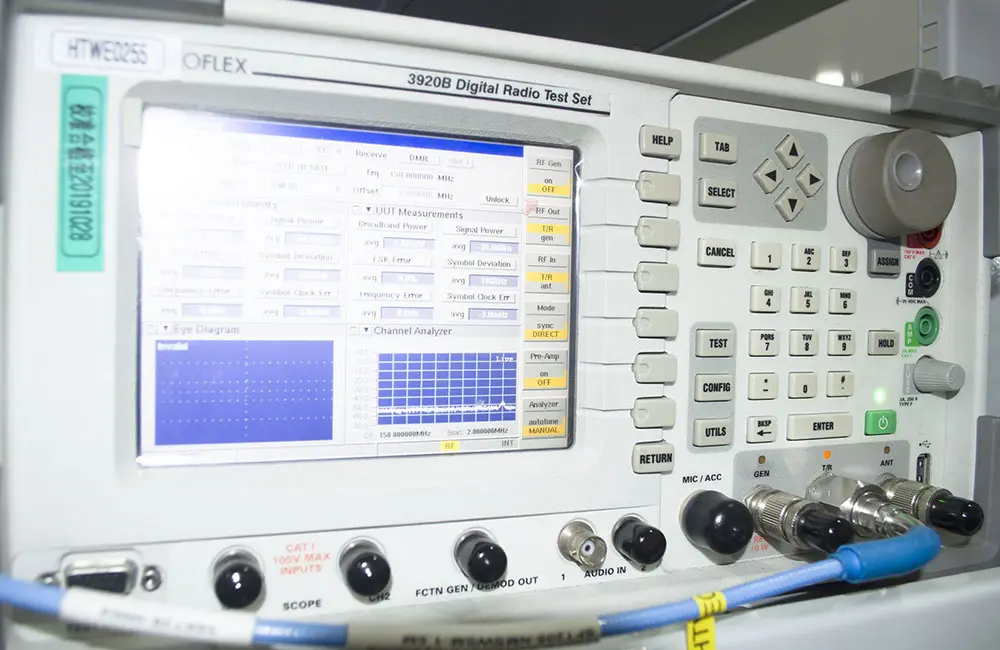
Many electrical products used daily must comply with the essential health and safety requirements of the Low Voltage Directive 2014/35/EU. This directive covers electrical equipment with rated voltages between 50V and 1000V for alternating current (AC) and 75V to 1500V for direct current (DC). Like other CE directives, this directive applies when electrical products are placed on the market and must bear the ce marking to allow free trade within the European Economic Area (EEA).
By affixing the CE mark to an electrical product, the manufacturer or importer ensures that the product meets the safety requirements of the Low Voltage Directive 2014/35/EU.
Scope of LVD
LVD applies to electrical equipment operating within the voltage range of 50–1000V AC and 75–1500V DC. This definition indicates the directive's scope, not a limitation of applicability (e.g., in a computer operating at 230V AC, a 12V DC circuit hazard is also regulated by LVD).
LVD covers products for consumer and industrial use, including those used by manufacturers themselves (e.g., testing equipment).
Examples of products include:
- Household appliances (en60335)
- Lighting equipment (EN60598)
- Audio-visual equipment (EN60065)
- Information technology equipment (en60950)
- Electrical machinery (en60204)
- Measuring instruments (EN61010)
CE Technical Documentation Requirements
The CE system of LVD is similar to the EMC directive; all products within the scope must have a CE marking and a declaration of conformity signed by the manufacturer or importer. A simple self-declaration is insufficient for ensuring product safety (safety being defined as preventing injury or damage to people, livestock, or property). Thus, an LVD declaration must be supported by technical documentation.
Technical documentation must include:
1. General description of the electrical equipment.
2. Conceptual design and manufacturing drawings.
3. Descriptions and explanations needed to understand the drawings.
4. List of all or part of the applied standards and measures taken to meet the directive's safety requirements.
5. Design calculations and checks made.
6. Test reports.
Objectives of LVD
The directive ensures that low-voltage equipment is safe during use. It applies to electrical products with voltages between 50V to 1000V AC and 75V to 1500V DC, including all safety rules to prevent risks from mechanical causes. The design and construction of equipment must guarantee safety during normal and fault conditions.
Evaluated hazards include:
1. Electric shock.
2. Energy hazard.
3. Fire.
4. Mechanical and thermal hazards.
5. Radiation hazard.
6. Chemical hazard.
Core Requirements for CE certification of Low Voltage Directive:
A. General Requirements
a) To ensure safe use, the electrical equipment must have markings indicating its usage characteristics and compliance details. If not feasible, this can be stated in the manual.
b) The product should clearly display the manufacturer's name, brand, or trademark. If difficult, it may be shown on the packaging.
c) The equipment and its components must be manufactured to allow safe assembly and connection.
d) Design and construction should ensure safety under intended use and maintenance conditions, meeting sections B and C requirements.
B. Prevention of Hazards from Electrical Equipment
a) Avoid risks of injury from direct or indirect contact with electrical parts.
b) Prevent hazardous temperatures, arcs, or radiation.
c) Adequately protect people and livestock from non-electrical dangers associated with electrical equipment.
d) Insulation must be appropriate for foreseeable conditions.
C. Prevention of External Influences Causing Hazard
a) Electrical products must meet mechanical requirements to protect people, livestock, and property.
b) Products must withstand non-mechanical environmental factors under intended conditions to prevent risks.
c) Products should remain safe even under predictable overload conditions.
LVD Testing Items
1. Working voltage
2. Fault testing
3. Impact testing
4. Vibration testing
5. Shock testing
6. Electrical clearance, creepage, and insulation distance
7. Plug testing
8. Protective conductor resistance
9. External wiring terminals
10. Power cord stress relief test
11. Electrical connection and fixation test
12. Leakage test
13. Accessibility test
14. Energy hazard check
15. Limited power test
16. Safety interlock test
17. Pcb test
18. Power supply casing
19. Encapsulation and sealed part inspection
20. External force test
21. Electrical equipment in buildings
22. Electric shock test
23. Dielectric strength test
24. Label inspection and test
25. Radiation test
26. Heating test
27. SELV test
28. TNV test
29. Current limiting circuit test
30. Overload test
31. Manual control test
32. Battery explosion test
33. Spill test
34. Combustion test
35. Fire prevention test
36. Adhesive test
37. Vicat test
38. Waterproof test
Documentation Required for LVD CE Certification:
1) Description of electrical equipment.
2) Design principles, component and circuit diagrams.
3) Descriptions and explanations for understanding the drawings and equipment operation.
4) List of all or partially applicable standards and explanations of measures for unmet standards to achieve directive safety requirements.
5) Calculations and inspection results from the design phase.
6) Test reports.
Process for LVD CE Certification:
1. Application (complete the application form, company information, provide product details, and arrange sample submission to a testing agency)
2. Quotation (determine testing standards, duration, and fees based on provided information)
3. Payment (confirm the quote, sign the application form and service agreement, and make payment)
4. Testing (conduct comprehensive testing per EU standards)
5. Completion of testing and report generation
6. Certificate issuance
Timeline for lvd certification
For general lvd directive testing, approximately one week.
Email:hello@jjrlab.com
Write your message here and send it to us
 FDA Requirements for Biocompatibility under ISO 10
 Amazon Spain WEEE Compliance Deadline: September 3
 What is the ASTM F2264 Certification Test?
 What is ASTM F2194 Certification Testing?
 What is the ASTM F2167 Certification Test?
 What is the ASTM F2050 Certification Test?
 What is ASTM F1967 Certification Testing? How to g
 What is the ASTM F1917 Certification Test?
Leave us a message
24-hour online customer service at any time to respond, so that you worry!