


French Packaging Law Leko
As EU environmental regulations continue to tighten, the Packaging Law (Packaging EPR) has become a standard compliance requirement for cross-border sellers. Among EU countries, Germany and France are the two most inquired-about jurisdictions with the strictest supervision and heaviest penalties.
If you are selling on Amazon / eBay / independent websites in the European market, we recommend you read this article carefully.
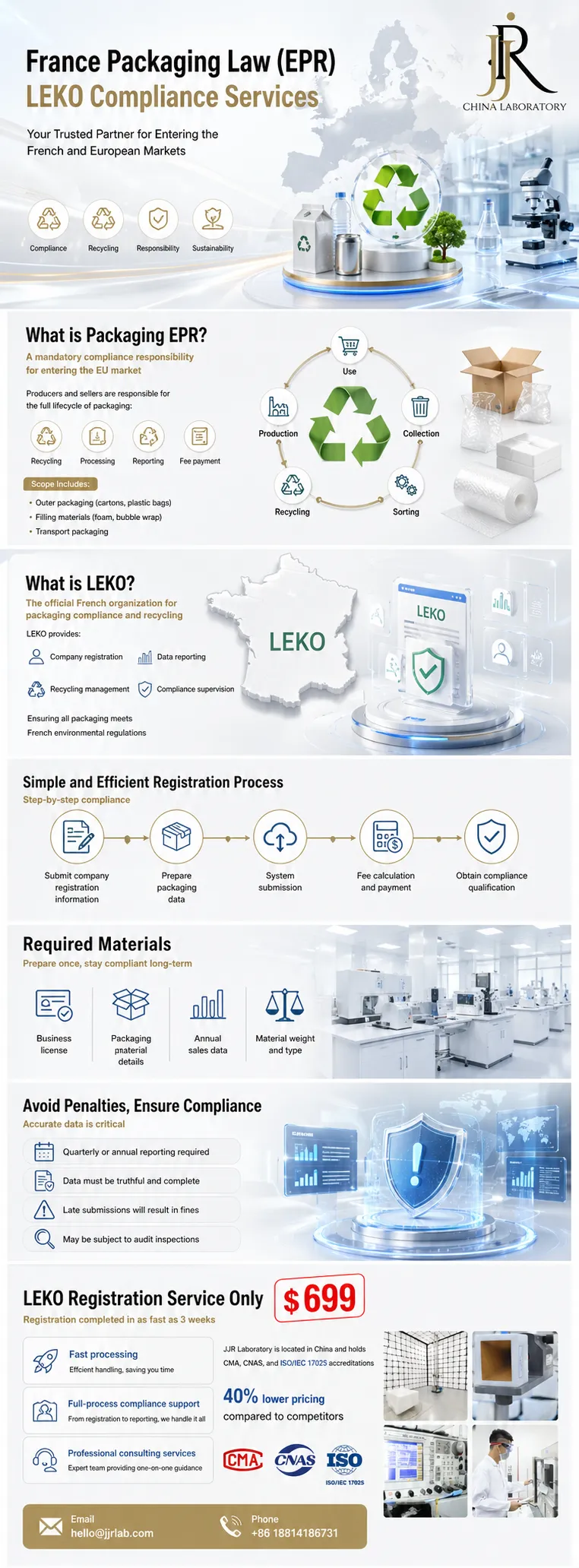
What is the Packaging Law (EPR)?
Packaging Law is part of the EU’s EPR (Extended Producer Responsibility) system.
The core logic is straightforward:
Whoever sells goods into the national market is responsible for packaging waste (collection + treatment + declaration + payment).
This includes:
1. Product outer packaging (cartons, plastic bags)
2. Filling materials (bubble bags, foam)
3. Express delivery packaging (included in some countries)
What is Leko?
Leko is a major French packaging recycling and environmental compliance organization, providing packaging law declaration and compliance services for enterprises.
Below is a detailed guide to declaring the French Packaging Law through Leko, covering procedures, required documents, and precautions:
1. Understand Leko and the Packaging Law
4. Introduction to Leko: Leko is an organization specializing in packaging recycling and environmental compliance, offering declaration and management services for the Packaging Law. Understanding Leko’s responsibilities and service scope is the first step of declaration.
5. Overview of the Packaging Law: The French Packaging Law requires all packaging materials sold in the French market to meet environmental standards, and Leko is responsible for supervising the implementation of this requirement.
2. Register with Leko
• Visit the Leko website: Go to Leko’s official website to find information on enterprise registration and packaging declaration.
• Fill in the registration form: Download and complete Leko’s enterprise registration form. The form generally requires company name, address, business license, types of packaging materials, annual sales volume, and other information.
• Submit the application: Submit the completed registration form and relevant documents to Leko via email or Leko’s online system.
3. Prepare Required Documents
• Enterprise business license: Provide the company’s business license or registration certificate to verify legal entity status.
• Packaging material list: Detail all types, quantities, and weights of packaging materials sold, including paper, plastic, glass, metal, and other categories.
• Sales data: Provide annual sales data to help Leko calculate recycling fees and determine compliance requirements.
4. Declaration and Reporting
• Regular declaration: Submit quarterly or annual packaging material declaration reports as required by Leko. Reports must include packaging type, quantity, and recycling/treatment methods.
1. Report format: Complete declaration reports in accordance with Leko’s specified format and requirements to ensure data accuracy and completeness.
2. Fee payment: Leko calculates recycling fees based on the declared packaging volume and material types. Enterprises must pay the relevant fees on time to support the recycling and treatment system.
5. Compliance Inspection
3. Audit process: Leko may conduct audits of enterprises to verify the authenticity and accuracy of all declared information. Enterprises must prepare relevant documents and records.
4. Rectification measures: If non-compliance is found in declarations, Leko will require enterprises to take rectification actions to meet Packaging Law requirements.
6. Notes
1. Ensure accuracy: Ensure all information is correct when filling in registration and declaration forms to avoid compliance issues caused by data errors.
2. Declare on time: Abide by Leko’s declaration deadlines to avoid fines for late submission.
3. Legal consultation: For questions or complex situations, consult a legal advisor or Packaging Law expert to ensure full compliance.
By following Leko’s declaration guidelines, enterprises can effectively manage packaging material recycling and environmental compliance, avoid legal risks, and support France’s environmental goals.
Differences Between LEKO and CITEO
LEKO focuses on electronic waste recycling and treatment with innovative recycling technologies and efficient operations. Its advanced sorting system accurately classifies various types of electronic waste to maximize resource utilization.
LEKO also emphasizes corporate cooperation, providing customized recycling solutions to help businesses reduce environmental costs and achieve sustainable development.
In contrast, CITEO specializes in household packaging and cultural paper recycling. It builds extensive recycling networks and provides professional recycling services to encourage public participation in environmental protection.
CITEO also actively conducts environmental publicity and education to raise public awareness and foster a society-wide environmental protection culture.
For enterprises and individuals, the choice of recycling scheme depends on individual needs and actual conditions:
4. LEKO is more suitable if you have large volumes of electronic waste and require efficient, professional recycling services.
1. CITEO is a better match if you prioritize household packaging and cultural paper recycling, along with environmental education.
Both LEKO and CITEO contribute to environmental protection. Choosing the right recycling scheme helps reduce environmental costs and supports the planet’s sustainable development.
How Much Does French Packaging Law Leko Cost?
JJR LAB provides the French Packaging EPR Leko service at a cost of $699, with registration completed within 3 weeks.
Email:hello@jjrlab.com
Related PRODUCTS
-
Italy EPR CONAI Registration
-

French WEEE Registration
-
French Packaging Law Leko
-
French Packaging EPR Citeo
-
German Battery Act (BattG) Fee
-

Germany WEEE Certification Fee
-
German Packaging Act VerpackG
-

Turkey Responsible Person Service
-
Amazon UK Responsible Person Service
-

Amazon EU Responsible Person Service