


Germany WEEE Certification Fee
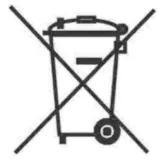
As Germany’s environmental regulations continue to tighten, the supervision of WEEE (Waste Electrical and Electronic Equipment) recycling is also being strengthened. All electrical and electronic products sold to Germany must complete weee registration.
Major platforms including Amazon, AliExpress, TEMU, and eBay have stepped up strict inspections of German weee compliance and implemented full controls on electrical and electronic products sold to Germany. Unregistered products will be forcibly removed from shelves.
Unlike the Packaging Law, WEEE has many categories with different recycling mechanisms, which many sellers are not familiar with. This article summarizes common questions about German WEEE to help you fully understand.
How much is the German weee certification Fee?
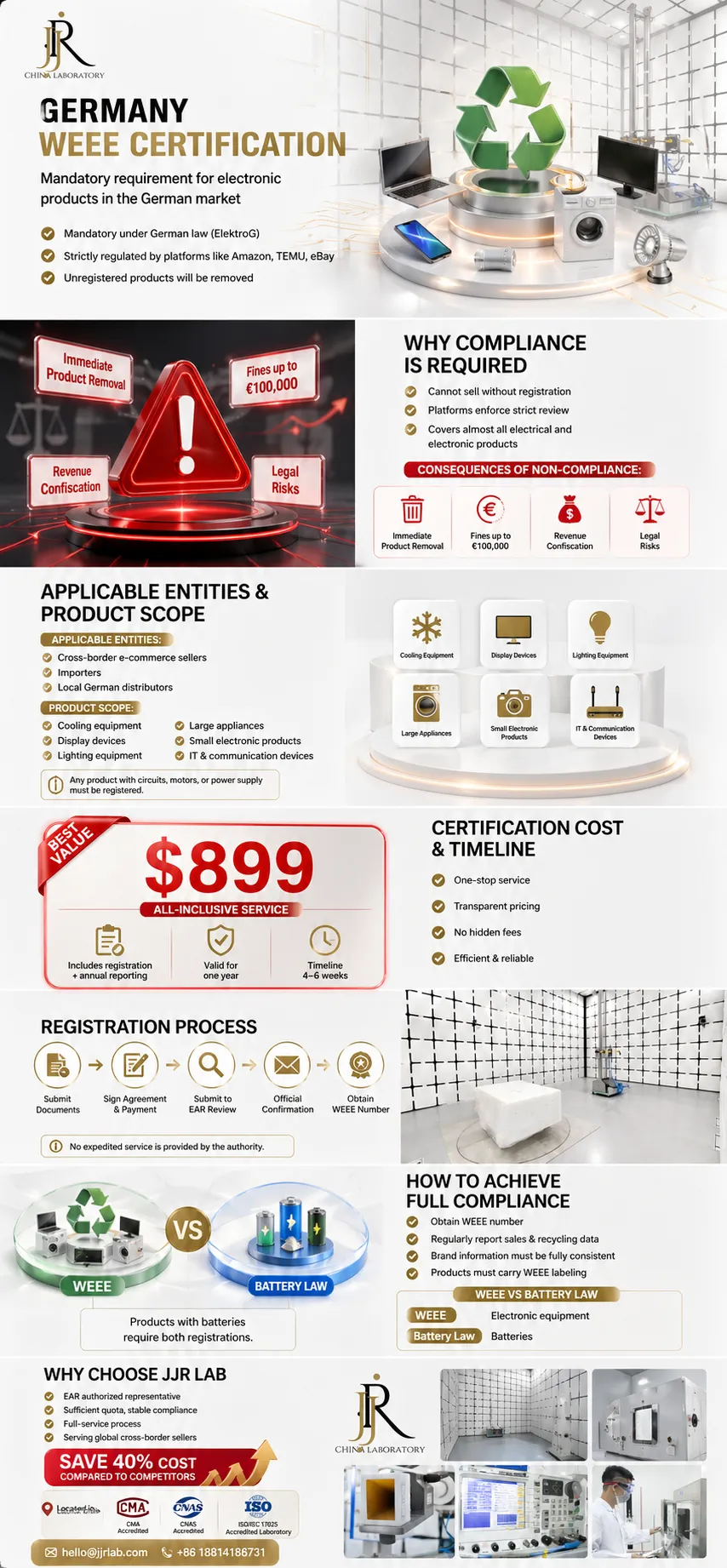
JJR LAB provides German WEEE registration service at a cost of $899.
• Validity: Registration + annual declaration (calendar year)
• Processing Time: 4–6 weeks to obtain compliance approval
Which Products Need WEEE Registration?
German WEEE covers nearly all electrical and electronic equipment, divided into 6 main categories:
1. Heat exchangers (e.g., air conditioners, refrigerators using refrigerants)
2. Display devices for household use (e.g., monitors, digital photo frames with screen > 100 cm²)
3. Lamps & gas-discharge lamps (e.g., light bulbs, fluorescent lamps)
4. Large electronic equipment (e.g., massage chairs, fitness equipment > 50 cm)
5. Small electrical and electronic equipment (e.g., watches, headphones, string lights, DVD players, drones < 50 cm)
6. Small IT & telecommunications equipment (e.g., USB cables, car GPS < 50 cm with data transmission)
Most cross-border sellers fall under Category 5. Exceptions: power banks with USB cables require 2 categories (power bank = Cat.5; USB cable = Cat.6).
In short: Any product with circuit boards, motors, or external power supply is under WEEE regulation.
Which Sellers Need to Register German WEEE?
According to the German ElektroG (WEEE Act), the following parties must register:
1. Cross-border e-commerce sellers: Selling on Amazon, TEMU, AliExpress, etc., regardless of company location.
2. Importers: Companies importing electrical products into Germany (bear recycling responsibility).
3. Distributors: Resellers within Germany must ensure WEEE compliance.
Difference Between WEEE and Battery Law?
• German WEEE: Recycling directive for electrical and electronic equipment (covers all related devices).
• German Battery Law: Recycling directive for batteries (only products with batteries).
Key Difference:
WEEE recycles devices only; Battery Law recycles batteries only.
Products with batteries require both WEEE and Battery Law registration.
Real Recycling vs. Guaranteed Recycling?
1.Real Recycling
Based on actual e-waste generation. When collection points are full, producers/authorized representatives handle recycling and disposal.
2.Guaranteed Recycling
During WEEE registration, sellers pay a pre-deposit fee based on estimated waste weight as a guarantee.
Simple explanation:
• Guaranteed Recycling = Prepaid “environmental membership card” (shows commitment).
• Real Recycling = Actual operation based on collected waste.
Both are independent but equally important for environmental compliance.
Consequences of Not Registering WEEE?
1. Platforms (Amazon, TEMU, AliExpress) will remove listings immediately.
2. Fines up to €100,000.
3. Confiscation of all illegal income in Germany.
4. Reports/complaints by competitors and retroactive liability.
Can I Register WEEE on TEMU Without a Brand?
Yes.
If no trademark is uploaded in TEMU backend, use your company English name as the brand name for WEEE registration. After approval, you can bind successfully.
Important:
Ensure accuracy of company English name, brand format, spacing, symbols, and case—errors will cause binding failure.
How to Check WEEE Category on Amazon?
WEEE brand must match Amazon store brand. Category follows platform judgment; appeal via Seller Support if misclassified.
Log in to Amazon Seller Central → Germany WEEE help page:
https://www.sellercentral.amazon.dev/gp/help/GY97WLQDLFH2SNBY
Open all 9 device types to check for registration code fields. A field means the category requires WEEE; the displayed brand is the one to register.
WEEE Registration Process?
1. Seller fills application form (business license, store info, product info) and submits documents.
2. Sign contract, make payment; JJR LAB reviews materials.
3. Submit application to EAR (German registration authority).
4. EAR confirms authorization with client.
5. weee certificate issued and recorded in German e-recycling system → registration completed.
How to Achieve Full WEEE Compliance?
1. Register WEEE
Submit documents to EAR via a compliance agent. EAR issues WEEE-Reg-Nummer and records it in the official system.
2. Regular Declarations & Recycling Reports
After registration, report quantity, type, weight monthly/quarterly/annually.
Upload registration number & certificate to platforms. Company/brand names must match exactly.
3. weee labeling Obligation
All products, packaging, and manuals must display the standard WEEE crossed-out bin symbol (minimum height 7 mm, clear and permanent).
Can WEEE Registration Be Expedited?
Officially NO.
Processing time depends on:
1. Incomplete/incorrect documents (e.g., changed business license, mismatched products).
2. EAR audit of authorized representatives (annual reviews may suspend services).
3. EAR quota limits for authorized representatives (since 2024).
Applications are randomly assigned to EAR officers. Any “expedited service” claim is false.
Choose agents with full EAR qualification, sufficient quota, and official guarantee status.
Why Choose JJR LAB?
• Authorized representatives EAR-approved & quota-sufficient.
• Fast processing, full registration + declaration support.
• Dedicated account manager, professional and reliable.
• Assisted thousands of cross-border sellers in successful WEEE certification.
Email:hello@jjrlab.com
Related PRODUCTS
-
Italy EPR CONAI Registration
-

French WEEE Registration
-
French Packaging Law Leko
-
French Packaging EPR Citeo
-
German Battery Act (BattG) Fee
-
Germany WEEE Certification Fee
-
German Packaging Act VerpackG
-

Turkey Responsible Person Service
-
Amazon UK Responsible Person Service
-

Amazon EU Responsible Person Service