



Smart / LED Lighting CE Certification for Europe
CE certification: The Mandatory Pass for Lighting Products to Enter the European Market
As a core hub of the global high-end lighting market, Europe imposes stringent compliance requirements on lighting products. According to EU regulations, all lighting products (covering almost all categories such as chandeliers, LED spotlights, and motion-sensor lights) circulating in the EU market must obtain CE certification and affix the ce marking. This is a prerequisite for the legal sale of products.
CE certification is not a single test, but a compliance system composed of multiple core directives. It directly determines whether products can pass customs inspection and be sold on supermarkets, e-commerce platforms (e.g., Amazon Europe, TEMU Europe).
Four Core Directives: Covering Safety, Electromagnetic Compatibility, Energy Efficiency and Environmental Protection
(I) low voltage directive (LVD, 2014/35/EU)
Applicable to all lighting products with AC voltage ranging from 50V to 1000V and DC voltage ranging from 75V to 1500V. This includes everything from small USB night lights to large outdoor floodlights, with only a few categories such as household plugs being exempt.
Core Requirements: Focus on electrical safety and structural safety to prevent risks such as electric shock, fire, and overheating. Key test items include:
① Dielectric Withstand Voltage: Must withstand a voltage test of ≥2500V AC to ensure no breakdown of the insulation layer.
② Temperature Rise Control: The temperature rise of key components shall be ≤45K to avoid aging or scalding caused by high temperatures.
③ Ground Continuity: The grounding resistance shall be ≤0.1Ω to form effective safety protection.
④ Additional Requirements for Special Lighting: For example, children's lighting products must comply with the choking hazard prevention requirements of EN 60598-2-10, and recessed lighting products must meet the heat dissipation requirements of EN 60598-2-2.
Core Standards: Centered on the EN 60598 series, among which EN 60598-1 is the general safety standard, matched with the EN 60598-2-x series of specific lighting standards (x represents the type of lighting). LED lighting products also need to comply with the LED driver standard EN 61347-2-13 and the LED module standard EN 62031.
(II) Electromagnetic Compatibility Directive (EMC, 2014/30/EU)
Applicable to all lighting products containing electronic components, especially those with LED drivers and dimming functions, which need to be focused on due to their tendency to generate electromagnetic interference.
Core Requirements: Achieve "two-way compatibility" — neither interfering with other equipment nor being affected by external electromagnetic interference. Tests are divided into two categories:
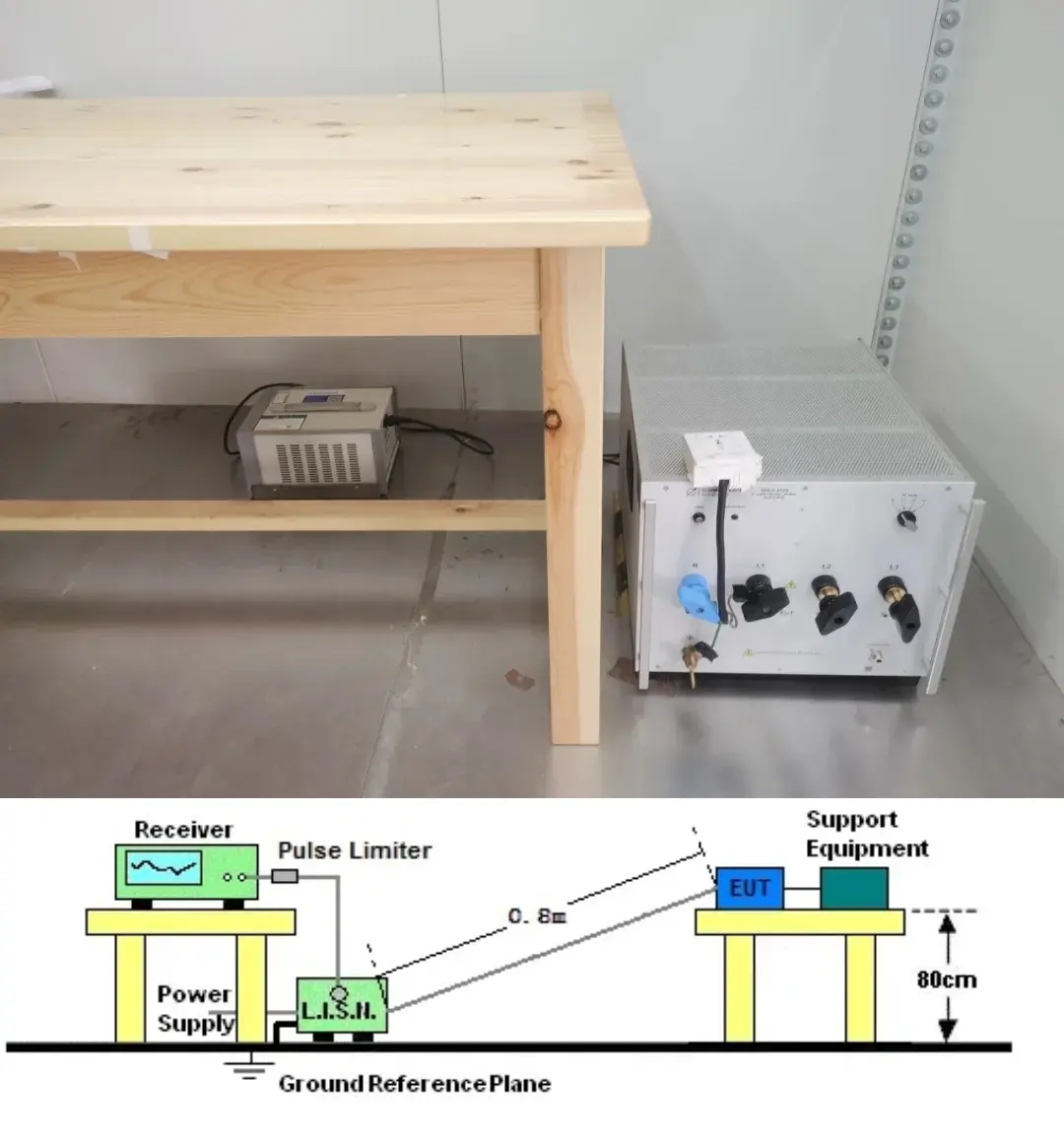
① Electromagnetic Interference (EMI): Limit the product's own radiation. For example, the radiated emission in the 30MHz-1GHz frequency band shall be ≤44dBμV/m, and the conducted emission shall be ≤66dBμV.
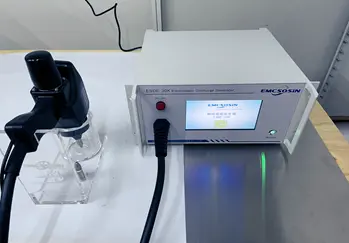
② Electromagnetic Susceptibility (EMS): Resist external interference, and must pass tests such as electrostatic discharge (±8kV contact / ±15kV air) and voltage fluctuation (±10%).
Core Standards: EN 55015 (electromagnetic disturbance limits) and EN 61547 (immunity requirements), supplemented by the harmonic and voltage fluctuation limits of en 61000-3-2/3-3.
(III) Energy Efficiency and Environmental Protection Directives
1. ERP Energy Efficiency Directive (EU 2019/2020)
Applicable to all lighting products, requiring the labeling of energy efficiency classes from A to G, and testing parameters such as luminous efficacy, color rendering index, and standby power consumption. LED lighting products also need to meet the requirements of lumen maintenance rate and service life to ensure stable long-term energy-saving performance.
2. RoHS Directive (2011/65/EU)
Restricts 10 hazardous substances such as lead, cadmium, and mercury in lighting products. Homogeneous materials such as LED chips, solder, and plastic parts must be tested to ensure that their content does not exceed the standard.
Additional Directives for Special Scenarios
① Smart lighting with Bluetooth / Wi-Fi: Must comply with the Radio Equipment Directive (RED, 2014/53/EU).
② Lighting for explosive environments: Must meet the explosion-proof grade requirements of the ATEX Directive.
③ Close-range lighting products: Must pass the EN 62471 photobiological safety test to avoid human injury caused by light radiation.
Full Certification Process
1. Product Classification
Clarify the type of lighting (e.g., recessed / portable), application scenario (indoor / outdoor) and function (whether with wireless module), and match the corresponding directives and standards.
2. Document Preparation
Sort out technical documents such as circuit schematics, PCB Layout, BOM lists, and risk assessment reports (including mechanical and electrical risk analysis) in advance, which need to be in both Chinese and English.
3. Sample Testing
① Institution Selection: Prioritize laboratories with ISO 17025 qualification or EU-recognized notified bodies to ensure the authority of the report.
② Test Focus: Ordinary lighting products need to complete LVD+EMC dual directive tests. Products with wireless functions or explosion-proof requirements need to add corresponding special tests. It is recommended to conduct pre-testing first (e.g., using near-field probes to locate radiation sources) to reduce rectification costs.
4. Review and Rectification
After the laboratory issues the draft report, the data must be confirmed in a timely manner. If problems such as excessive EMI occur, rectification can be carried out by optimizing the filter circuit and adding shielding covers.
High-risk products may face factory inspections, so the production process and quality control system need to be sorted out in advance.
5. Certification Issuance and Compliance Maintenance
① After passing the review, sign the Declaration of Conformity (DOC) and affix the ce marking (height ≥5mm, marked on the product or packaging, with manufacturer information and input parameters attached).
② Technical documents must be kept for 10 years for inspection. After product design updates, the certification compliance needs to be re-evaluated.
Pitfall Avoidance Guide
1. Ignoring the Compliance of Key Components: Failure of the entire lamp test due to uncertified CE components such as LED drivers and transformers. It is necessary to screen compliant suppliers in advance.
2. Incomplete Document Information: Missing risk assessment reports or unmarked warning signs (e.g., IPX4 waterproof rating) in user manuals will delay the review cycle.
3. Blindly Choosing Certification Bodies: Reports issued by non-ISO 17025 laboratories or non-notified bodies are not recognized by the EU, which may face the risk of customs seizure.
4. Non-standard CE Marking: A marking with a size of less than 5mm or without attached manufacturer information will be deemed as false compliance.
5. Neglecting Follow-up Maintenance: Failure to re-certify after product iteration will lead to the invalidation of the original certificate.
Email:hello@jjrlab.com
Write your message here and send it to us
 Japan MIC Wireless Certification Testing
 Canada RSS-247 Testing Lab
 LVD and EMC Testing for Power Adapters
 IEC 62133-2 Lithium Battery Testing Laboratory
 EN 55032 and EN 55035 Testing Laboratory
 FCC ID testing lab for Bluetooth earbuds
How to get an FCC ID and How Much Does It Cost
What is the EN 300 328 Testing Standard
FCC ID testing lab for Bluetooth earbuds
How to get an FCC ID and How Much Does It Cost
What is the EN 300 328 Testing Standard
Leave us a message
24-hour online customer service at any time to respond, so that you worry!